The Cologne Pogrom of August 24, 1349
1349 · Cologne, Germany
In Cologne, Germany, Jews are blamed for the Black Death and massacred in the Cologne Pogrom.
February 14, 1349
Approximately 2,000 Jews were burned to death by mobs or forcibly removed from the city of Strasbourg during the Strasbourg massacre, part of the widespread violence against Jews during the Black Death pandemic.
Strasbourg, Holy Roman Empire
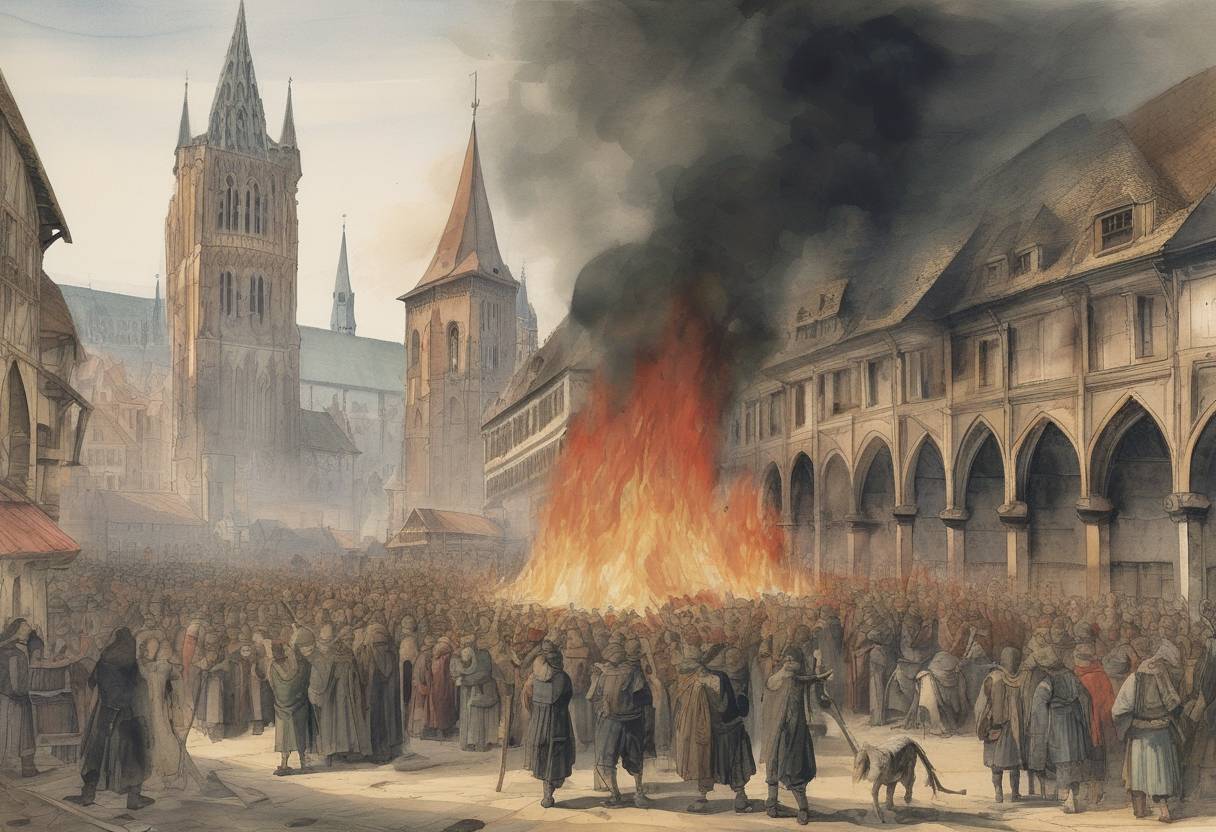
The Strasbourg Massacre, which occurred on February 14, 1349, was a tragic and violent event during the period of the Black Death, a devastating pandemic that swept through Europe from 1347 to 1351. This massacre was part of a broader wave of anti-Semitic violence that spread across Europe, fueled by fear, superstition, and scapegoating.
The Black Death: The pandemic, caused by the bacterium Yersinia pestis, resulted in the deaths of an estimated 25 to 30 million people in Europe, approximately one-third of the continent’s population at the time. The disease’s rapid spread and high mortality rate led to widespread panic and social upheaval.
Scapegoating of Jews: As the plague ravaged communities, Jews were often blamed for the outbreak, accused of poisoning wells or conspiring to destroy Christendom. These unfounded accusations were exacerbated by existing anti-Semitic sentiments and economic tensions.
Location: Strasbourg, a city in the Holy Roman Empire, now part of modern-day France.
Massacre: On February 14, 1349, a mob attacked the Jewish community of Strasbourg. Approximately 2,000 Jews were either burned to death or forcibly removed from the city. This brutal act was one of the earliest and most significant pogroms during the Black Death.
Political Dynamics: The massacre was partly driven by local political dynamics. The city council of Strasbourg, which had initially protected the Jewish community, was overthrown by a coalition of guilds and local nobles who supported the violence against Jews.
Expulsion and Confiscation: Following the massacre, the remaining Jews were expelled from Strasbourg, and their properties were confiscated. This pattern of expulsion and property seizure was repeated in numerous other European cities during this period.
Wider Impact: The Strasbourg Massacre was part of a series of violent attacks against Jews across Europe, including in cities such as Basel, Mainz, and Cologne. These events significantly reduced the Jewish population in many regions and disrupted Jewish life and culture.
Historical Significance: The massacre is a stark example of how fear and prejudice can lead to violence and persecution. It highlights the vulnerability of minority communities during times of crisis and the destructive power of scapegoating.
The Strasbourg Massacre of 1349 remains a poignant reminder of the dangers of intolerance and the tragic consequences of societal fear and misinformation. It underscores the importance of historical memory in understanding and preventing similar atrocities in the future.
Source: en.wikipedia.org