The Marikana Massacre: August 16, 2012
2012 · Marikana, South Africa
The Marikana massacre occurred in South Africa, where police opened fire on striking miners, resulting in 34 deaths and many injuries.
August 10, 2012
The Marikana miners' strike began in South Africa, leading to a series of protests and a tragic massacre later in the month.
Marikana, South Africa | Lonmin
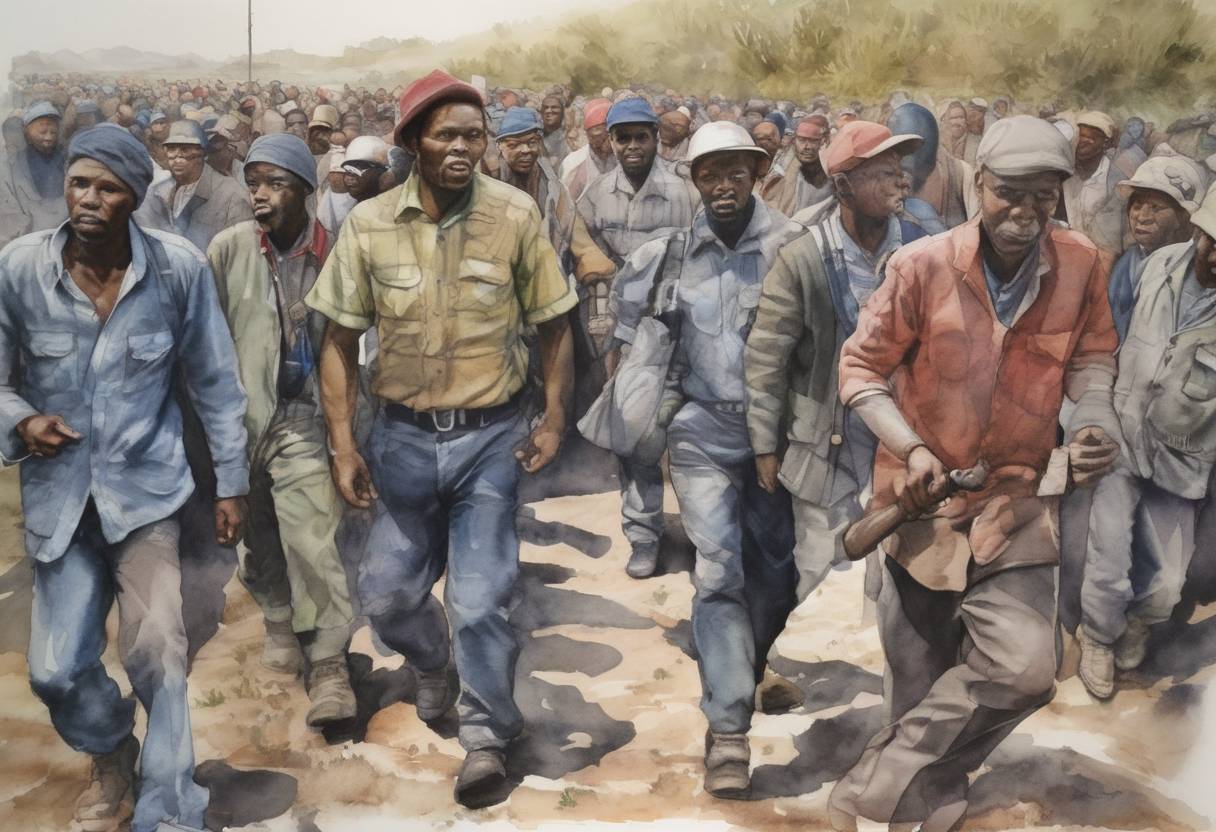
On August 10, 2012, a significant labor strike began at the Lonmin platinum mine in Marikana, South Africa. This event marked the start of a series of protests that would culminate in the tragic Marikana Massacre later that month. The strike was primarily driven by demands for higher wages and better working conditions from the miners, who were dissatisfied with their pay and the living conditions provided by the mining company.
Economic Conditions: The mining sector in South Africa has historically been a major part of the economy, but it has also been fraught with labor disputes. Miners often worked under harsh conditions for relatively low wages, leading to frequent tensions between workers and mining companies.
Lonmin Mine: The Lonmin mine, located in the North West Province, was one of the world’s largest producers of platinum. The miners at Lonmin were demanding a wage increase from approximately 4,000 South African Rand per month to 12,500 Rand.
Union Dynamics: The strike was initially organized by workers outside the traditional union structures, reflecting dissatisfaction with the established unions, particularly the National Union of Mineworkers (NUM), which was perceived as being too close to management.
Worker Grievances: The miners’ grievances were not only about wages but also about the lack of adequate housing and the dangerous working conditions they faced daily.
Rising Tensions: Prior to the strike, there had been a series of smaller protests and clashes between rival unions, notably the NUM and the newly formed Association of Mineworkers and Construction Union (AMCU), which was gaining popularity among the workers.
Escalation: Over the following days, the situation escalated, with violent clashes occurring between striking miners, police, and security personnel. The tensions culminated in the Marikana Massacre on August 16, 2012, when police opened fire on the striking workers, resulting in the deaths of 34 miners and injuries to many others.
National and International Reaction: The massacre drew widespread condemnation and highlighted the deep-seated issues of inequality and labor rights in South Africa. It prompted national and international calls for investigations and reforms in the mining sector.
Long-term Impact: The events at Marikana had a profound impact on South African society, leading to increased scrutiny of labor practices and the role of unions. It also sparked debates about the legacy of apartheid-era economic structures and the need for more equitable economic policies.
The Marikana miners’ strike and the subsequent massacre remain pivotal moments in South Africa’s post-apartheid history, symbolizing the ongoing struggles for economic justice and workers’ rights in the country.
Source: www.sahistory.org.za