Appointment of Pope Leo VIII on December 6, 963
963 · Rome, Italy
Pope Leo VIII is appointed as pope by Emperor Otto I, marking a significant moment in the history of the papacy and the Holy Roman Empire.
November 10, 0461
The death of Pope Leo I, also known as Leo the Great, who was one of the most significant popes of the early Christian Church. He is remembered for his theological contributions and his role in asserting the authority of the papacy.
Rome, Italy | Catholic Church
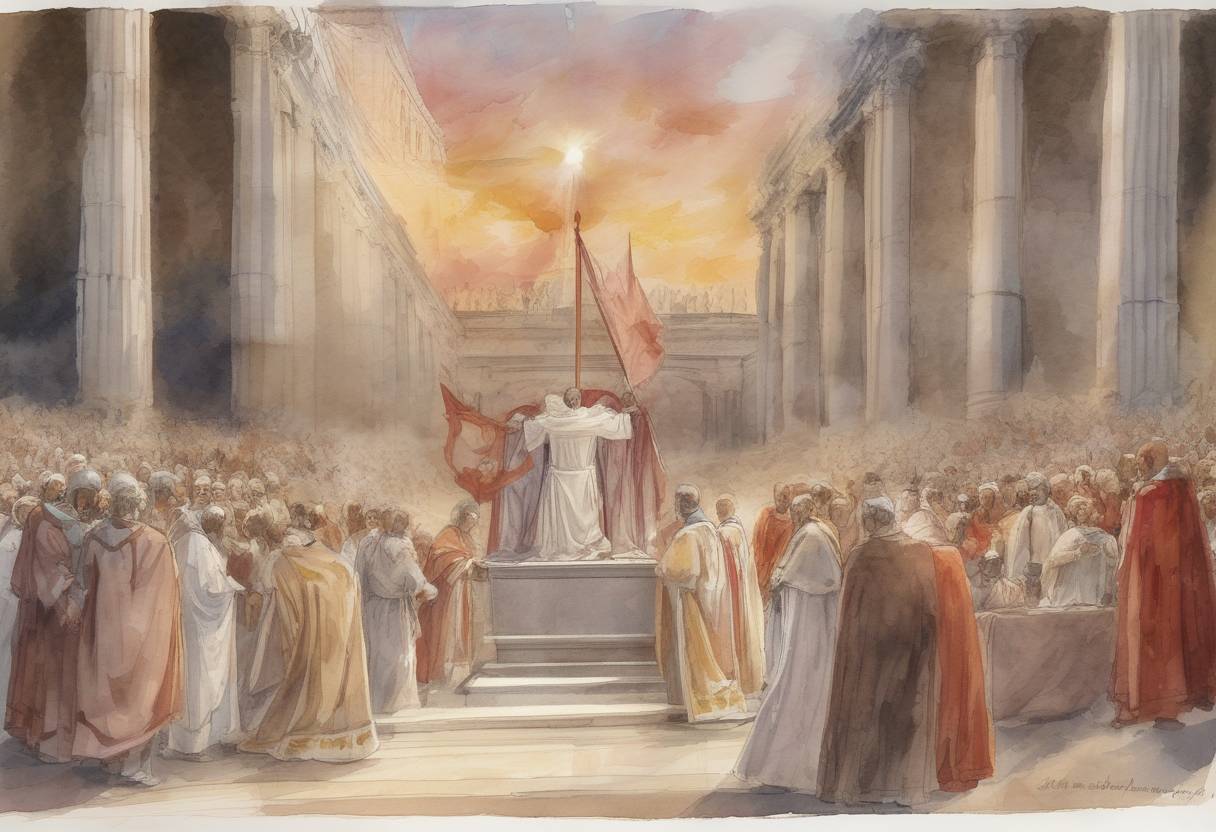
Pope Leo I, commonly known as Leo the Great, passed away on November 10, 461. His papacy, which began in 440, was marked by significant theological contributions and a strong assertion of papal authority, making him one of the most influential figures in the early Christian Church.
Early Life and Papacy: Leo was born around 400 AD in Tuscany, part of the Western Roman Empire. Before becoming pope, he served as a deacon and was known for his administrative and diplomatic skills. He was elected pope in 440, succeeding Pope Sixtus III.
Theological Contributions: Leo is perhaps best known for his role in the Christological debates of the time. His “Tome of Leo,” a letter written to the Council of Chalcedon in 451, articulated the doctrine of the two natures of Christ—fully divine and fully human. This document was pivotal in shaping the Chalcedonian Definition, which became a cornerstone of orthodox Christian theology.
Papal Authority: Leo was a staunch advocate for the primacy of the Bishop of Rome. He worked tirelessly to consolidate the authority of the papacy over other bishops and to establish the pope as the spiritual leader of the Christian world. His efforts laid the groundwork for the centralization of ecclesiastical power in Rome.
Council of Chalcedon (451): Leo’s influence was instrumental at this ecumenical council, where his “Tome” was read and accepted as a foundational text. The council’s decisions helped to unify the Church on the nature of Christ, although it also led to schisms with certain Eastern churches.
Diplomatic Achievements: Leo is famously remembered for his encounter with Attila the Hun in 452. According to tradition, Leo met Attila and persuaded him to turn back from his invasion of Italy, sparing Rome from destruction. Although the exact details are debated, this event enhanced Leo’s reputation as a powerful and respected leader.
Defense of Rome: In 455, Leo faced another threat when the Vandals, led by King Genseric, sacked Rome. While unable to prevent the sack, Leo negotiated with Genseric to limit the destruction and spare the lives of the city’s inhabitants.
Canonization and Recognition: Leo was canonized as a saint, and his feast day is celebrated on November 10. He is one of only two popes to be given the title “the Great,” reflecting his enduring impact on the Church.
Influence on Papal Doctrine: Leo’s teachings and writings continued to influence the development of Christian doctrine and the role of the papacy for centuries. His emphasis on the authority of the pope helped shape the medieval Church and its governance.
Historical Significance: Leo’s papacy marked a turning point in the history of the Church, as it transitioned from a period of persecution and doctrinal uncertainty to one of greater unity and institutional strength. His legacy is evident in the continued prominence of the papacy in global Christianity.
Pope Leo I’s death on November 10, 461, marked the end of a transformative era for the early Church, but his contributions continue to resonate throughout Christian history.
Source: en.wikipedia.org