The Coronation of William III and Mary II: April 11, 1689
1689 · London, England
William III and Mary II were crowned as joint sovereigns of England, Scotland, and Ireland, marking the beginning of their reign.
November 5, 1688
William of Orange landed at Brixham, England, beginning the Glorious Revolution.
Brixham, England | William of Orange's forces
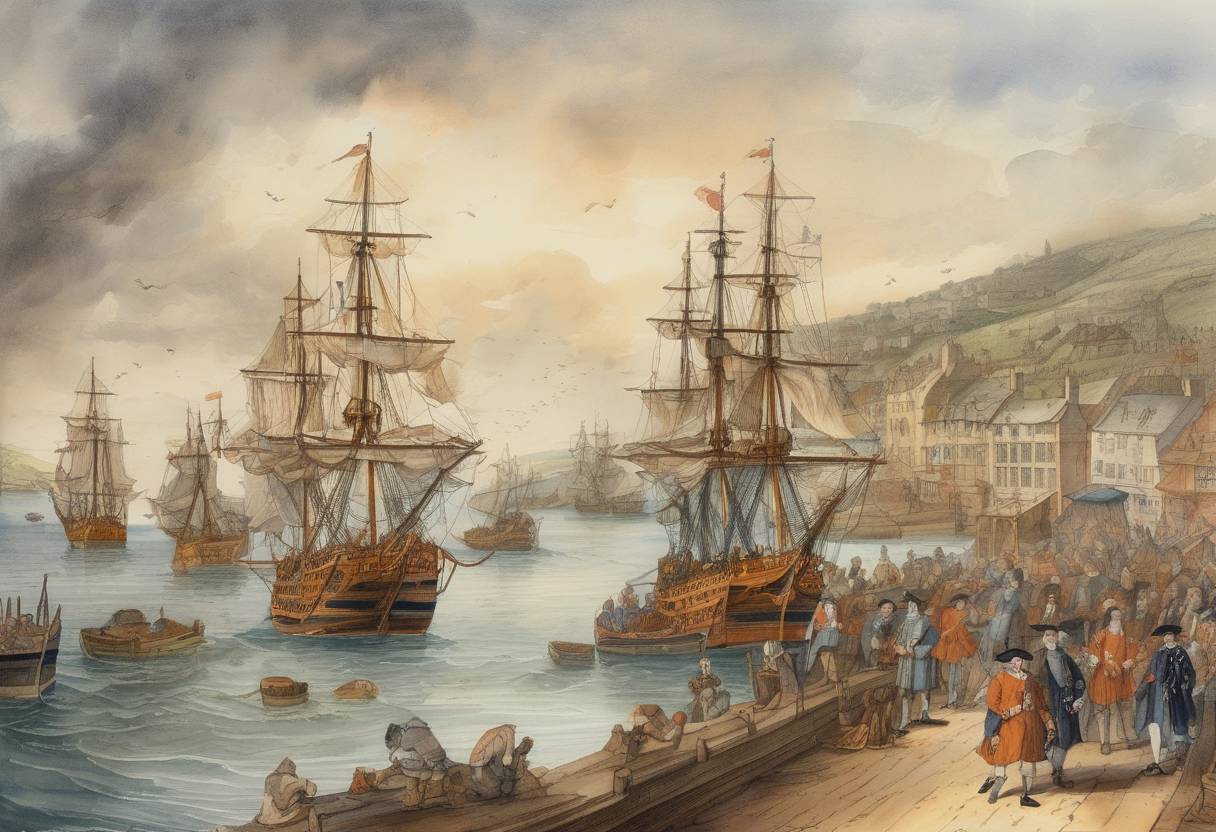
On November 5, 1688, William of Orange, a Dutch prince, landed at Brixham in Devon, England, marking the commencement of the Glorious Revolution. This pivotal event set in motion a series of developments that would fundamentally alter the political landscape of England and establish constitutional monarchy as a cornerstone of British governance.
The Glorious Revolution was precipitated by widespread dissatisfaction with the reign of King James II of England. James, a Catholic monarch, had alienated many of his subjects, particularly the Protestant majority, through his policies that favored Catholics and his attempts to centralize royal power. His issuance of the Declaration of Indulgence, which suspended laws against Catholics and Protestant dissenters, and the birth of his son, which promised a Catholic succession, intensified fears of a Catholic dynasty.
In response to these concerns, a group of English nobles, known as the “Immortal Seven,” extended an invitation to William of Orange, who was married to James II’s Protestant daughter, Mary. They urged him to intervene and restore Protestant rule.
William’s fleet set sail from the Netherlands in late October 1688, consisting of approximately 463 ships and 15,000 troops. Despite adverse weather conditions, the fleet successfully navigated the English Channel, landing at Brixham on November 5, 1688. William’s arrival was strategically timed to coincide with Guy Fawkes Night, a date symbolically associated with the failure of a Catholic plot against the Protestant monarchy.
Upon landing, William declared his intention to preserve the Protestant religion and the liberties of England. His declaration was well-received, and he quickly garnered support from influential figures and the general populace.
The landing at Brixham set off a chain of events that led to the relatively bloodless overthrow of King James II. As William’s forces advanced towards London, James found his support dwindling. Key military and political figures defected to William’s side, and James eventually fled to France in December 1688.
In February 1689, William and Mary were jointly offered the English throne by Parliament, marking the beginning of their reign. This transition of power was formalized through the Bill of Rights 1689, which established constitutional limits on the monarchy and affirmed the supremacy of Parliament.
The Glorious Revolution is celebrated for its relatively peaceful nature and its role in establishing parliamentary democracy in England. It laid the groundwork for modern constitutional monarchy and influenced political thought across Europe and the Americas.
In summary, William of Orange’s landing at Brixham on November 5, 1688, was a decisive moment in English history, heralding the Glorious Revolution and the dawn of a new era of governance.
Source: en.wikipedia.org