Lech Wałęsa Elected President of Poland - December 9, 1990
1990 · Warsaw, Poland
Lech Wałęsa is elected President of Poland, becoming the first democratically elected president of the country after the fall of communism.
August 26, 1980
The Polish government agreed to the demands of striking shipyard workers in Gdańsk, leading to the formation of the Solidarity movement, the first independent labor union in a Soviet-bloc country.
Gdańsk, Poland | Solidarity
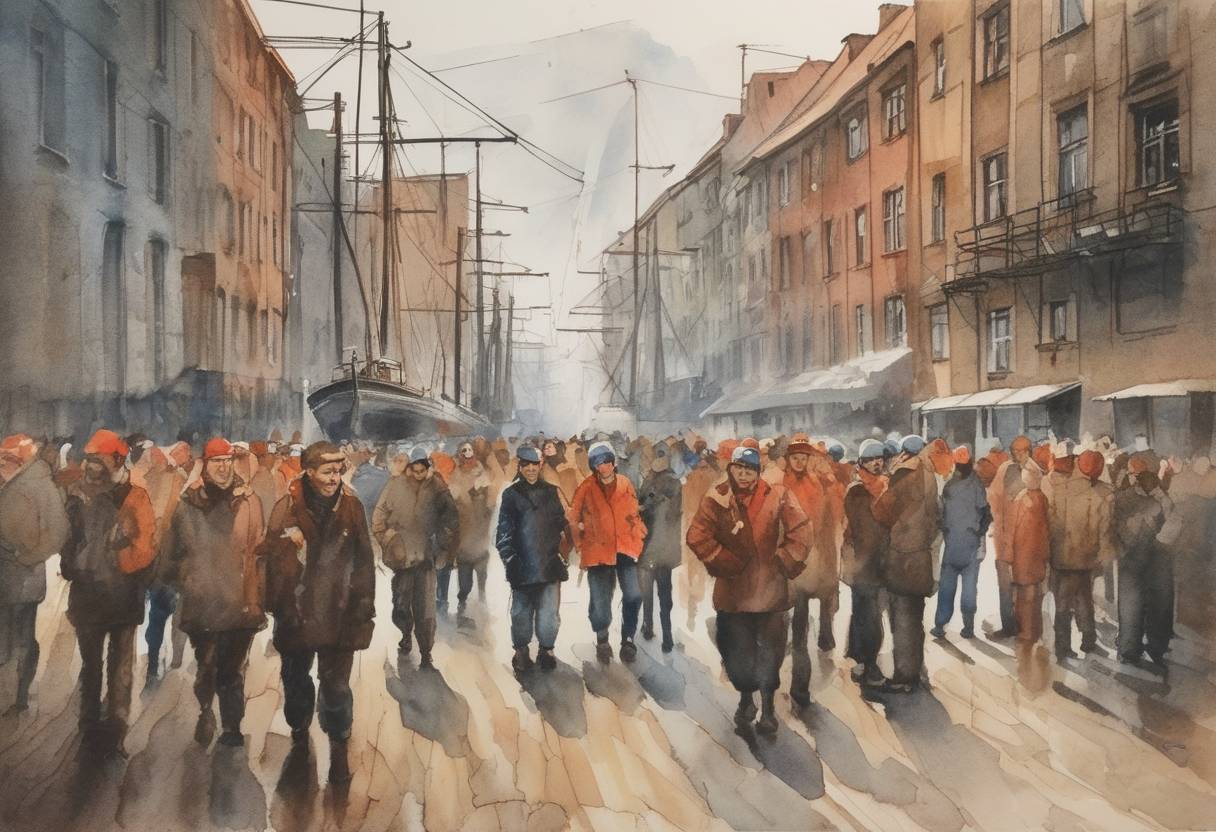
On August 26, 1980, a pivotal moment in modern European history unfolded as the Polish government agreed to the demands of striking shipyard workers in Gdańsk. This agreement led to the formation of “Solidarity” (Solidarność), the first independent labor union in a Soviet-bloc country, marking a significant step in the eventual decline of communist influence in Eastern Europe.
The late 1970s and early 1980s were a period of economic hardship and political unrest in Poland. The Polish economy was struggling with high inflation, food shortages, and a burdensome foreign debt. This economic crisis fueled widespread dissatisfaction among workers and the general populace.
In July 1980, the Polish government announced a sudden increase in food prices, which triggered a wave of strikes across the country. The most significant of these strikes began in August at the Lenin Shipyard in Gdańsk, led by an electrician named Lech Wałęsa. The workers demanded not only economic reforms but also greater political freedoms and the right to form independent unions.
On August 26, 1980, the Polish government agreed to many of the workers’ demands, including the right to form independent trade unions. This agreement was formalized in the Gdańsk Agreement, signed on August 31, 1980. The agreement marked a significant concession by the communist government, acknowledging the legitimacy of the workers’ demands and paving the way for the establishment of Solidarity.
The events of August 26, 1980, and the subsequent rise of Solidarity were instrumental in reshaping the political landscape of Eastern Europe, contributing to the broader wave of democratization that swept across the region in the late 20th century.
Source: en.wikipedia.org