The Enactment of Japan's Post-War Constitution
1947 · Tokyo, Japan
The new post-war Constitution of Japan went into effect, establishing a parliamentary system and renouncing war.
November 29, 1890
The Meiji Constitution came into effect in Japan, establishing a form of constitutional monarchy.
, Japan | Japanese government
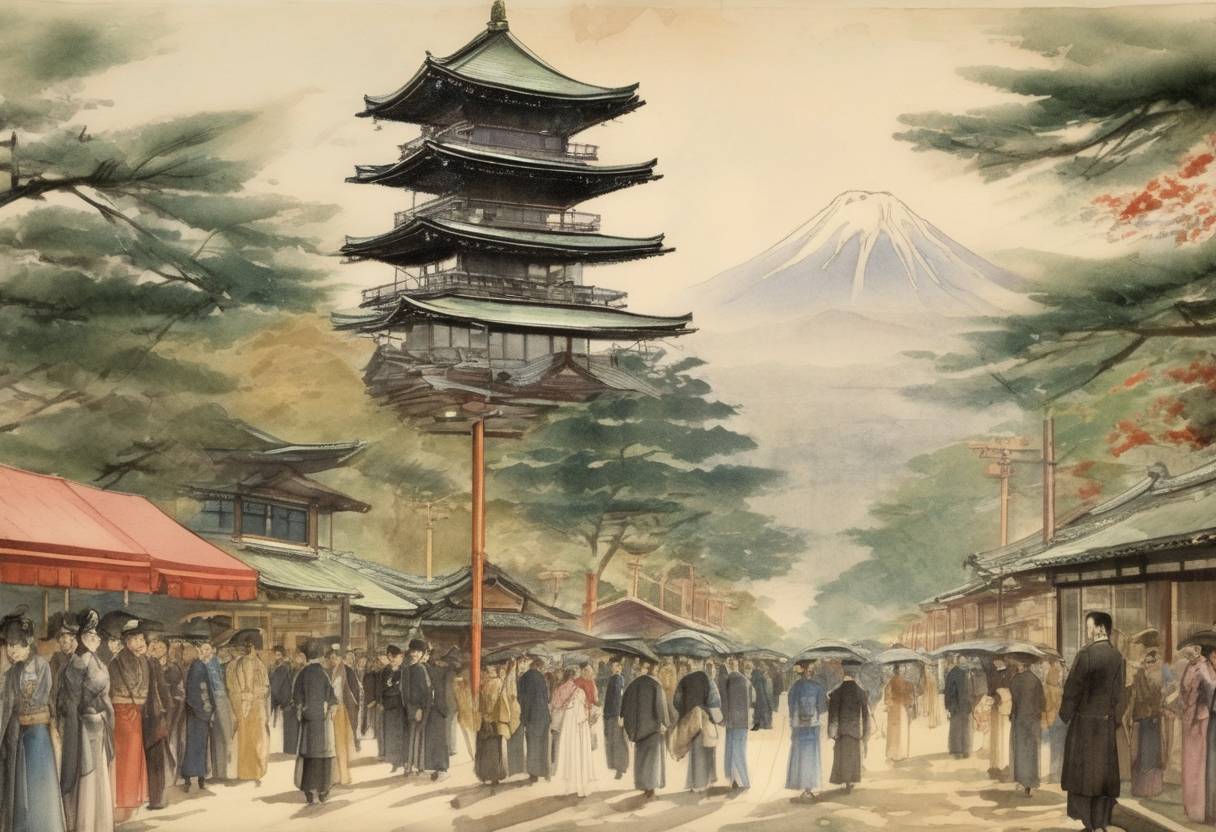
On November 29, 1890, the Meiji Constitution officially came into effect in Japan, marking a significant transformation in the nation’s political landscape. This event established a form of constitutional monarchy, which played a crucial role in Japan’s modernization efforts during the Meiji Era.
The Meiji Restoration of 1868 marked the beginning of Japan’s rapid transformation from a feudal society to a modern state. The restoration dismantled the Tokugawa shogunate, restoring imperial rule under Emperor Meiji. The new leadership was determined to strengthen Japan and prevent Western colonization by adopting Western political, military, and technological advancements.
The drafting of the Meiji Constitution was heavily influenced by European models, particularly the Prussian Constitution. Ito Hirobumi, a key figure in the Meiji government, led a delegation to Europe to study various constitutional systems. Upon returning, Ito and his team worked meticulously to draft a constitution that would balance Western political ideals with Japan’s unique cultural and historical context.
Emperor’s Authority: The constitution established the Emperor as the sovereign ruler, with significant powers, including command over the military and the ability to dissolve the Diet (parliament).
Bicameral Legislature: The Imperial Diet was created, consisting of two houses: the House of Peers and the House of Representatives. While the Diet had legislative powers, its authority was limited, and the Emperor retained significant control.
Civil Rights: The constitution guaranteed certain civil liberties, such as freedom of speech and assembly, but these rights were subject to limitations by law.
Cabinet and Prime Minister: The constitution introduced a cabinet system, with ministers appointed by the Emperor. The Prime Minister, also appointed by the Emperor, was responsible for leading the government.
The implementation of the Meiji Constitution was a pivotal moment in Japan’s history. It laid the foundation for Japan’s emergence as a modern state and a major world power. The constitution facilitated the centralization of power, enabling the government to implement reforms that propelled Japan’s industrialization and military expansion.
However, the constitution also had its limitations. The Emperor’s extensive powers and the restricted role of the Diet meant that true democratic governance was not fully realized. This concentration of power would later contribute to the rise of militarism in Japan during the early 20th century.
The Meiji Constitution remained in effect until the end of World War II, when it was replaced by the current Japanese Constitution in 1947. The legacy of the Meiji Constitution is a testament to Japan’s complex journey towards modernization and its efforts to balance tradition with innovation.
Source: en.wikipedia.org