The Battle of Aratus: June 7, 555
555 · Aratus, Italy
The Battle of Aratus took place, where Byzantine forces under General Narses defeated the Ostrogoths, contributing to the Byzantine reconquest of Italy.
September 1, 0550
The Battle of Taginae, also known as the Battle of Busta Gallorum, took place during the Gothic War between the Byzantine Empire and the Ostrogothic Kingdom. The Byzantine forces, led by General Narses, defeated the Ostrogoths, marking a significant victory for the Byzantines in their efforts to reclaim Italy.
Taginae, Italy | Byzantine Empire
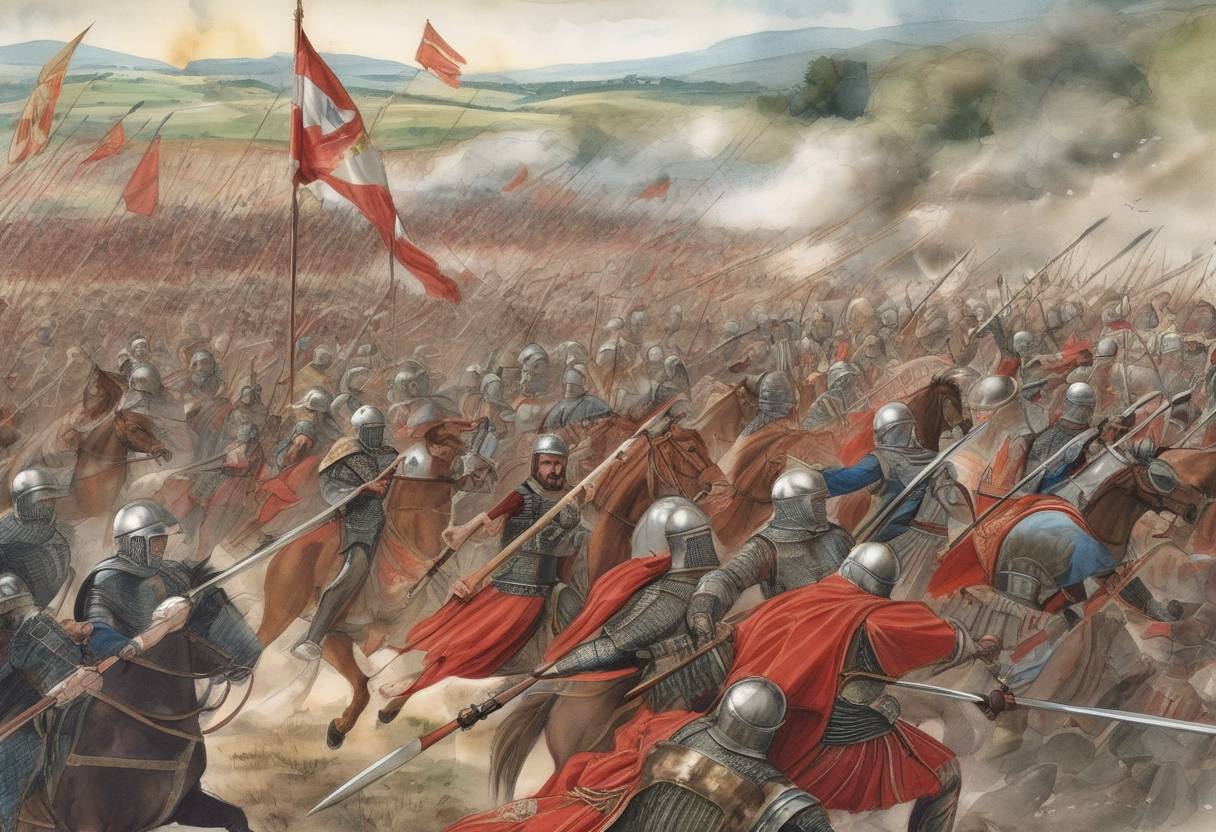
The Battle of Taginae, also known as the Battle of Busta Gallorum, was a pivotal engagement during the Gothic War, which took place between the Byzantine Empire and the Ostrogothic Kingdom. This battle occurred in the summer of 552, not 550, marking a significant victory for the Byzantine forces under the command of General Narses.
The Gothic War (535–554): This conflict was part of the Byzantine Emperor Justinian I’s ambitious campaign to reconquer the western territories of the former Roman Empire. The war aimed to restore Roman control over Italy, which had been under Ostrogothic rule since the fall of the Western Roman Empire.
Byzantine Strategy: Under the leadership of General Belisarius and later Narses, the Byzantines sought to weaken the Ostrogothic hold on Italy through a series of military campaigns. By 552, the Byzantines had already made significant inroads, capturing key cities and territories.
Location: The battle took place near Taginae, in the region of Umbria, central Italy. The exact location is often associated with the area known as Busta Gallorum.
Forces Involved:
The Engagement: Narses employed a strategic formation, using his infantry to form a strong defensive line while cavalry units were positioned on the flanks. The Ostrogoths, underestimating the Byzantine tactical arrangement, launched a frontal assault. Narses’ forces held firm, and the Byzantine cavalry executed a decisive flanking maneuver, enveloping the Ostrogothic forces.
Byzantine Victory: The battle resulted in a decisive victory for the Byzantines. King Totila was killed during the engagement, which significantly demoralized the Ostrogothic forces.
Aftermath: The defeat at Taginae marked a turning point in the Gothic War. With the Ostrogothic leadership in disarray, the Byzantines were able to continue their campaign, eventually leading to the fall of the Ostrogothic Kingdom.
Historical Significance: The victory at Taginae was crucial in Justinian’s efforts to restore Roman authority in the West. It paved the way for the eventual Byzantine reconquest of Italy, although the region would continue to face challenges from other groups, such as the Lombards, in the following decades.
The Battle of Taginae exemplifies the strategic military prowess of the Byzantine Empire under Justinian I and highlights the complexities of the Gothic War, a conflict that reshaped the political landscape of Italy during the 6th century.
Source: en.wikipedia.org