Women of Greece Granted the Right to Vote in National Elections
1952 · Athens, Greece
The women of Greece are granted the right to vote in national elections, marking a significant step in the country's progress towards gender equality.
November 25, 1973
Greek dictator George Papadopoulos was ousted in a military coup led by Brigadier General Dimitrios Ioannidis.
Athens, Greece | Greek military
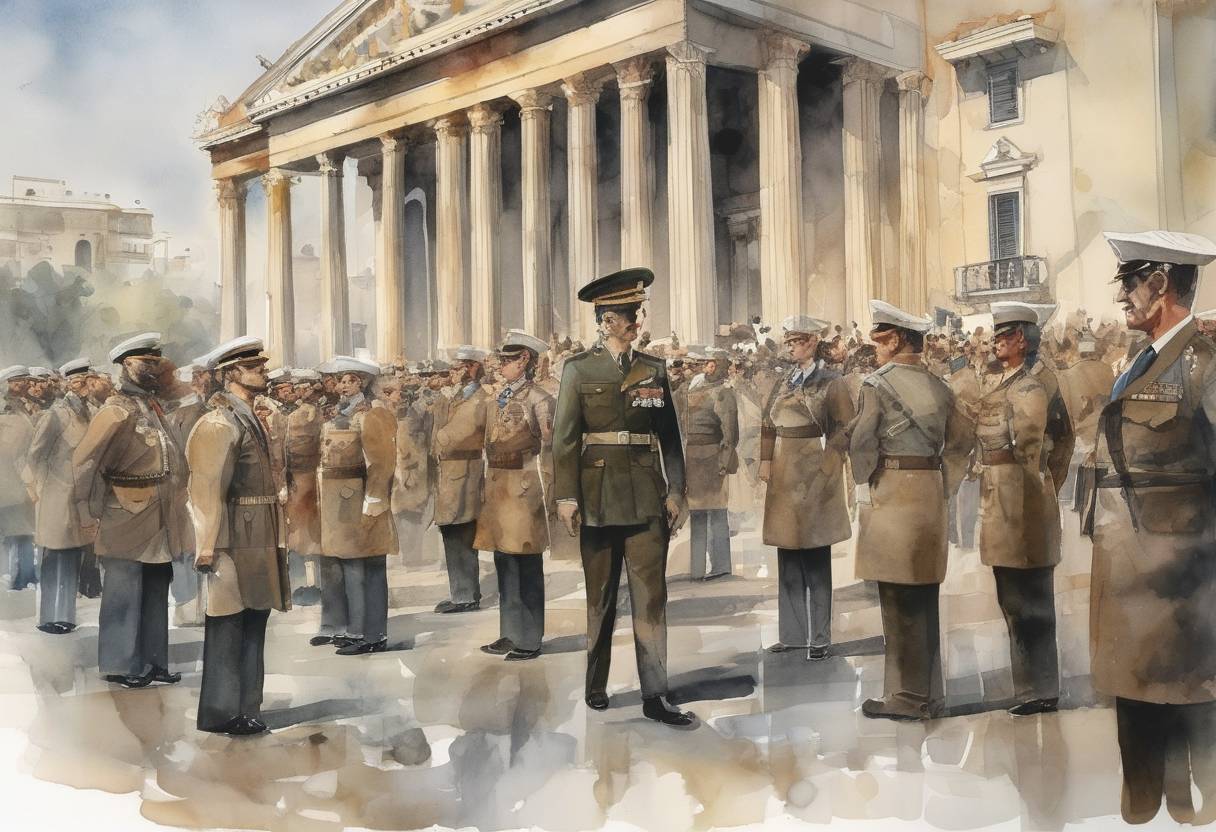
On November 25, 1973, a significant political shift occurred in Greece when George Papadopoulos, the head of the military junta that had been ruling the country since 1967, was ousted in a coup led by Brigadier General Dimitrios Ioannidis. This event marked a pivotal moment in Greek history, as it signaled the end of Papadopoulos’s authoritarian regime and set the stage for further political changes in Greece.
George Papadopoulos came to power through a military coup on April 21, 1967, which established a repressive regime known as the “Regime of the Colonels.” Under Papadopoulos’s leadership, Greece experienced severe political repression, censorship, and human rights abuses. The junta justified its rule by claiming it was necessary to prevent a communist takeover.
In the early 1970s, Papadopoulos attempted to legitimize his regime by introducing limited political reforms. In 1973, he declared Greece a republic, abolishing the monarchy, and appointed himself as the President. However, these moves did little to quell domestic unrest or gain international legitimacy.
The coup against Papadopoulos was orchestrated by Brigadier General Dimitrios Ioannidis, a hardline member of the junta who was dissatisfied with Papadopoulos’s attempts at reform. Ioannidis, who had significant influence within the military and security forces, viewed Papadopoulos’s policies as too lenient and believed they threatened the stability of the regime.
On November 25, 1973, Ioannidis and his supporters executed a swift and bloodless coup. Papadopoulos was arrested and removed from power. Ioannidis, however, chose to remain behind the scenes, installing General Phaedon Gizikis as the new head of state, while he wielded real power as the head of the military police.
The ousting of Papadopoulos did not lead to immediate democratization. Instead, Ioannidis’s regime continued the repressive policies of its predecessor, maintaining strict control over political life in Greece. However, the regime’s inability to effectively govern and its mishandling of the Cyprus crisis in 1974 eventually led to its downfall.
The events of November 25, 1973, are significant as they marked the beginning of the end for the military junta in Greece. The regime’s collapse in 1974 paved the way for the restoration of democracy, known as the Metapolitefsi, and the establishment of the Third Hellenic Republic.
In summary, the coup led by Dimitrios Ioannidis against George Papadopoulos was a critical juncture in Greek history, highlighting the internal divisions within the junta and setting the stage for Greece’s eventual transition to democracy.
Source: en.wikipedia.org