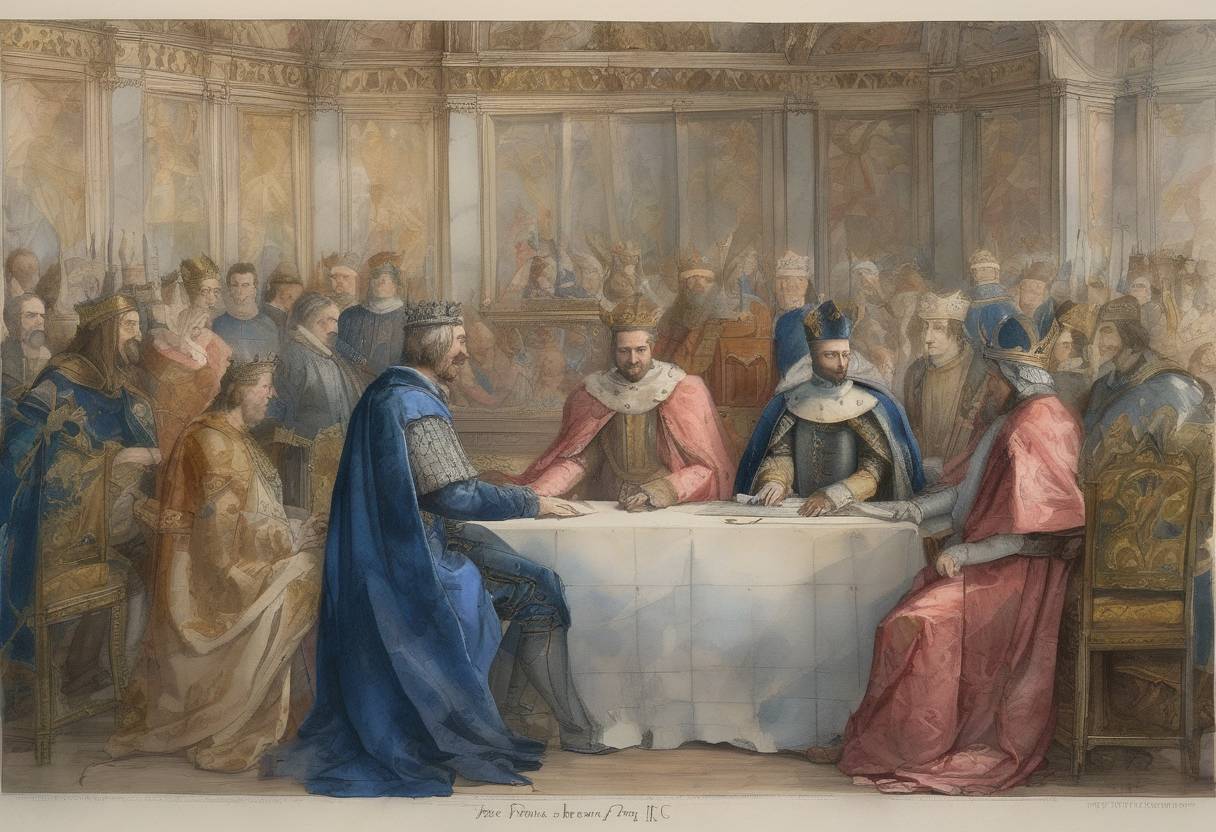
The Treaty of Paris (1259)
On December 4, 1259, the Treaty of Paris was signed between King Louis IX of France and King Henry III of England. This treaty marked the end of a series of conflicts between the two nations, which had been ongoing since the early 13th century. The agreement was a significant diplomatic achievement, aiming to resolve territorial disputes and establish a more stable relationship between the two kingdoms.
Context and Background
The roots of the conflict between England and France can be traced back to the Norman Conquest of England in 1066, which led to English monarchs holding significant territories in France. By the 12th century, the Angevin Empire, under the rule of the English crown, included vast lands in France, such as Normandy, Anjou, and Aquitaine. This dual allegiance created tensions with the French crown, which sought to consolidate its control over these regions.
The conflict intensified during the reign of King John of England, who lost Normandy and other territories to King Philip II of France in the early 13th century. Subsequent attempts by English monarchs to reclaim these lands led to ongoing hostilities.
Key Provisions of the Treaty
The Treaty of Paris in 1259 was a compromise that sought to address these territorial disputes:
Territorial Concessions: King Henry III of England agreed to renounce claims to Normandy, Anjou, Maine, and Poitou, effectively acknowledging French sovereignty over these regions. In return, he retained control over the Duchy of Aquitaine, albeit as a vassal to the French king.
Homage and Fealty: Henry III agreed to pay homage to Louis IX for the lands he held in France, acknowledging the French king’s overlordship. This was a significant gesture, symbolizing a formal recognition of the hierarchical relationship between the two monarchs.
Marriage Alliances and Peace: The treaty also included provisions for marriage alliances and mutual support, aiming to foster a lasting peace between the two nations.
Aftermath and Significance
The Treaty of Paris was a pivotal moment in the medieval history of England and France. It temporarily eased tensions and allowed both kingdoms to focus on internal consolidation and other external challenges. For Louis IX, the treaty was part of his broader strategy to strengthen the French monarchy and expand its influence.
However, the peace established by the treaty was not permanent. Disputes over the interpretation and implementation of the treaty’s terms eventually contributed to renewed conflicts, including the Hundred Years’ War in the 14th century.
In the broader historical context, the Treaty of Paris exemplifies the complex feudal relationships and territorial politics of medieval Europe. It highlights the intricate balance of power and diplomacy that characterized the interactions between European monarchies during this period.