Exsurge Domine and Martin Luther: June 15, 1520
1520 · Rome, Papal States
Pope Leo X issued the papal bull Exsurge Domine, threatening Martin Luther with excommunication unless he recanted his 95 Theses.
April 16, 1521
Martin Luther arrived in Worms for the Diet of Worms, where he was asked to recant his teachings.
Worms, Holy Roman Empire | Catholic Church
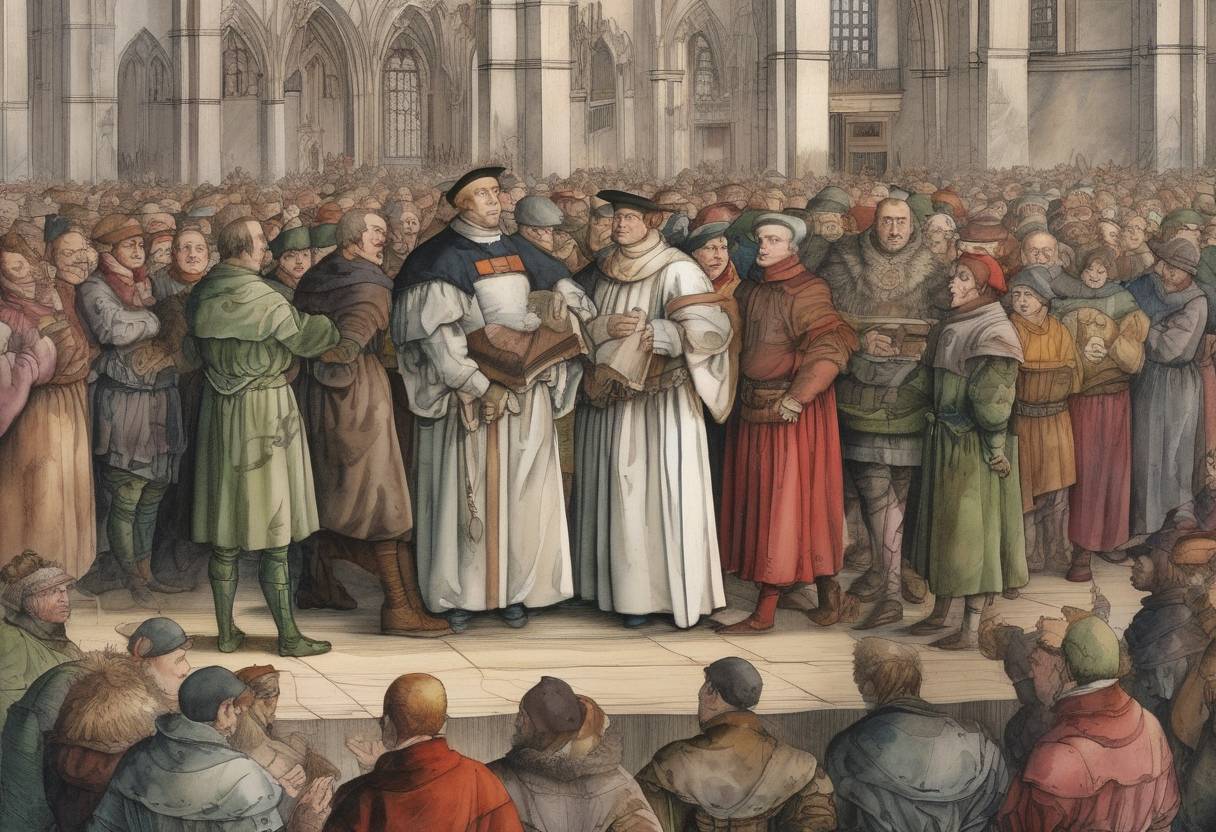
On April 16, 1521, Martin Luther, the seminal figure of the Protestant Reformation, arrived in Worms, Germany, to appear before the Diet of Worms. This assembly was a critical moment in the history of the Reformation and marked a significant confrontation between Luther and the Holy Roman Empire.
The Diet of Worms was convened by Emperor Charles V to address the growing religious and political upheaval caused by Luther’s teachings. Martin Luther, a German monk and theologian, had sparked widespread controversy with his 95 Theses in 1517, which criticized the Catholic Church’s practices, particularly the sale of indulgences. His ideas rapidly spread across Europe, challenging the authority of the Church and leading to calls for reform.
Summons to Worms: Luther was summoned to the Diet to answer charges of heresy. Despite the risks, he decided to attend, under the protection of a safe conduct pass granted by Emperor Charles V.
Arrival in Worms: Luther’s arrival in Worms was met with great anticipation. He was greeted by large crowds, indicative of his growing influence and the public’s interest in the proceedings.
The Hearings: On April 17 and 18, Luther stood before the assembly. He was asked to recant his writings and teachings. Luther famously requested time to consider his response, and on the following day, he delivered his resolute stance, refusing to recant unless convinced by Scripture or clear reason.
Luther’s defense was a pivotal moment. He declared, “Unless I am convinced by the testimony of the Scriptures or by clear reason… I am bound by the Scriptures I have quoted and my conscience is captive to the Word of God. I cannot and will not recant anything, since it is neither safe nor right to go against conscience. May God help me. Amen.”
Edict of Worms: Following Luther’s refusal to recant, the Diet issued the Edict of Worms on May 25, 1521, declaring Luther an outlaw and heretic, banning his writings, and calling for his arrest.
Protection and Legacy: Despite the edict, Luther was protected by Frederick the Wise, Elector of Saxony, who arranged for his “kidnapping” and safe passage to Wartburg Castle. There, Luther continued his work, including translating the New Testament into German, making the scriptures more accessible to the general populace.
Impact on the Reformation: Luther’s stand at Worms solidified his role as a central figure in the Protestant Reformation. His defiance against ecclesiastical authority inspired others to challenge the Church, leading to significant religious, social, and political changes across Europe.
The Diet of Worms was a defining moment in the history of Christianity, symbolizing the struggle for religious reform and the assertion of individual conscience against institutional authority. Luther’s actions and the subsequent Reformation had profound and lasting impacts on the religious landscape of Europe and the world.
Source: en.wikipedia.org