1972 · Moon, N/A
Eugene Cernan and Harrison Schmitt, astronauts of Apollo 17, became the last humans to walk on the Moon. Apollo 17 was the final mission of NASA's Apollo program.
November 19, 1969
Apollo 12 astronauts Charles Conrad and Alan Bean became the third and fourth humans to walk on the Moon.
Moon, United States | NASA
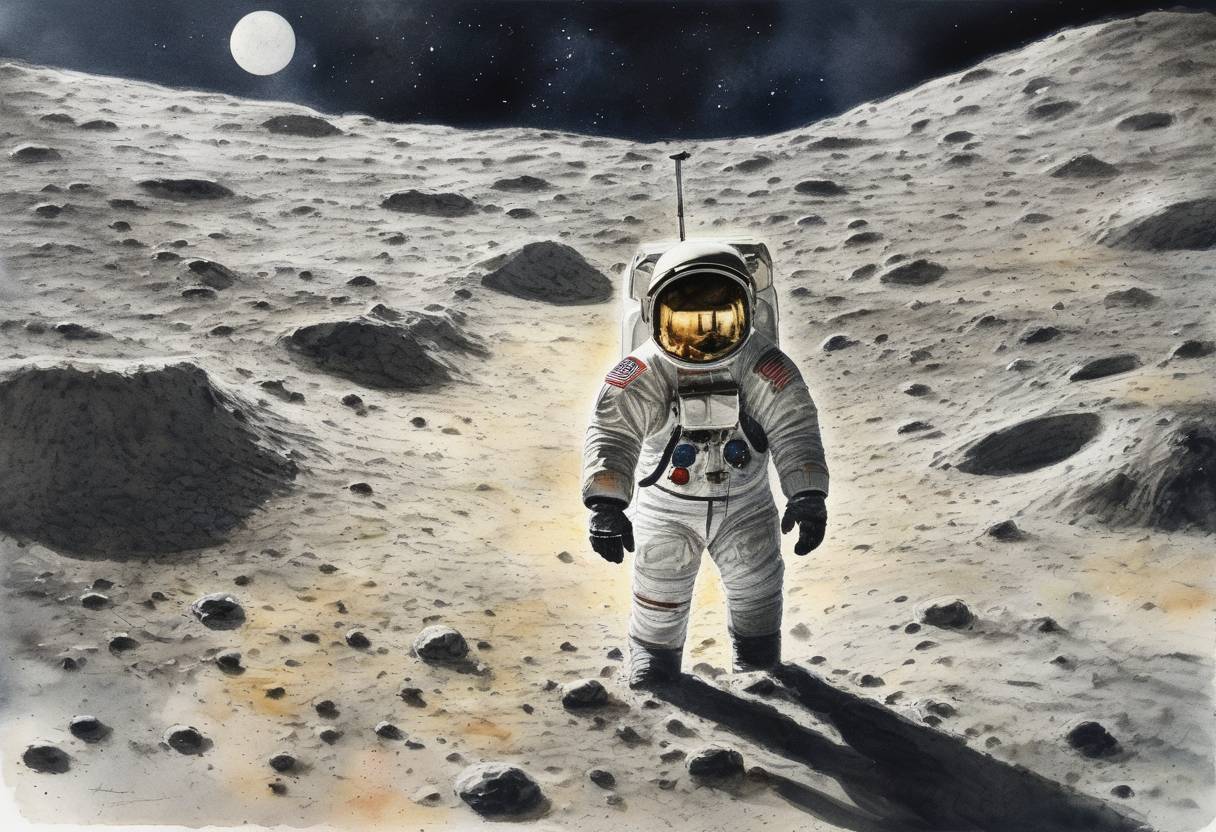
On November 19, 1969, astronauts Charles “Pete” Conrad and Alan L. Bean became the third and fourth humans to walk on the Moon during NASA’s Apollo 12 mission. This mission marked the United States’ second successful manned lunar landing, following the historic Apollo 11 mission.
Apollo 12 was the sixth crewed mission in the Apollo program and the second to land on the Moon. The mission’s primary objectives were to perform detailed scientific lunar exploration and to demonstrate precision landing capabilities. The mission launched on November 14, 1969, from Kennedy Space Center in Florida, aboard a Saturn V rocket.
Launch and Journey to the Moon: The Apollo 12 mission began with a successful launch, despite being struck by lightning twice shortly after liftoff. The crew, composed of Commander Charles Conrad, Command Module Pilot Richard F. Gordon, and Lunar Module Pilot Alan L. Bean, quickly resolved the electrical issues and continued their journey to the Moon.
Lunar Landing: On November 19, 1969, the Lunar Module, named “Intrepid,” successfully landed in the Ocean of Storms (Mare Insularum), a vast lunar mare. The landing site was chosen for its scientific interest and proximity to the Surveyor 3 spacecraft, which had landed on the Moon in April 1967.
Moonwalks: Conrad and Bean conducted two moonwalks, spending a total of about 7 hours and 45 minutes on the lunar surface. During these extravehicular activities (EVAs), they deployed scientific instruments, collected lunar samples, and retrieved parts of the Surveyor 3 spacecraft for analysis back on Earth.
Scientific Contributions: Apollo 12 significantly contributed to lunar science by deploying the Apollo Lunar Surface Experiments Package (ALSEP), which included instruments to measure seismic activity, solar wind, and magnetic fields. The mission also returned 34 kilograms (75 pounds) of lunar samples, providing valuable insights into the Moon’s composition and geological history.
Precision Landing: The mission demonstrated the ability to perform precision landings on the Moon, a critical capability for future lunar exploration. The successful retrieval of parts from Surveyor 3 also provided data on the effects of long-term exposure to the lunar environment.
The success of Apollo 12 reinforced the feasibility of sustained lunar exploration and paved the way for subsequent Apollo missions. The mission’s achievements in scientific exploration and technical precision contributed to a deeper understanding of the Moon and advanced the United States’ space exploration capabilities.
In summary, Apollo 12’s successful lunar landing and exploration on November 19, 1969, marked a significant milestone in human space exploration, showcasing the potential for detailed scientific study and technological advancement in space missions.
Source: en.wikipedia.org