End of U.S. Military Mission in Iraq - December 17, 2011
2011 · Baghdad, Iraq
The United States formally ended its military mission in Iraq with a ceremony in Baghdad, marking the withdrawal of the last U.S. troops from the country.
December 18, 2011
The last convoy of U.S. troops left Iraq, marking the official end of the U.S. military mission in the country after nearly nine years of war.
Baghdad, Iraq | United States Armed Forces
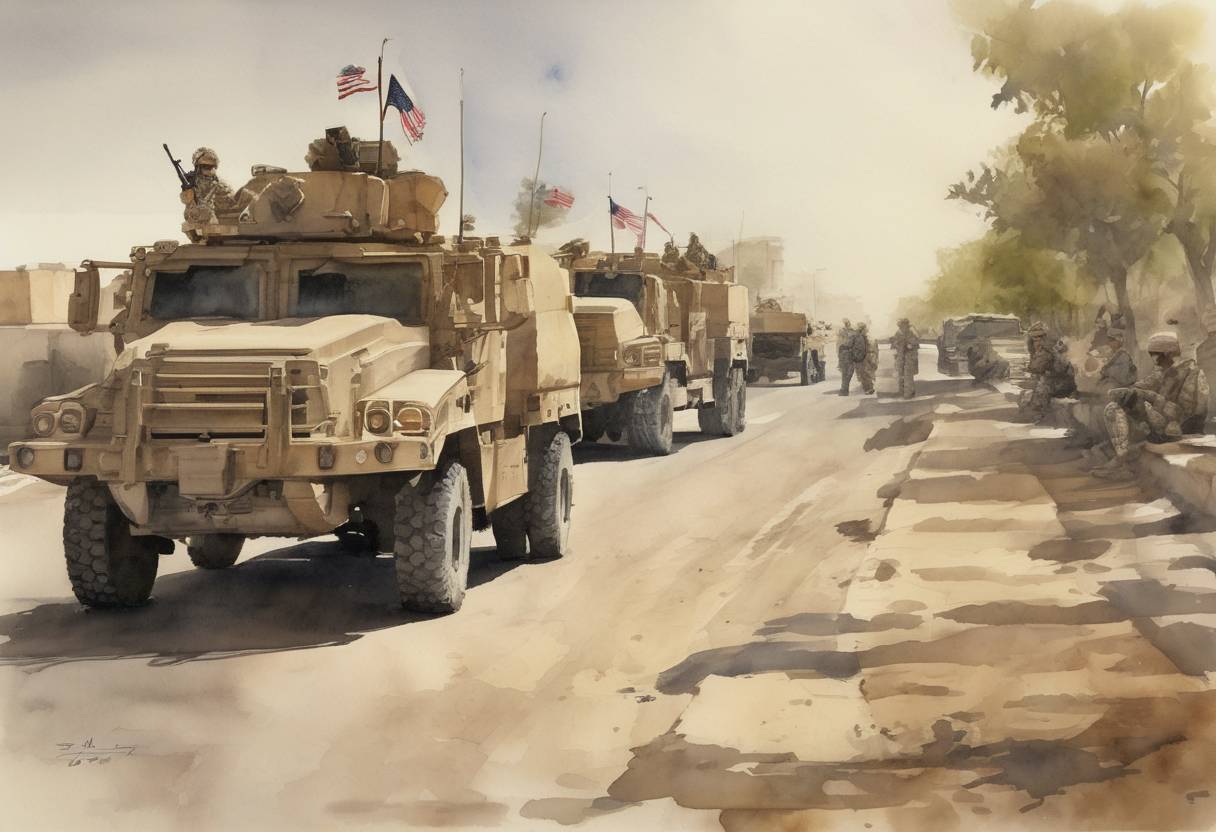
On December 18, 2011, the last convoy of U.S. troops departed Iraq, marking the official end of the U.S. military mission in the country. This event concluded nearly nine years of military involvement that began with the invasion of Iraq in March 2003.
The U.S. invasion of Iraq in 2003 was primarily justified by the Bush administration on the grounds that Iraq possessed weapons of mass destruction (WMDs) and posed a threat to international security. The invasion led to the toppling of Saddam Hussein’s regime. However, subsequent investigations revealed that Iraq did not possess WMDs, leading to significant controversy and debate over the legitimacy of the war.
2003-2006: Insurgency and Sectarian Violence: Following the initial military success, Iraq descended into a period of insurgency and sectarian violence. Various militant groups, including Al-Qaeda in Iraq, emerged, leading to widespread instability.
2007: The Surge: In response to escalating violence, President George W. Bush announced a “surge” of additional U.S. troops in 2007. This strategy aimed to stabilize the country and reduce violence, which saw some success in the following years.
2008: U.S.-Iraq Status of Forces Agreement (SOFA): In December 2008, the U.S. and Iraq signed the Status of Forces Agreement, which set a deadline for the withdrawal of U.S. forces by the end of 2011.
2009-2011: Drawdown: Under President Barack Obama, the U.S. began a gradual drawdown of troops, transitioning security responsibilities to Iraqi forces.
On December 18, 2011, the last convoy of U.S. troops crossed the border into Kuwait, effectively ending the U.S. military mission in Iraq. This withdrawal was a significant milestone, fulfilling the terms of the 2008 SOFA and President Obama’s commitment to end the war.
Political and Security Challenges: The withdrawal left Iraq to face significant political and security challenges. Sectarian tensions persisted, and the Iraqi government struggled to maintain stability.
Rise of ISIS: The power vacuum and ongoing instability contributed to the rise of the Islamic State of Iraq and Syria (ISIS), which captured large swathes of territory in Iraq and Syria in 2014.
U.S. Involvement Resumes: In response to the threat posed by ISIS, the U.S. and its allies launched a military campaign in 2014 to support Iraqi forces and combat the extremist group.
The U.S. military mission in Iraq had profound implications for U.S. foreign policy, regional dynamics in the Middle East, and global perceptions of American military interventions. The war’s human and financial costs, along with its controversial justifications, continue to influence debates on military engagement and international relations.
The withdrawal on December 18, 2011, marked the end of a significant chapter in U.S. and Iraqi history, with lasting impacts on both nations and the broader region.
Source: www.reuters.com