The Mountain Meadows Massacre: September 7, 1857
1857 · Mountain Meadows, United States
The Mountain Meadows massacre begins in Utah, where a group of Mormon settlers and Paiute Native Americans attack an immigrant wagon train.
September 11, 1857
The Mountain Meadows Massacre took place in Utah Territory, where a wagon train was attacked by Mormon militia.
Mountain Meadows, United States | Mormon militia
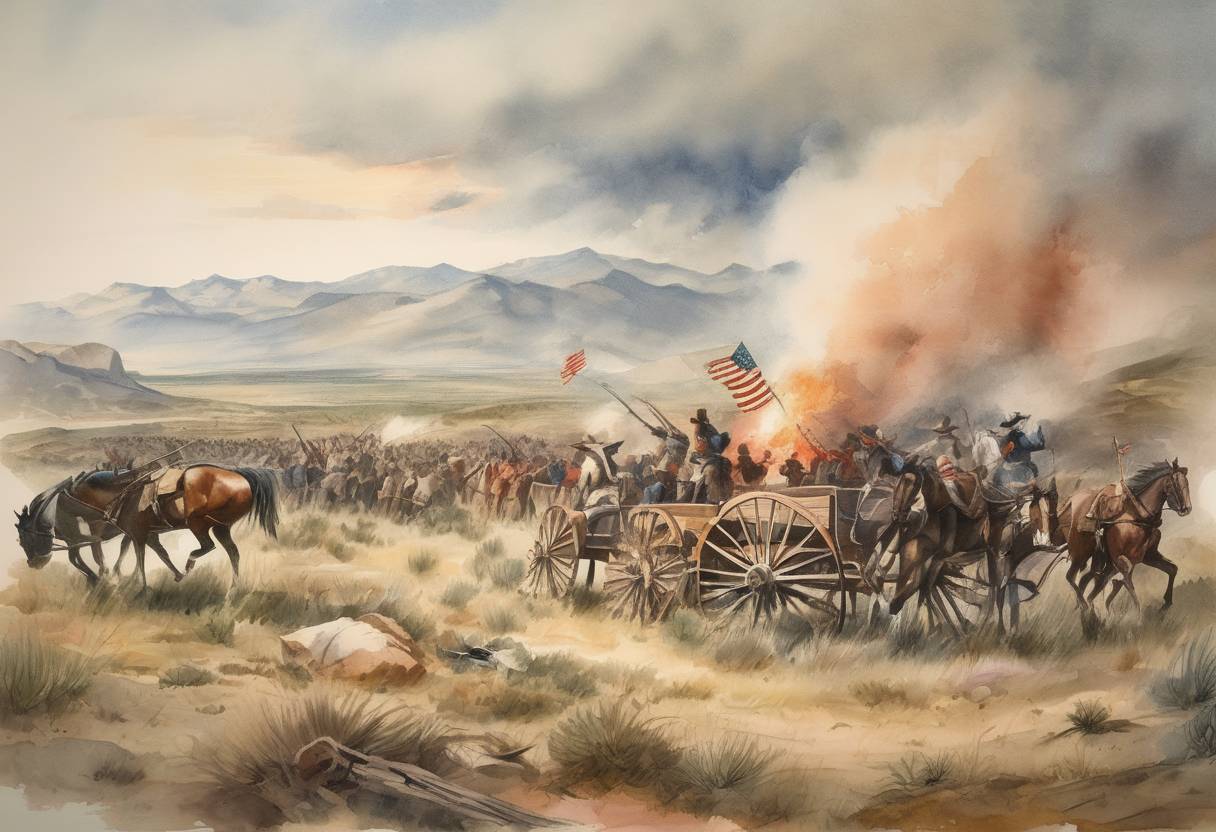
The Mountain Meadows Massacre was a tragic and complex event that occurred on September 11, 1857, in the Utah Territory. This incident involved the violent attack on the Baker-Fancher emigrant wagon train by a group of Mormon militia members and Paiute Native Americans. The massacre resulted in the deaths of approximately 120 men, women, and children, marking one of the darkest moments in the history of the American West.
The Utah War: The massacre took place during a period of heightened tension known as the Utah War (1857-1858), a conflict between Mormon settlers in the Utah Territory and the United States federal government. The U.S. government, under President James Buchanan, had dispatched troops to the territory to address reports of rebellion and lawlessness among the Mormons, led by Brigham Young.
Religious and Social Tensions: The Mormons, who had settled in Utah to escape persecution, were wary of outsiders and federal intervention. The arrival of the U.S. Army exacerbated fears of invasion and persecution, leading to a defensive and hostile posture among the settlers.
The Baker-Fancher Party: The emigrant group, known as the Baker-Fancher party, was traveling from Arkansas to California. They were well-equipped and had a large number of cattle, which may have attracted attention and resentment from local settlers.
Initial Attack: On September 7, 1857, the wagon train was attacked while camped at Mountain Meadows, a fertile valley in southern Utah. The initial assault was carried out by a group of Mormon militia disguised as Native Americans, with the intent to blame the attack on local tribes.
Siege and Deception: The emigrants defended themselves for several days. On September 11, under a flag of truce, the militia, led by local Mormon leader John D. Lee, convinced the emigrants to surrender their weapons in exchange for safe passage. Once disarmed, the emigrants were ambushed and killed.
Survivors: Only 17 children, all under the age of seven, were spared and taken in by local Mormon families. These children were later returned to relatives in Arkansas.
Delayed Justice: The massacre was initially covered up, with blame placed on Native Americans. It wasn’t until 1874 that John D. Lee was arrested and tried for his role in the massacre. He was convicted and executed in 1877.
Impact on Mormon Relations: The massacre severely damaged the reputation of the Mormon community and strained relations with the U.S. government. It highlighted the deep mistrust and isolation felt by the Mormons and contributed to the eventual integration of Utah into the United States.
Historical Reflection: The Mountain Meadows Massacre remains a subject of historical study and reflection, symbolizing the tragic consequences of fear, isolation, and religious conflict. It serves as a reminder of the complexities of frontier life and the often-violent interactions between settlers and indigenous peoples.
The Mountain Meadows Massacre is a sobering chapter in American history, illustrating the potential for violence when cultural and religious tensions are left unchecked.
Source: en.wikipedia.org