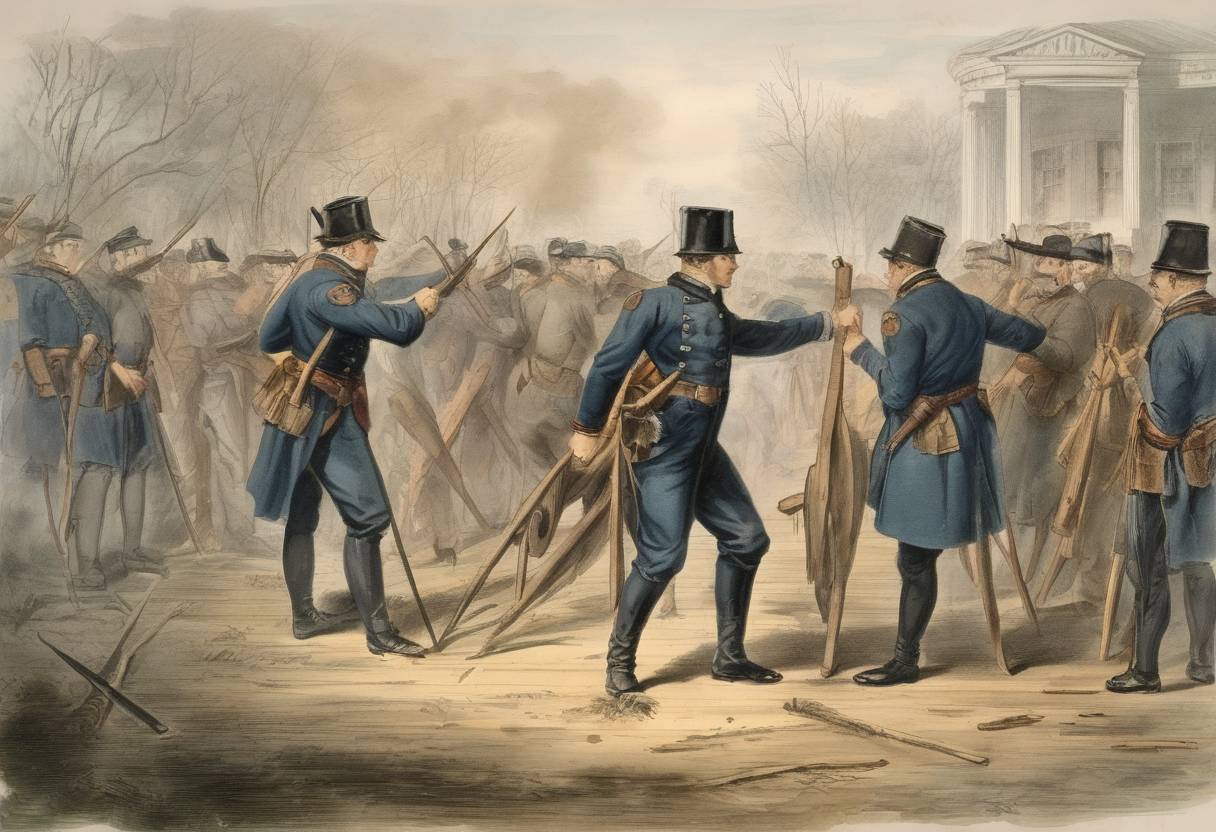
Abolition of Flogging in the United States Army - August 5, 1861
On August 5, 1861, the United States Army officially abolished flogging as a form of punishment. This decision marked a significant shift in military discipline practices and reflected broader changes in societal attitudes towards corporal punishment.
Historical Context
Flogging, a form of corporal punishment involving the beating of a person with a whip or rod, was a common disciplinary measure in military forces worldwide. In the United States, it was used to maintain order and discipline among soldiers. However, by the mid-19th century, the practice began to face increasing criticism.
Factors Leading to Abolition
Changing Attitudes: The 19th century saw a growing movement against corporal punishment, both in civilian and military contexts. Humanitarian reformers argued that flogging was inhumane and degrading.
Military Reform: The U.S. military was undergoing significant reforms during this period, aiming to professionalize the army and improve the treatment of soldiers. The abolition of flogging was part of broader efforts to modernize military discipline.
Legislative Action: The decision to abolish flogging was influenced by legislative actions and public opinion. Congress played a crucial role in enacting reforms that reflected the changing societal values.
The Decision
The abolition of flogging was formalized through legislative action. On August 5, 1861, Congress passed an act that officially prohibited the use of flogging as a disciplinary measure in the U.S. Army. This decision was part of a series of reforms implemented during the early years of the Civil War, aimed at improving the conditions and morale of soldiers.
Aftermath and Significance
Improved Soldier Morale: The abolition of flogging was well-received by soldiers, as it eliminated a punishment that was widely viewed as harsh and unjust. This change contributed to improved morale and discipline within the ranks.
Precedent for Further Reforms: The decision set a precedent for further reforms in military discipline and the treatment of soldiers. It was part of a broader trend towards more humane and effective disciplinary practices.
Reflection of Societal Change: The abolition of flogging in the military mirrored broader societal changes, as the United States moved towards more progressive views on punishment and human rights.
In summary, the abolition of flogging in the U.S. Army on August 5, 1861, was a pivotal moment in military history, reflecting changing attitudes towards corporal punishment and contributing to the professionalization and modernization of military discipline.