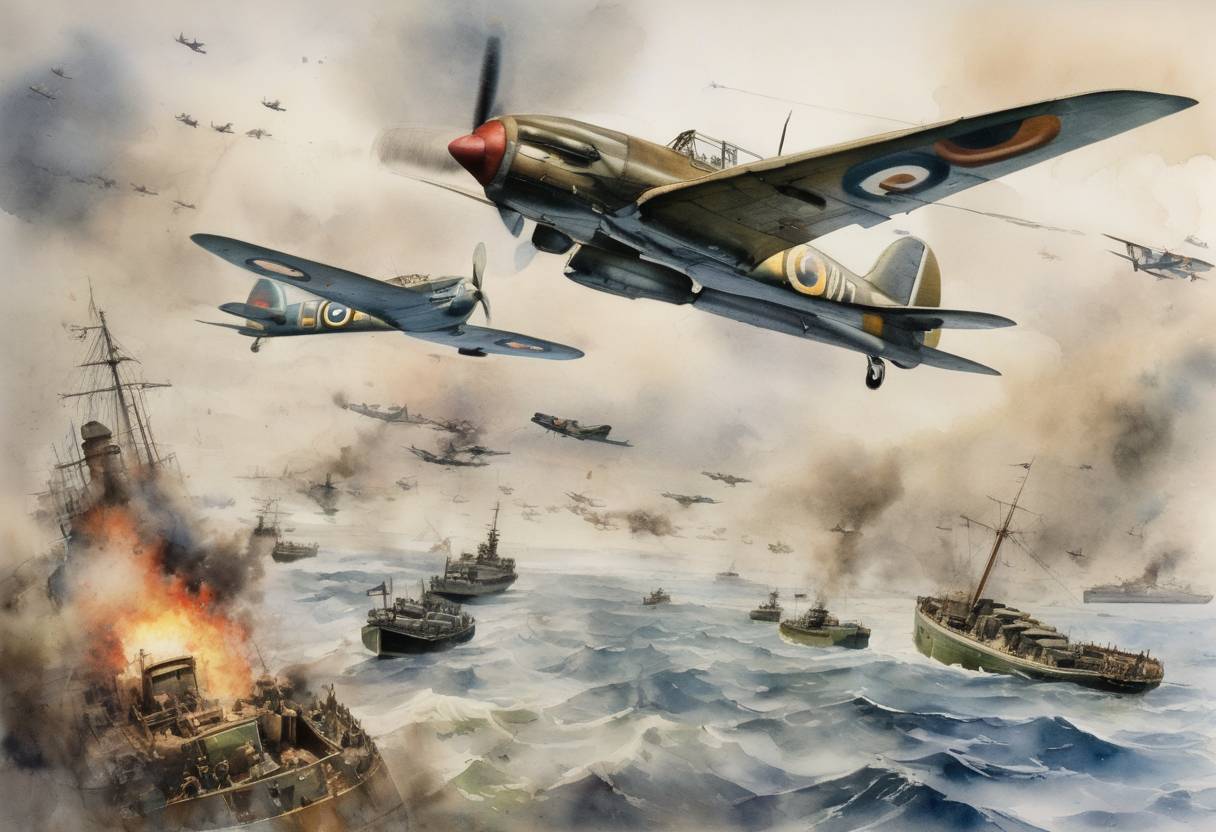
The Battle of Britain Begins: July 10, 1940
On July 10, 1940, the Battle of Britain commenced as the German Luftwaffe initiated a series of aerial assaults on British shipping convoys in the English Channel. This marked the beginning of a critical phase in World War II, as Nazi Germany sought to gain air superiority over the United Kingdom in preparation for a potential invasion, codenamed Operation Sea Lion.
Context and Prelude
- Fall of France: Prior to the Battle of Britain, Germany had swiftly defeated France in June 1940, leaving Britain as the primary opposition to Nazi expansion in Western Europe.
- Strategic Importance: Control of the skies over Britain was deemed essential by Adolf Hitler and the German High Command to ensure the success of any invasion plans.
- British Preparedness: The Royal Air Force (RAF), under the leadership of Air Chief Marshal Sir Hugh Dowding, had been preparing for such an eventuality, focusing on the development of radar technology and the production of fighter aircraft like the Supermarine Spitfire and Hawker Hurricane.
Key Events on July 10, 1940
- Initial Attacks: The Luftwaffe targeted British shipping convoys in the English Channel, aiming to disrupt supply lines and draw the RAF into battle.
- Tactics: The German strategy involved using bombers escorted by fighter planes to attack convoys, hoping to weaken British defenses and morale.
- RAF Response: The RAF’s Fighter Command responded by deploying squadrons to intercept the German aircraft, marking the beginning of a prolonged aerial conflict.
Significance and Consequences
- Air Superiority: The Battle of Britain was the first major military campaign fought entirely by air forces. Its outcome would determine control of the skies over Britain.
- British Resilience: Despite being outnumbered, the RAF’s effective use of radar, strategic deployment, and the bravery of its pilots played a crucial role in resisting the German onslaught.
- Turning Point: The failure of the Luftwaffe to achieve air superiority by the end of October 1940 forced Hitler to postpone and eventually abandon Operation Sea Lion, marking a significant turning point in the war.
Broader Historical Impact
- Morale Boost: The successful defense of Britain provided a significant morale boost to the Allied forces and demonstrated that Nazi Germany could be resisted.
- Strategic Shift: The battle shifted the focus of the war, leading to increased Allied cooperation and the eventual entry of the United States into the conflict following the attack on Pearl Harbor in December 1941.
The Battle of Britain remains a defining moment in World War II history, symbolizing the resilience and determination of the British people and their armed forces in the face of overwhelming odds.