Assassination of Emperor Elagabalus and Ascension of Severus Alexander
222 · Rome, Roman Empire
Emperor Elagabalus is assassinated by the Praetorian Guard during a revolt. His cousin, Severus Alexander, is proclaimed emperor.
March 28, 0193
The Roman Emperor Pertinax is assassinated by the Praetorian Guard, leading to the auction of the imperial throne.
Rome, Roman Empire | Praetorian Guard
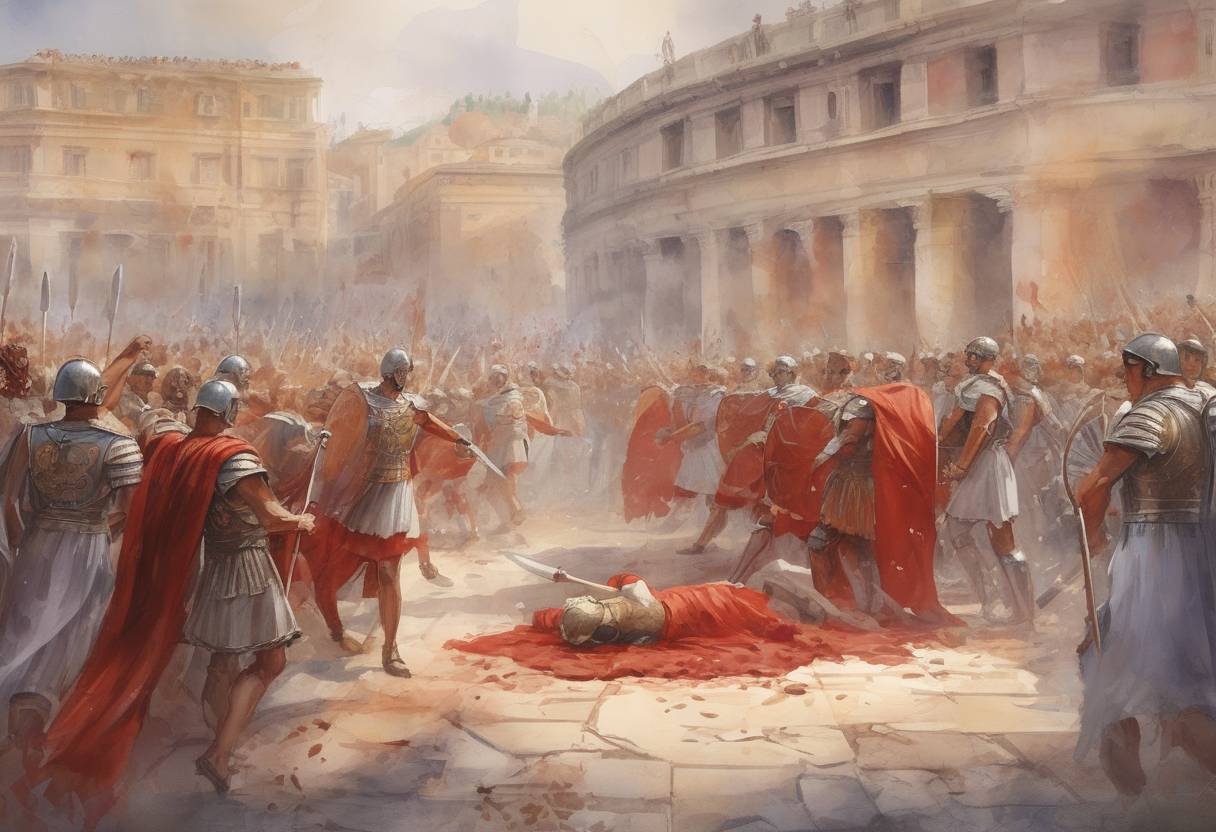
On March 28, 193 AD, a significant and tumultuous event unfolded in the Roman Empire: the assassination of Emperor Pertinax by the Praetorian Guard. This event marked a dramatic episode in the Year of the Five Emperors, a period characterized by political instability and rapid changes in leadership.
Pertinax, born on August 1, 126 AD, was a distinguished military officer and senator who ascended to the throne following the assassination of Emperor Commodus on December 31, 192 AD. Pertinax was chosen by the Senate due to his reputation for integrity and competence. His reign, however, was short-lived, lasting only 86 days.
Upon becoming emperor, Pertinax faced numerous challenges, including a depleted treasury and a demoralized army. He attempted to implement financial reforms and restore discipline within the military, which included curbing the excesses of the Praetorian Guard. These measures, while necessary, were unpopular among the guardsmen, who had grown accustomed to the privileges and wealth they enjoyed under Commodus.
On March 28, 193 AD, a faction of the Praetorian Guard, dissatisfied with Pertinax’s reforms and his failure to meet their financial demands, stormed the imperial palace. Despite attempts to negotiate, Pertinax was unable to placate the guards, and he was brutally assassinated. His death underscored the volatile power dynamics within the Roman Empire and the significant influence of the Praetorian Guard.
Following Pertinax’s assassination, the Praetorian Guard took the unprecedented step of auctioning off the imperial throne to the highest bidder. Didius Julianus, a wealthy senator, emerged victorious by offering a substantial sum to the guards. His purchase of the throne highlighted the extent of corruption and the erosion of traditional Roman values.
Didius Julianus’s reign was short and fraught with challenges. His ascension through bribery further destabilized the empire and incited outrage among the Roman populace and military. This discontent paved the way for Septimius Severus, a prominent general, to march on Rome, overthrow Julianus, and establish the Severan dynasty.
The assassination of Pertinax and the subsequent auction of the imperial throne are emblematic of the broader issues facing the Roman Empire during this period, including political corruption, military influence, and the fragility of imperial authority. These events contributed to the ongoing crisis of the third century, which saw further political fragmentation and economic decline.
Source: en.wikipedia.org