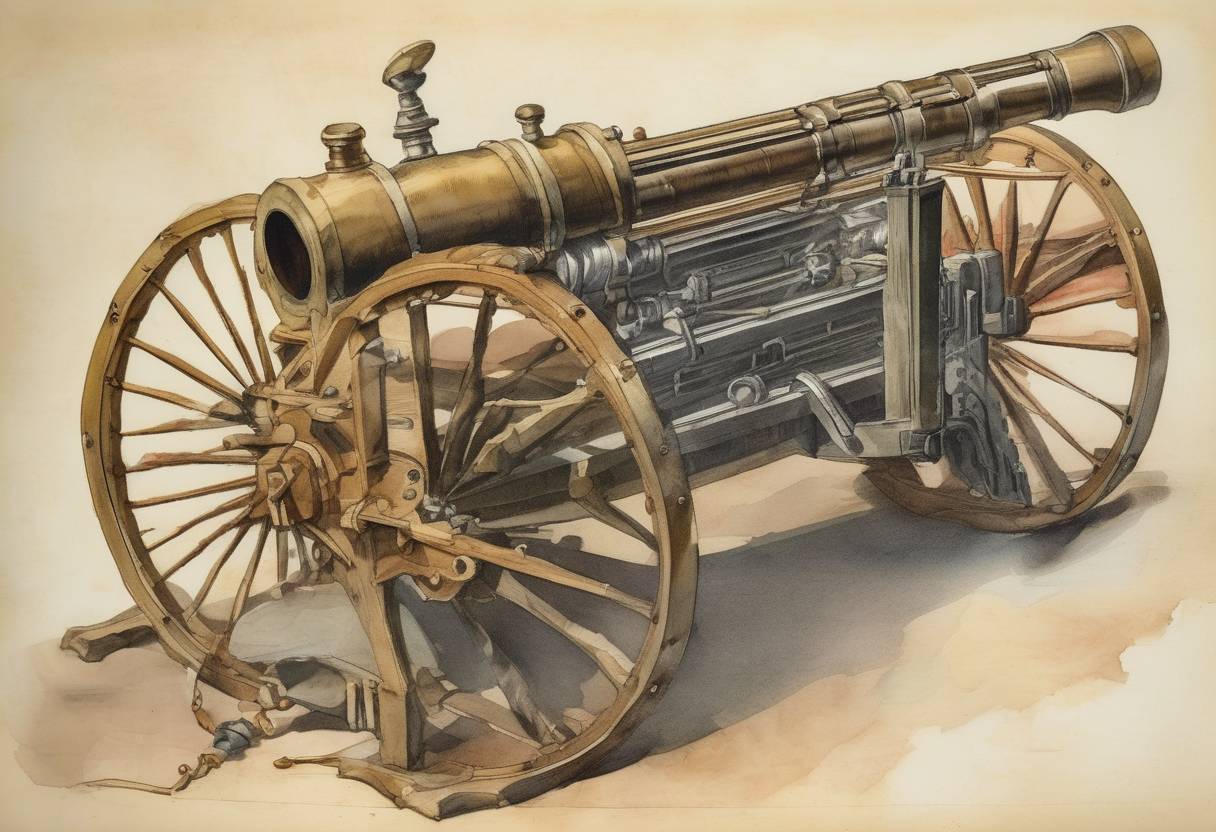
The Invention of the Puckle Gun
On May 15, 1718, James Puckle, a London lawyer and inventor, was granted a patent for what is considered the world’s first machine gun, known as the Puckle Gun. This invention marked a significant development in the history of firearms and military technology.
Background
James Puckle was an English lawyer, writer, and inventor. His interest in mechanics and engineering led him to design a firearm that could fire multiple rounds without the need for reloading after each shot. The early 18th century was a period of significant military innovation, with European powers seeking advancements that could provide an edge in warfare.
The Puckle Gun
The Puckle Gun was a flintlock revolver, designed to be mounted on a tripod. It featured a revolving cylinder that could hold multiple pre-loaded chambers, allowing it to fire shots in rapid succession. The gun was capable of firing nine shots per minute, a remarkable rate for the time, considering that most firearms were single-shot muskets.
Design and Features
- Caliber and Ammunition: The Puckle Gun was designed to fire two types of ammunition. One was round bullets intended for use against Christian enemies, and the other was square bullets, which Puckle claimed were more damaging and intended for use against Muslim Turks. This reflects the period’s religious and cultural conflicts.
- Mechanism: The gun’s mechanism involved a manually operated crank that rotated the cylinder, aligning each chamber with the barrel for firing.
- Portability: Although it was not easily portable due to its size and the need for a tripod, it was designed to be used on ships or fortifications.
Historical Significance
The Puckle Gun is often cited as an early precursor to modern machine guns. While it was not widely adopted or successful in its time, it demonstrated the potential for rapid-fire weaponry and influenced future developments in firearms technology.
Challenges and Limitations
- Production and Adoption: The Puckle Gun faced challenges in production and was not widely adopted by military forces. Its complex mechanism and the limitations of contemporary manufacturing technology hindered its widespread use.
- Impact on Warfare: Despite its limited use, the Puckle Gun represented a conceptual leap in the design of firearms, foreshadowing the development of more efficient and reliable machine guns in the 19th and 20th centuries.
Conclusion
James Puckle’s invention of the Puckle Gun on May 15, 1718, stands as a notable moment in the history of military technology. While it did not achieve significant success during its time, it laid the groundwork for future innovations in automatic weaponry, highlighting the continuous quest for advancements in military capabilities.