The Death of King Louis XIV: The Sun King's Final Day
1715 · Versailles, France
King Louis XIV of France, known as the Sun King, dies after a reign of 72 years, the longest of any major European monarch.
May 6, 1682
Louis XIV of France moved his court to the Palace of Versailles, symbolizing the absolute monarchy and the centralization of power in France.
Versailles, France | French monarchy
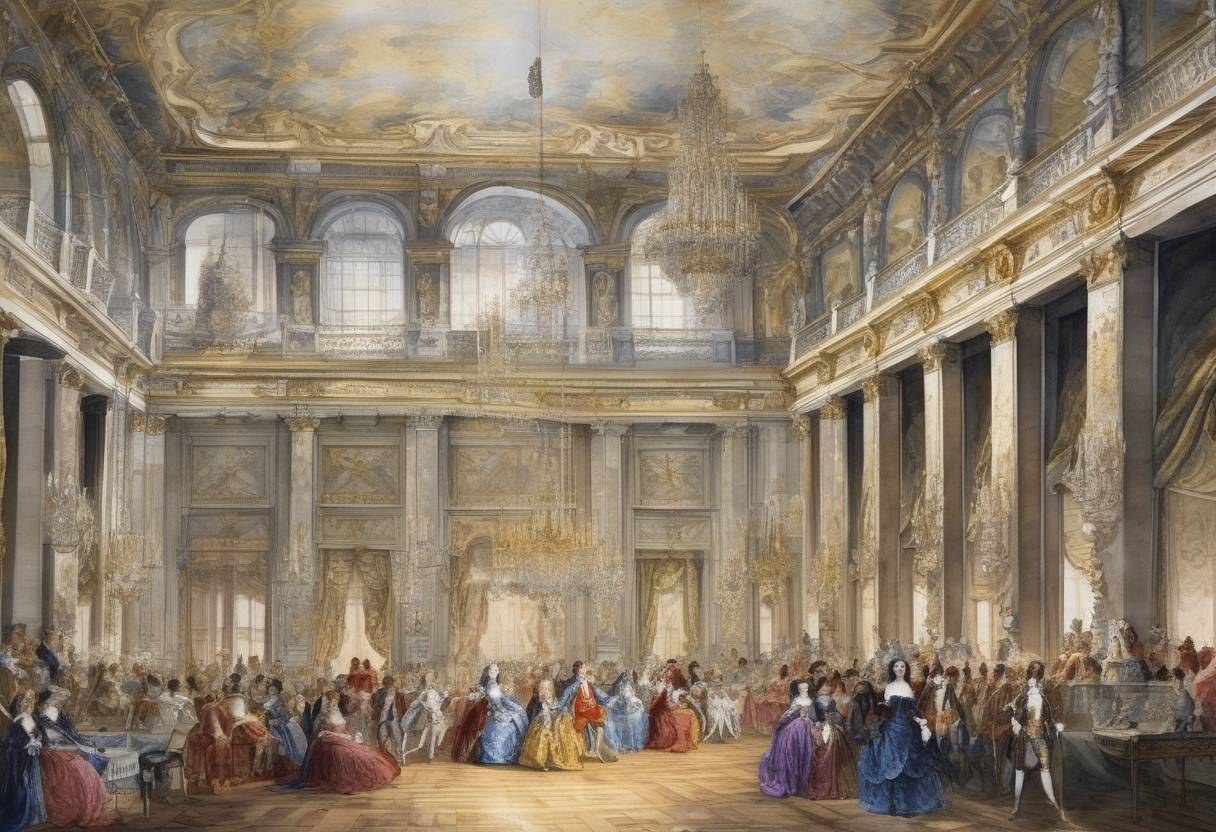
On May 6, 1682, King Louis XIV of France officially moved his court to the Palace of Versailles, marking a significant moment in French history that symbolized the absolute monarchy and the centralization of power. This strategic relocation was not merely a change of residence but a calculated political move that had profound implications for the governance and cultural landscape of France.
Louis XIV’s Reign: Known as the “Sun King,” Louis XIV ascended to the throne in 1643 and ruled until his death in 1715. His reign is noted for its length and the consolidation of royal power.
Construction of Versailles: Originally a hunting lodge built by Louis XIII, Louis XIV began transforming Versailles into a grand palace in 1661. The expansion was part of his vision to create a symbol of his absolute power and the glory of France.
Centralization of Power: By moving the court to Versailles, Louis XIV aimed to centralize the government and diminish the power of the nobility. The palace became the epicenter of political life, where nobles were required to spend time, thus keeping them under the king’s watchful eye.
The Fronde: A series of civil wars in France between 1648 and 1653, known as the Fronde, highlighted the instability and the threat posed by the nobility to royal authority. This experience influenced Louis XIV’s decision to control the nobility more tightly.
Development of Versailles: Over two decades, Louis XIV invested heavily in the construction and embellishment of Versailles, employing renowned architects like Louis Le Vau and Jules Hardouin-Mansart, and artists such as Charles Le Brun.
Symbol of Absolute Monarchy: The relocation of the court on May 6, 1682, was a clear demonstration of Louis XIV’s absolute rule. Versailles was designed to reflect the king’s power and the grandeur of his reign.
Cultural and Political Hub: Versailles became the center of political power and cultural life in France. It hosted elaborate ceremonies, balls, and performances, reinforcing the king’s image as a patron of the arts and culture.
Control Over Nobility: By requiring the nobility to reside at Versailles, Louis XIV effectively reduced their power and influence, ensuring loyalty and diminishing potential threats to his authority.
Legacy of Versailles: The palace became a model of European absolutism and influenced other monarchies. It remained the royal residence until the French Revolution in 1789.
Cultural Flourishing: The court at Versailles became a beacon of French culture, art, and fashion, setting trends that spread across Europe.
The move to Versailles was a pivotal moment in the history of France, exemplifying the principles of absolute monarchy. It showcased the power and influence of Louis XIV and set a precedent for centralized governance that would impact France and other European nations for generations. The grandeur of Versailles remains a testament to the era’s architectural and cultural achievements, symbolizing both the zenith and the eventual challenges of monarchical rule in France.
Source: en.wikipedia.org