Coronation of Henry VI of England
1429 · London, England
Henry VI of England was crowned King of England at Westminster Abbey.
April 9, 1413
Henry V was crowned King of England at Westminster Abbey.
London, England | English monarchy
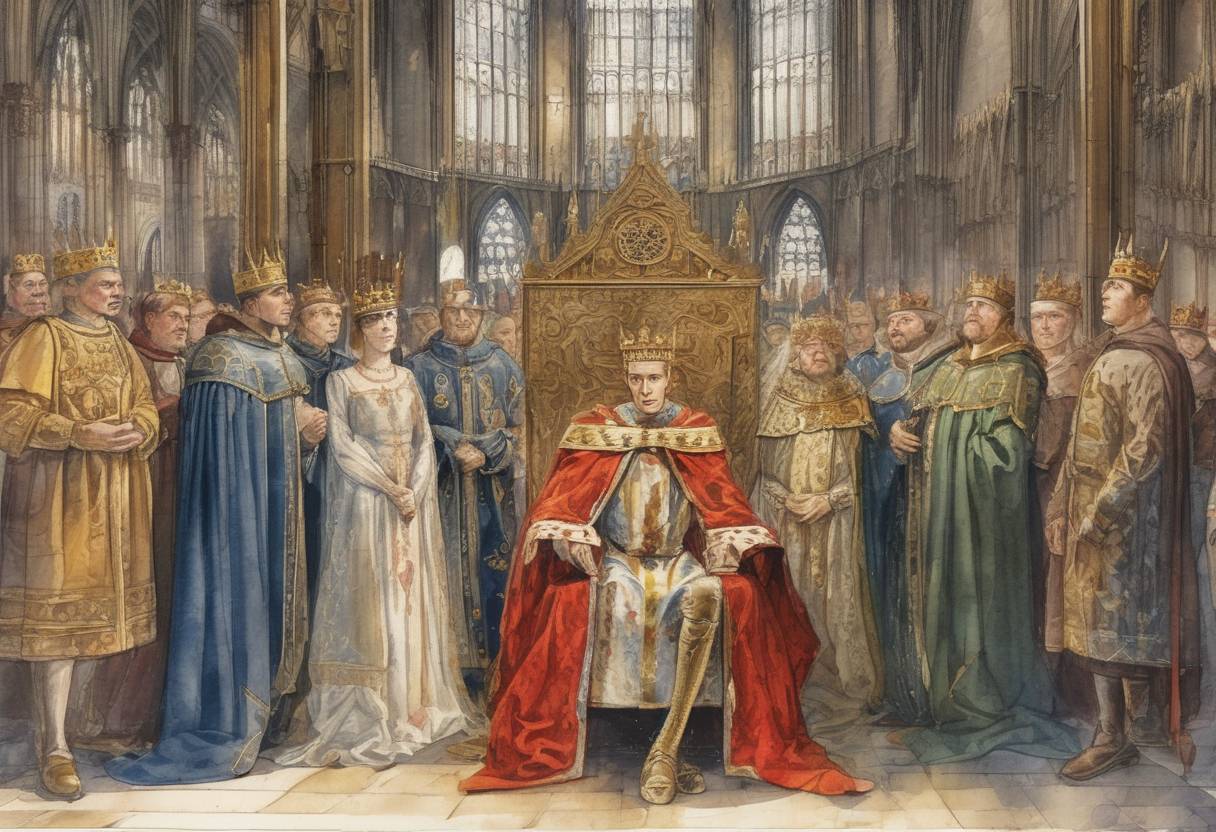
On April 9, 1413, Henry V was crowned King of England at Westminster Abbey, marking the beginning of a reign that would become renowned for its military successes and significant impact on English history.
Henry V was born on September 16, 1386, in Monmouth Castle, Wales, to Henry Bolingbroke (later Henry IV) and Mary de Bohun. His early life was shaped by the political turbulence of his father’s usurpation of the throne from Richard II in 1399, which established the Lancastrian dynasty.
Henry’s military prowess was evident from a young age. He played a crucial role in the Battle of Shrewsbury in 1403, where he was injured but demonstrated remarkable leadership. As Prince of Wales, he was involved in suppressing the Welsh rebellion led by Owain Glyndŵr and managing the volatile political landscape of the time.
Henry V ascended to the throne following the death of his father, Henry IV, on March 20, 1413. His coronation took place at Westminster Abbey, a traditional site for English coronations, symbolizing continuity and legitimacy. The ceremony was conducted with the customary grandeur, attended by nobles and dignitaries who pledged their allegiance to the new king.
Henry V’s reign is most famously associated with the Hundred Years’ War against France. His victory at the Battle of Agincourt in 1415 became legendary, showcasing his military acumen and boosting English morale. The Treaty of Troyes in 1420 further solidified his position, recognizing him as heir to the French throne.
Henry’s reign also saw efforts to strengthen the English monarchy and address domestic issues, including law and order and the administration of justice. His untimely death in 1422 at the age of 35 left a legacy of both military triumph and unresolved political challenges, as his infant son, Henry VI, succeeded him.
Henry V’s reign had a lasting impact on English and European history. His military campaigns and diplomatic maneuvers significantly influenced the course of the Hundred Years’ War. His leadership style and achievements have been romanticized in literature and drama, most notably in William Shakespeare’s play “Henry V,” which immortalizes his character and exploits.
In summary, Henry V’s coronation on April 9, 1413, marked the beginning of a pivotal era in English history, characterized by military success and efforts to consolidate royal power, leaving an enduring legacy that continues to capture the imagination of historians and the public alike.
Source: en.wikipedia.org