Napoleon's Retreat from Moscow: October 19, 1812
1812 · Moscow, Russia
Napoleon Bonaparte begins his retreat from Moscow after a failed invasion of Russia, marking a turning point in the Napoleonic Wars.
February 8, 1807
The Battle of Eylau was fought between Napoleon's Grande Armée and the Russian army, resulting in a bloody and inconclusive outcome.
Eylau, Prussia | French Empire
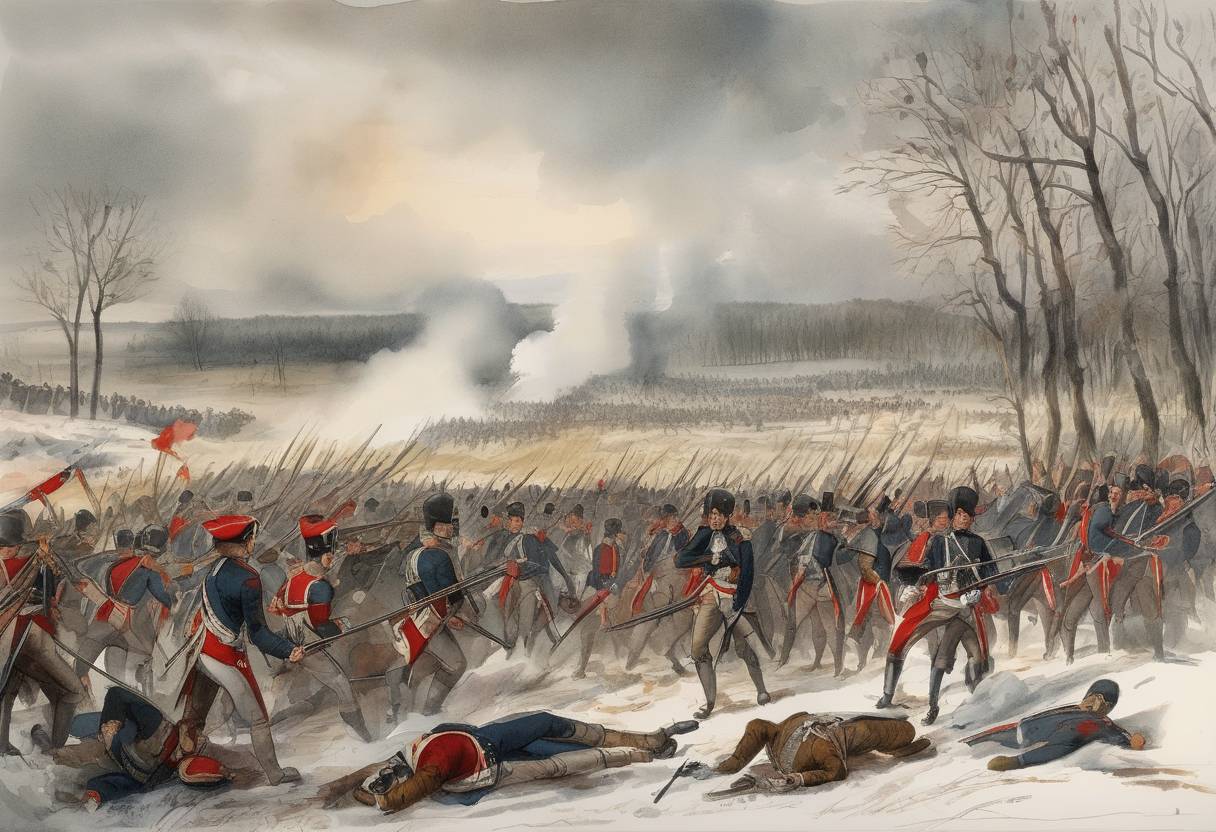
The Battle of Eylau, fought on February 8, 1807, was a significant engagement during the War of the Fourth Coalition, part of the Napoleonic Wars. This battle took place in the town of Eylau (present-day Bagrationovsk, Russia), located in East Prussia. It was a confrontation between Napoleon Bonaparte’s Grande Armée and the Russian army, commanded by General Levin August von Bennigsen.
War of the Fourth Coalition: This conflict involved major European powers, including Russia, Prussia, Britain, and Sweden, opposing Napoleon’s expanding French Empire. The coalition aimed to curtail Napoleon’s influence across Europe.
Strategic Importance: Eylau was strategically significant due to its location in East Prussia, a region that had become a focal point for military operations between the French and Russian forces.
Lead-up to the Battle: Prior to Eylau, Napoleon had achieved several victories, including the decisive Battle of Jena-Auerstedt in 1806. However, the harsh winter conditions and extended supply lines posed challenges for the French army.
Forces Involved: Napoleon commanded approximately 75,000 troops, while the Russian forces numbered around 67,000. The battle also saw the participation of a small contingent of Prussian troops allied with the Russians.
Course of the Battle: The battle commenced in the early hours of February 8 under severe winter conditions, with snow and freezing temperatures affecting both sides. The fighting was characterized by intense and brutal combat, with both armies suffering heavy casualties.
Key Moments:
Inconclusive Result: The Battle of Eylau ended without a clear victor. Both sides incurred significant losses, with estimates of casualties ranging from 25,000 to 40,000 combined.
Strategic Impact: Although the battle did not yield a decisive outcome, it marked one of the first instances where Napoleon’s forces were unable to achieve a clear victory, highlighting the resilience of the Russian army.
Subsequent Developments: The inconclusive nature of Eylau set the stage for further engagements between the French and Russian forces. The conflict continued until the Battle of Friedland in June 1807, where Napoleon secured a decisive victory, leading to the Treaty of Tilsit and a temporary peace with Russia.
The Battle of Eylau is remembered for its brutal conditions and high casualties, reflecting the harsh realities of Napoleonic warfare. It demonstrated the challenges Napoleon faced in maintaining his dominance over Europe and foreshadowed the difficulties he would encounter in future campaigns, particularly in Russia. The battle also underscored the determination of the Russian military, which would later play a crucial role in the eventual downfall of Napoleon.
Source: en.wikipedia.org