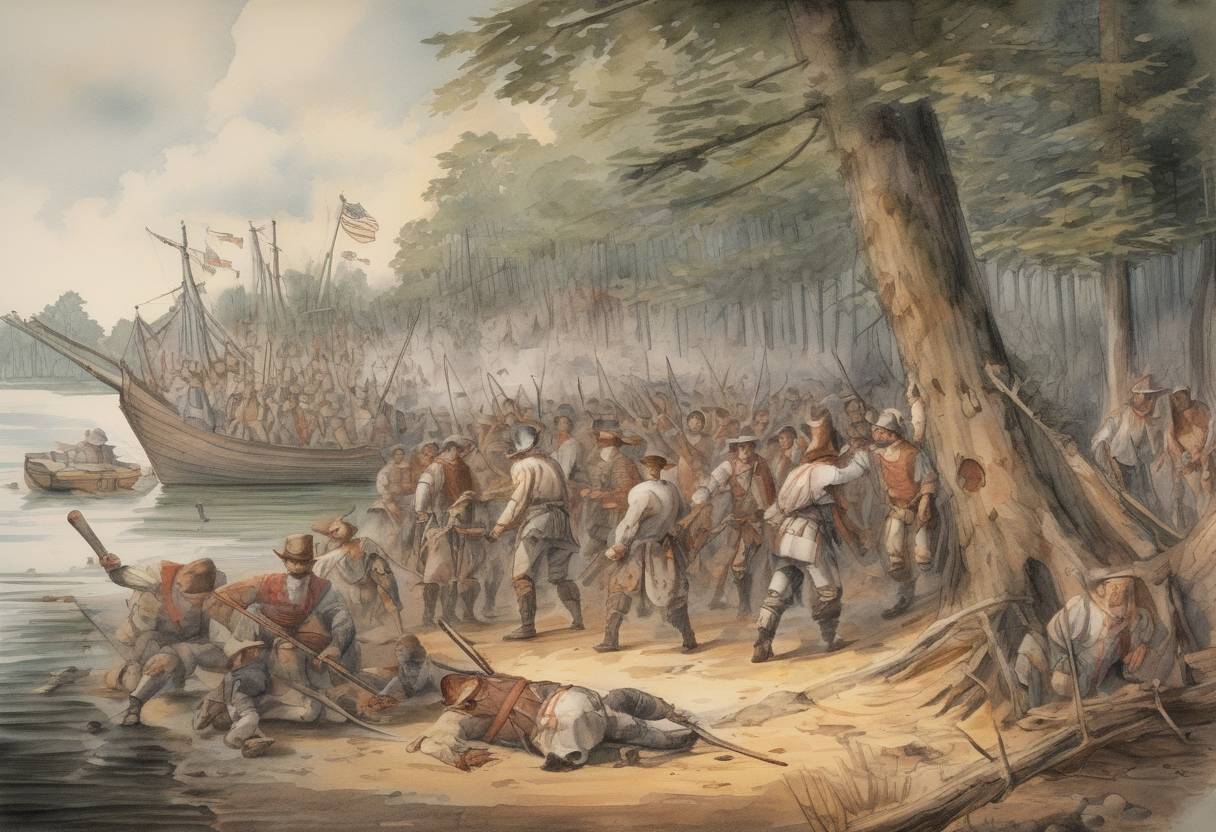
The Jamestown Massacre of March 22, 1622
On March 22, 1622, a significant and tragic event unfolded in the early history of English colonization in North America, known as the Jamestown Massacre. This event marked a pivotal moment in the relationship between English settlers and the indigenous peoples of the region.
Background
Jamestown, established in 1607, was the first permanent English settlement in North America. The colony, located in present-day Virginia, was founded by the Virginia Company of London. Initially, the settlers faced numerous challenges, including harsh conditions, disease, and food shortages. Relations with the local Powhatan Confederacy, a group of Algonquian-speaking tribes led by Chief Powhatan, were initially mixed, with periods of both cooperation and conflict.
Following the death of Chief Powhatan in 1618, his brother, Opechancanough, assumed leadership. Tensions between the settlers and the indigenous population increased as the English expanded their settlements and encroached on native lands.
The Massacre
On the morning of March 22, 1622, Opechancanough orchestrated a coordinated surprise attack against the English settlers. Algonquian warriors attacked the colony and its outlying plantations, killing 347 settlers, which accounted for about a third of the English population in the colony at the time. The attack was devastating and caught the settlers off guard, as many had been lulled into a false sense of security due to previous periods of relative peace.
Aftermath and Consequences
The massacre had profound and lasting effects on the Jamestown colony and its inhabitants:
Retaliation and Warfare: In response to the attack, the English settlers launched a series of retaliatory raids against the Powhatan Confederacy. This initiated a period of intermittent warfare that lasted for a decade, severely impacting both the settlers and the indigenous populations.
Shift in Colonial Policy: The massacre led to a shift in English colonial policy. The Virginia Company, which had been struggling financially, was dissolved in 1624, and Virginia became a royal colony under the direct control of the English crown. This change marked a significant turning point in the governance and expansion of English territories in North America.
Impact on Indigenous Relations: The event deepened mistrust and hostility between the English settlers and the indigenous peoples, setting a precedent for future conflicts as English colonization expanded.
Population and Settlement: Despite the heavy loss of life, the English continued to send more settlers to Virginia. The colony eventually recovered and expanded, but the massacre remained a stark reminder of the fragile and often violent nature of early colonial interactions.
Broader Historical Significance
The Jamestown Massacre is a critical event in the history of early American colonization. It highlights the complex and often contentious relationships between European settlers and Native American tribes. The massacre underscored the challenges of cultural misunderstandings, competition for resources, and the impact of colonial expansion on indigenous populations. This event set a pattern of conflict that would continue throughout the history of European colonization in North America.