Deposition of Charles the Fat on November 11, 887
887 · Frankfurt, East Francia
Charles the Fat, the last Carolingian Emperor, was deposed by the nobles of East Francia, leading to the eventual division of the Carolingian Empire.
June 13, 0823
Charles the Bald, who would later become King of West Francia and Holy Roman Emperor, was born.
Frankfurt, East Francia | Carolingian Empire
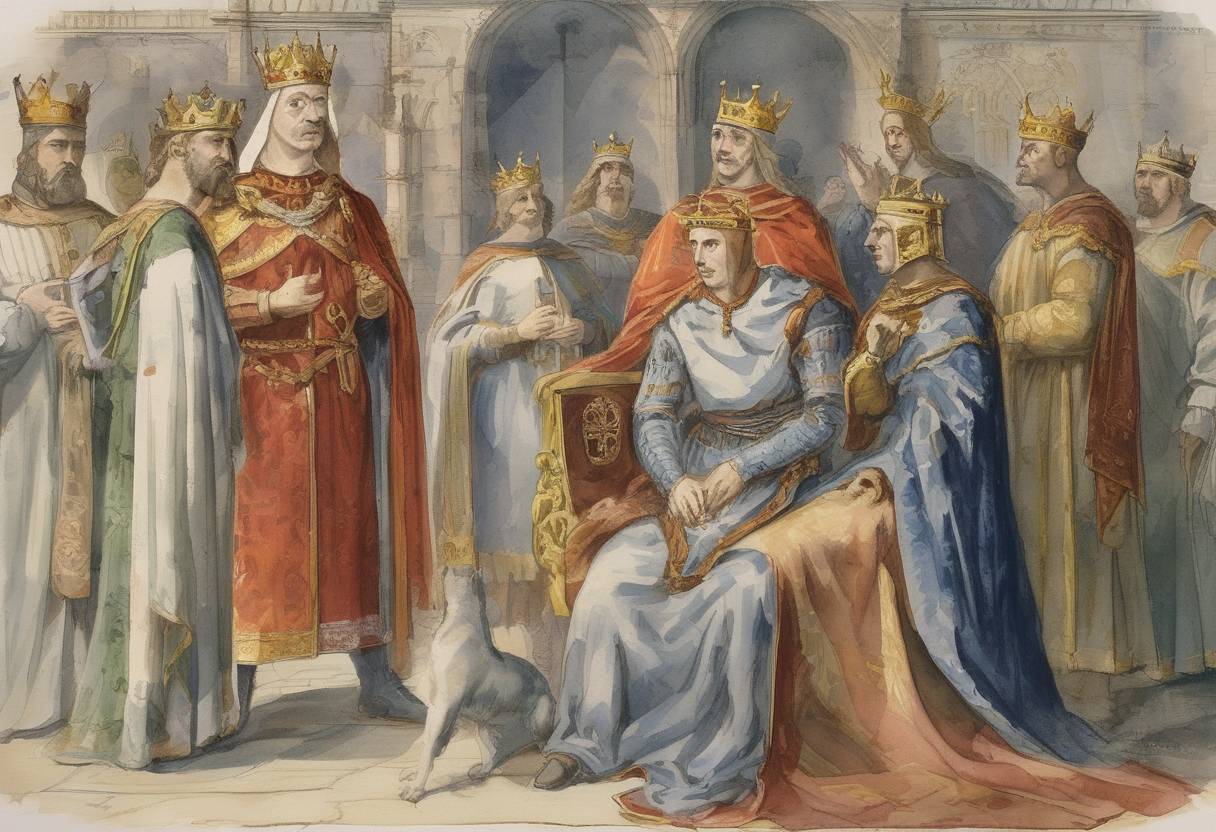
Charles the Bald was born on June 13, 823, in Frankfurt, in what is now modern-day Germany. He was a significant figure in the Carolingian dynasty, which played a crucial role in shaping medieval European history. Charles was the son of Louis the Pious, the King of the Franks and Emperor of the Carolingian Empire, and his second wife, Judith of Bavaria.
The Carolingian Empire, established by Charlemagne, Charles the Bald’s grandfather, was a dominant force in Western Europe during the early Middle Ages. Charlemagne’s reign marked a period of cultural revival and expansion, but his death in 814 led to a period of instability. Louis the Pious, Charlemagne’s son, faced numerous challenges in maintaining the empire’s unity, including internal family conflicts and external threats.
Charlemagne’s Legacy: Charlemagne’s efforts to consolidate and expand the Frankish Empire set the stage for future rulers like Charles the Bald. His reign was characterized by military conquests, religious reforms, and the promotion of learning and culture.
Louis the Pious’ Reign: Louis the Pious inherited a vast empire but struggled with maintaining control over his territories and managing the ambitions of his sons from his first marriage. The birth of Charles the Bald added another layer of complexity to the succession issues.
King of West Francia: Charles the Bald became King of West Francia in 843 following the Treaty of Verdun, which divided the Carolingian Empire among Louis the Pious’ surviving sons. This treaty is considered a pivotal moment in European history, as it laid the groundwork for the formation of modern European states.
Holy Roman Emperor: In 875, Charles was crowned Holy Roman Emperor, a title that underscored his influence and the continuation of the Carolingian legacy. His reign as emperor was marked by efforts to consolidate power and manage the complex political landscape of the time.
Charles the Bald’s reign was characterized by both achievements and challenges. He faced numerous internal revolts and external threats, including Viking invasions. Despite these challenges, his efforts to maintain the Carolingian legacy and his role in shaping the political landscape of medieval Europe were significant.
His reign also highlighted the difficulties of maintaining a large, diverse empire, a theme that would continue to resonate throughout European history. Charles the Bald’s legacy is a testament to the complexities of medieval rulership and the enduring impact of the Carolingian dynasty on European history.
Source: en.wikipedia.org