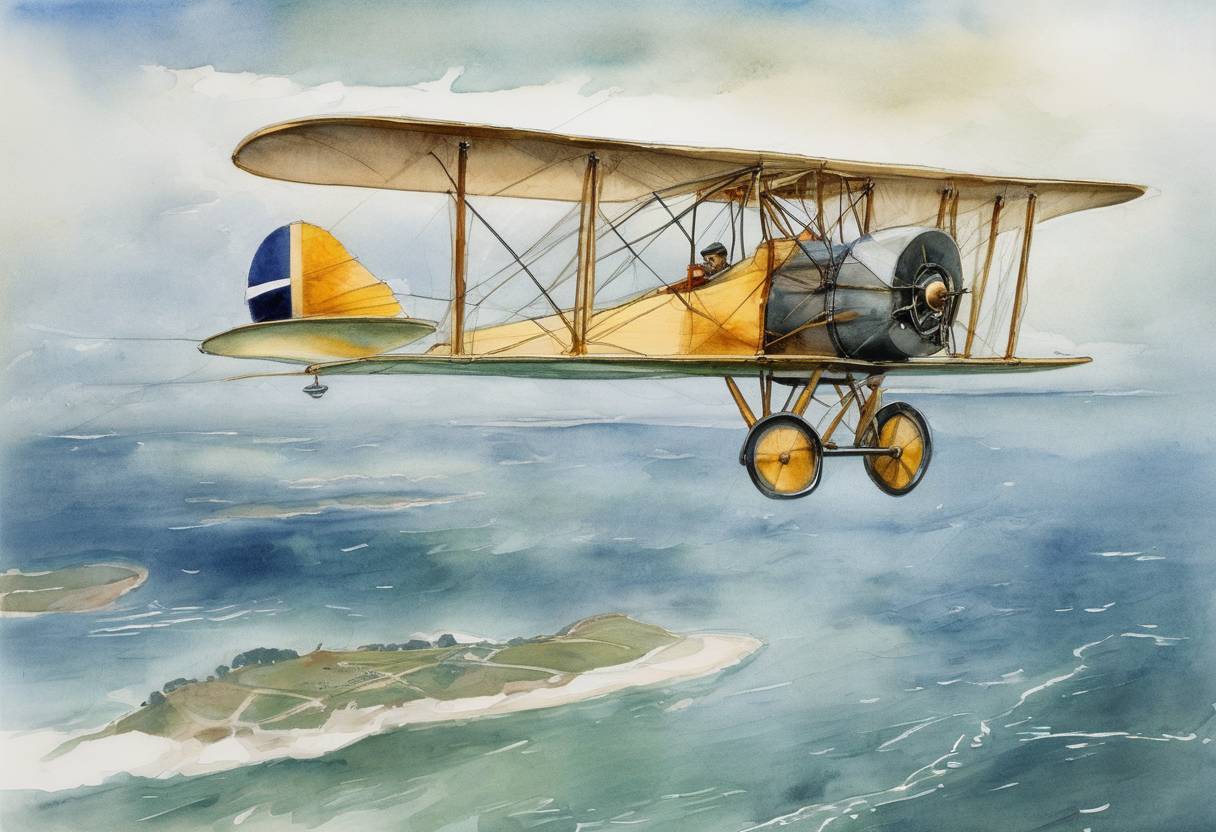
Louis Blériot’s Historic Flight Across the English Channel
On July 25, 1909, French aviator Louis Blériot achieved a remarkable milestone in aviation history by becoming the first person to fly across the English Channel in a heavier-than-air aircraft. This event marked a significant advancement in the field of aviation and demonstrated the potential of powered flight.
Background
Louis Blériot was an engineer and inventor who had been involved in aviation experiments since the early 1900s. Prior to his successful Channel crossing, Blériot had faced numerous challenges and setbacks, including several crashes. Despite these difficulties, he remained determined to advance aviation technology.
The English Channel, a body of water separating southern England from northern France, presented a formidable challenge for early aviators. The distance of approximately 22 miles (35 kilometers) was daunting due to the limited range and reliability of early aircraft.
The Flight
Blériot’s aircraft, the Blériot XI, was a monoplane featuring a 25-horsepower engine. It was a relatively simple design, but it was innovative for its time, incorporating lightweight materials and a tractor configuration with the engine at the front.
- Date: July 25, 1909
- Departure: Les Barraques, near Calais, France
- Destination: Dover, England
- Duration: Approximately 37 minutes
Blériot took off at dawn, navigating by sight as he crossed the Channel. The flight was fraught with challenges, including strong winds and the risk of engine failure. Despite these obstacles, Blériot successfully landed near Dover Castle, greeted by a small crowd and journalists.
Significance
Blériot’s successful crossing of the English Channel had several important implications:
Technological Advancement: The flight demonstrated the viability of powered flight over significant distances, encouraging further innovation in aircraft design and engineering.
International Recognition: Blériot’s achievement captured the world’s attention, earning him international fame and solidifying his place in aviation history.
Inspiration for Future Aviators: The successful crossing inspired other aviators to attempt longer and more challenging flights, contributing to the rapid development of aviation in the early 20th century.
Military Implications: The flight underscored the potential military applications of aircraft, influencing military strategies and the development of air forces.
Aftermath
Following his historic flight, Louis Blériot continued to contribute to aviation, establishing a successful aircraft manufacturing company. The Blériot XI became a popular model, used in various aviation competitions and military applications.
Blériot’s Channel crossing remains a celebrated event in aviation history, symbolizing the spirit of innovation and exploration that characterized the early years of flight.