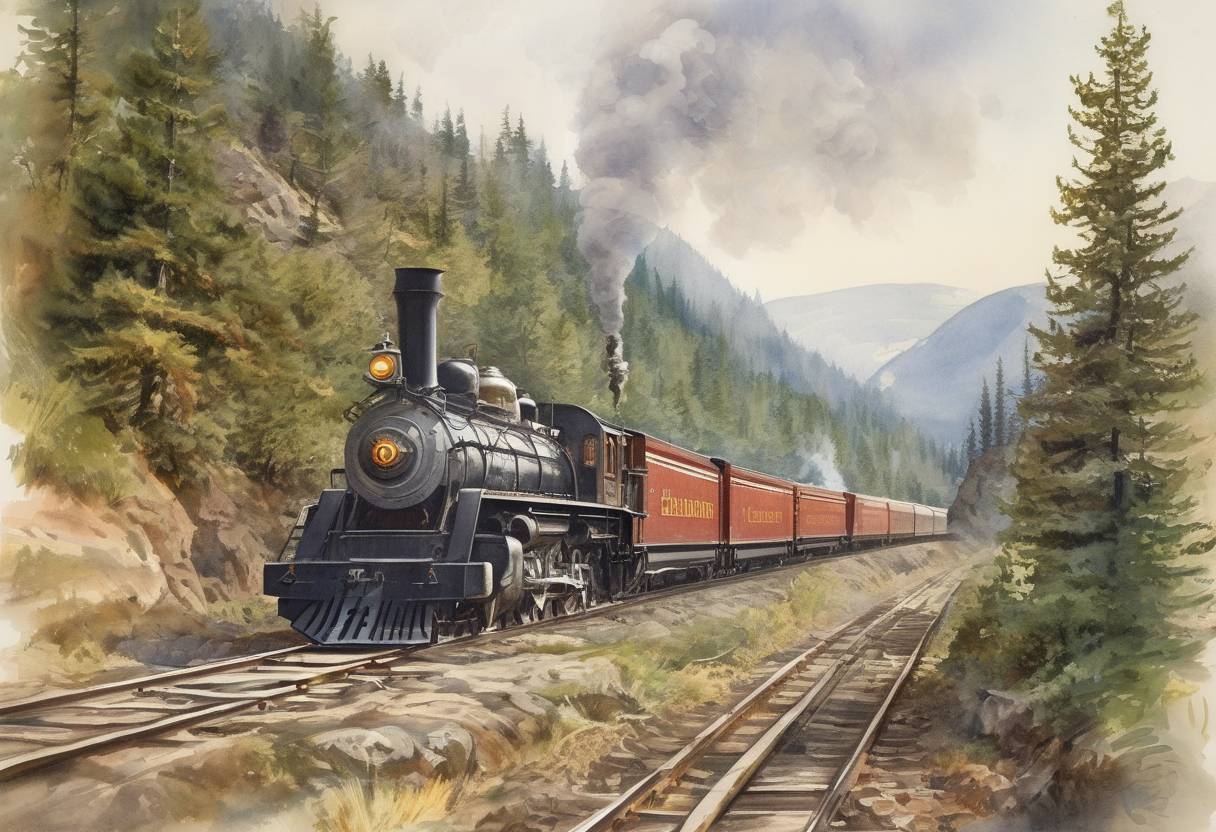
Completion of the Canadian Pacific Railway
Overview
The completion of the Canadian Pacific Railway (CPR) on June 3, 1889, marked a pivotal moment in Canadian history, symbolizing the unification of the country from coast to coast. This monumental achievement was a cornerstone in the development of Canada, facilitating economic growth, population expansion, and national unity.
Historical Context
Confederation and Expansion: Following the Confederation in 1867, Canada sought to expand its territory and solidify its sovereignty. The construction of a transcontinental railway was integral to this vision, promising to connect the eastern provinces with British Columbia, which joined Canada in 1871 partly due to the promise of a railway.
Challenges and Construction: The construction of the CPR was fraught with challenges, including difficult terrain, harsh weather conditions, and financial constraints. The project was spearheaded by the Canadian Pacific Railway Company, under the leadership of figures like Sir John A. Macdonald, Canada’s first Prime Minister, and William Cornelius Van Horne, the railway’s general manager.
Key Events Leading to Completion
Government Support: The Canadian government provided significant support, including financial subsidies and land grants, to ensure the railway’s completion.
Labor and Engineering Feats: Thousands of workers, including many Chinese laborers, were employed in the construction, facing perilous conditions. Engineering feats such as the construction of the Spiral Tunnels and the bridging of the Fraser River were critical to overcoming geographical obstacles.
Last Spike Ceremony: The ceremonial “Last Spike” was driven at Craigellachie, British Columbia, on November 7, 1885, symbolizing the completion of the main line. However, the final link to the eastern seaboard was completed on June 3, 1889, when the line reached Saint John, New Brunswick.
Significance and Aftermath
Economic Impact: The CPR facilitated the movement of goods and people across Canada, boosting trade and commerce. It played a crucial role in the settlement and development of the Canadian Prairies.
National Unity: The railway was a symbol of national unity, linking disparate regions and fostering a sense of Canadian identity.
Cultural and Social Implications: The construction and operation of the CPR had significant cultural and social impacts, including the displacement of Indigenous communities and the contribution of immigrant labor, particularly from China, which had lasting effects on Canadian society.
Conclusion
The completion of the Canadian Pacific Railway was more than just an engineering triumph; it was a transformative event in Canadian history. It laid the foundation for Canada’s economic development and played a crucial role in shaping the nation’s identity and territorial integrity.