1760 · Panipat, India
Afghan leader Ahmad Shah Durrani defeats the Marathas in the Third Battle of Panipat.
January 14, 1761
The Third Battle of Panipat takes place, marking a significant conflict between the Maratha Empire and the Durrani Empire in India.
Panipat, India | Maratha Empire
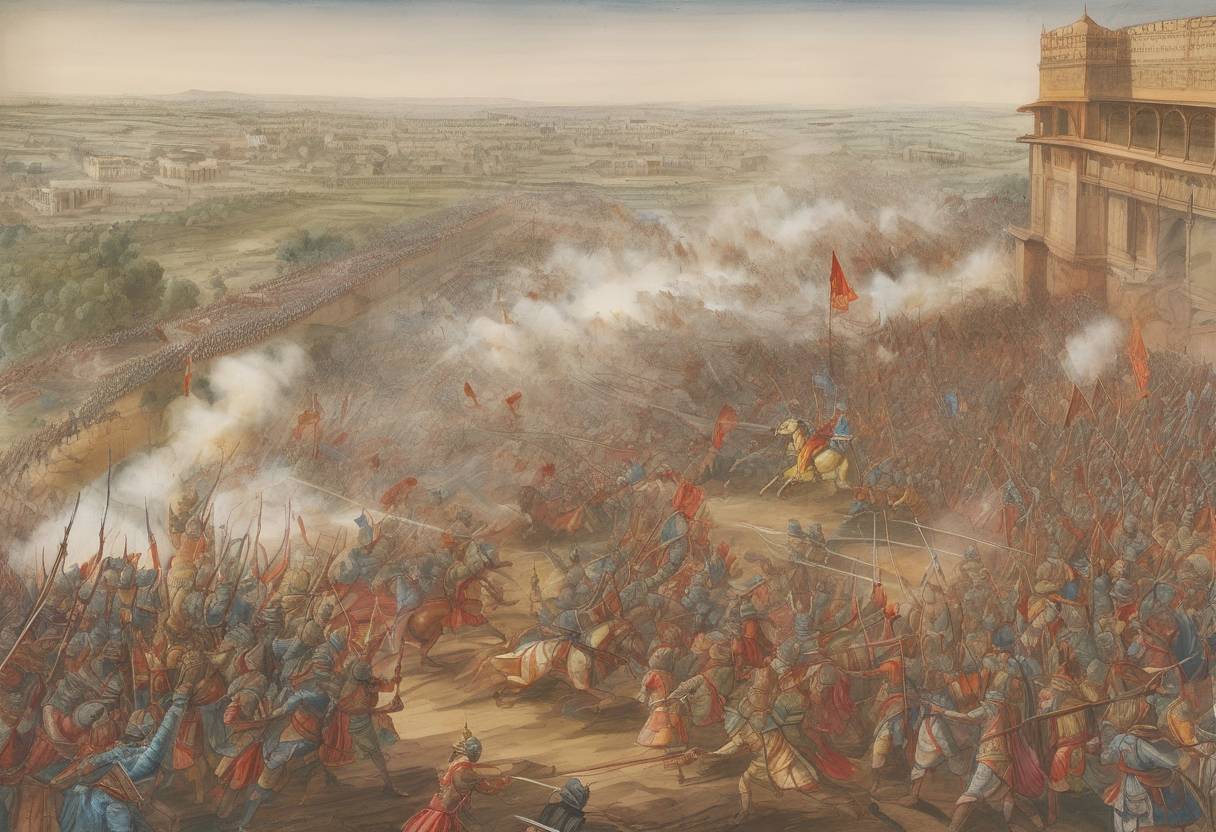
The Third Battle of Panipat, fought on January 14, 1761, was a pivotal conflict in Indian history, marking a significant clash between the Maratha Empire and the Durrani Empire led by Ahmad Shah Durrani, also known as Ahmad Shah Abdali. This battle is considered one of the largest and bloodiest fought in the 18th century.
Maratha Empire: By the mid-18th century, the Maratha Empire had become a dominant power in India, expanding its influence across vast territories. The Marathas aimed to establish their supremacy over the declining Mughal Empire and other regional powers.
Durrani Empire: Ahmad Shah Durrani, the founder of the Durrani Empire, sought to reassert Afghan control over northern India. His invasions were partly motivated by the desire to plunder the wealth of India and to counter the rising power of the Marathas.
Prelude to Battle: The Marathas, under the leadership of Sadashivrao Bhau, sought to halt Ahmad Shah Durrani’s advances into India. The two forces eventually converged near Panipat, a site historically significant for major battles.
Forces Involved: The Maratha army was vast, comprising around 45,000 soldiers, including cavalry, infantry, and artillery. They were supported by a large number of non-combatants. The Durrani forces, allied with several Indian rulers, numbered approximately 60,000, with additional support from local militias.
Tactics and Strategies: The Marathas, though initially successful in skirmishes, faced logistical challenges, including supply shortages and the harsh winter. Ahmad Shah Durrani’s forces, adept in cavalry maneuvers, exploited these weaknesses.
Outcome: The battle commenced in the early hours and lasted until the afternoon. The Marathas, despite their valiant efforts, were overwhelmed by the superior tactics and numbers of the Durrani forces. The battle resulted in a catastrophic defeat for the Marathas, with heavy casualties.
Casualties: The battle was devastating, with estimates of casualties ranging from 60,000 to 70,000 on the Maratha side, including soldiers and civilians. The Durrani forces also suffered significant losses.
Impact on the Maratha Empire: The defeat at Panipat severely weakened the Maratha Empire, leading to a temporary decline in their influence. It marked the end of their expansionist phase and led to internal strife and power struggles.
Durrani Empire’s Influence: Although victorious, Ahmad Shah Durrani did not establish long-term control over India. His empire’s influence waned, and he returned to Afghanistan, leaving a power vacuum in northern India.
Historical Significance: The battle underscored the fragility of Indian polities in the face of external invasions and highlighted the need for unity among Indian states. It also set the stage for the eventual rise of British colonial power in India, as local powers were weakened and fragmented.
The Third Battle of Panipat remains a significant event in Indian history, symbolizing the complex interplay of regional politics, military strategy, and the shifting dynamics of power in the subcontinent during the 18th century.
Source: en.wikipedia.org