Angola Gains Independence from Portugal
1975 · Luanda, Angola
Angola gained independence from Portugal, marking the end of Portuguese colonial rule in Africa and the beginning of a prolonged civil war.
April 25, 1974
The Carnation Revolution took place in Portugal, a nearly bloodless coup that led to the fall of the Estado Novo regime and the establishment of a democratic government.
Lisbon, Portugal | Armed Forces Movement
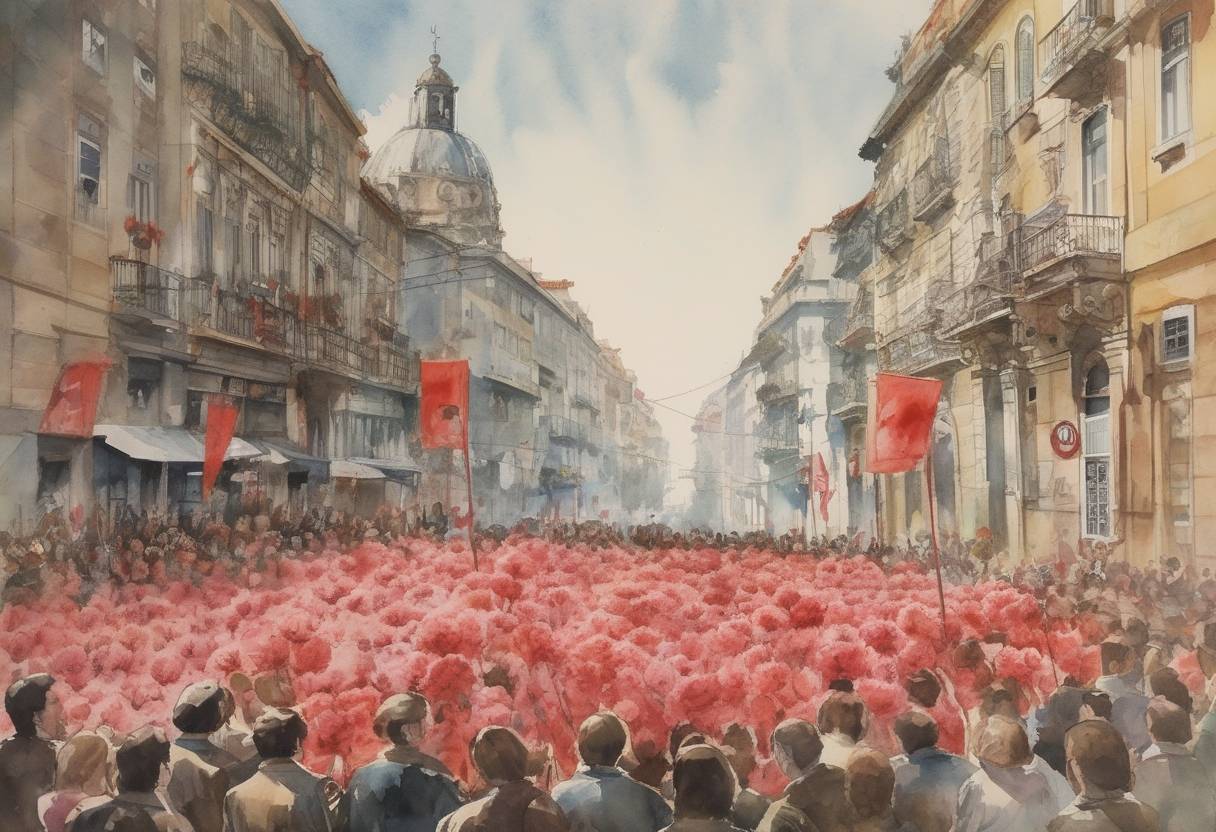
The Carnation Revolution, which occurred on April 25, 1974, in Portugal, was a pivotal event that marked the end of the Estado Novo regime and the beginning of a democratic era in the country. This nearly bloodless coup was orchestrated by the Armed Forces Movement (Movimento das Forças Armadas, MFA), a group of military officers who opposed the authoritarian government led by Prime Minister Marcelo Caetano.
The Estado Novo regime, established by António de Oliveira Salazar in 1933, was a corporatist authoritarian regime characterized by its repressive policies, censorship, and a secret police force known as PIDE (Polícia Internacional e de Defesa do Estado). The regime maintained a colonial war in Africa, which drained resources and led to widespread discontent among the Portuguese population and military.
Colonial Wars: Portugal was engaged in protracted colonial wars in Angola, Mozambique, and Guinea-Bissau. These conflicts were unpopular and costly, leading to dissatisfaction within the military ranks.
Economic Strain: The prolonged wars and international isolation placed a significant economic burden on Portugal, exacerbating domestic issues and increasing public discontent.
Military Discontent: Many military officers, particularly those who had served in the colonial wars, were frustrated with the regime’s policies and the lack of political and social reforms.
Formation of the MFA: The Armed Forces Movement was formed by a group of junior officers who sought to end the colonial wars and establish a democratic government.
April 25, 1974: The MFA launched a coordinated coup that began in the early hours of the morning. The movement was signaled by the broadcast of the song “Grândola, Vila Morena” on the radio, which served as a cue for the military to mobilize.
Occupation of Key Locations: The MFA quickly took control of strategic locations in Lisbon, including military barracks, radio stations, and government buildings.
Public Support: The coup was met with widespread public support. Civilians took to the streets, offering carnations to soldiers, which were placed in the muzzles of their guns, symbolizing the peaceful nature of the revolution.
Surrender of the Regime: By the afternoon, Marcelo Caetano and other key figures of the regime surrendered to the MFA, effectively ending the Estado Novo.
Transition to Democracy: The Carnation Revolution paved the way for a transition to democracy. A provisional government was established, and a new constitution was adopted in 1976, ensuring democratic freedoms and rights.
Decolonization: The revolution accelerated the decolonization process, leading to the independence of Portugal’s African colonies.
Social and Economic Reforms: The new government implemented significant social and economic reforms, including nationalization of industries and land reforms.
Legacy: The Carnation Revolution is celebrated annually in Portugal as Freedom Day (Dia da Liberdade), commemorating the peaceful transition to democracy and the end of authoritarian rule.
The Carnation Revolution remains a significant event in Portuguese history, symbolizing the power of peaceful resistance and the enduring quest for freedom and democracy.
Source: en.wikipedia.org