Assassination of Ali ibn Abi Talib
661 · Kufa, present-day Iraq
The Fourth Caliph of Islam, Ali ibn Abi Talib, is assassinated while praying in the Great Mosque of Kufa and succumbs to his injuries.
January 30, 0661
The assassination of Ali ibn Abi Talib, the fourth caliph of Islam, took place. Ali was attacked by a Kharijite named Abd al-Rahman ibn Muljam while praying in the Great Mosque of Kufa. He succumbed to his injuries two days later, leading to significant political and religious ramifications within the Islamic community, particularly contributing to the Sunni-Shia split.
Kufa, present-day Iraq | Islamic Caliphate
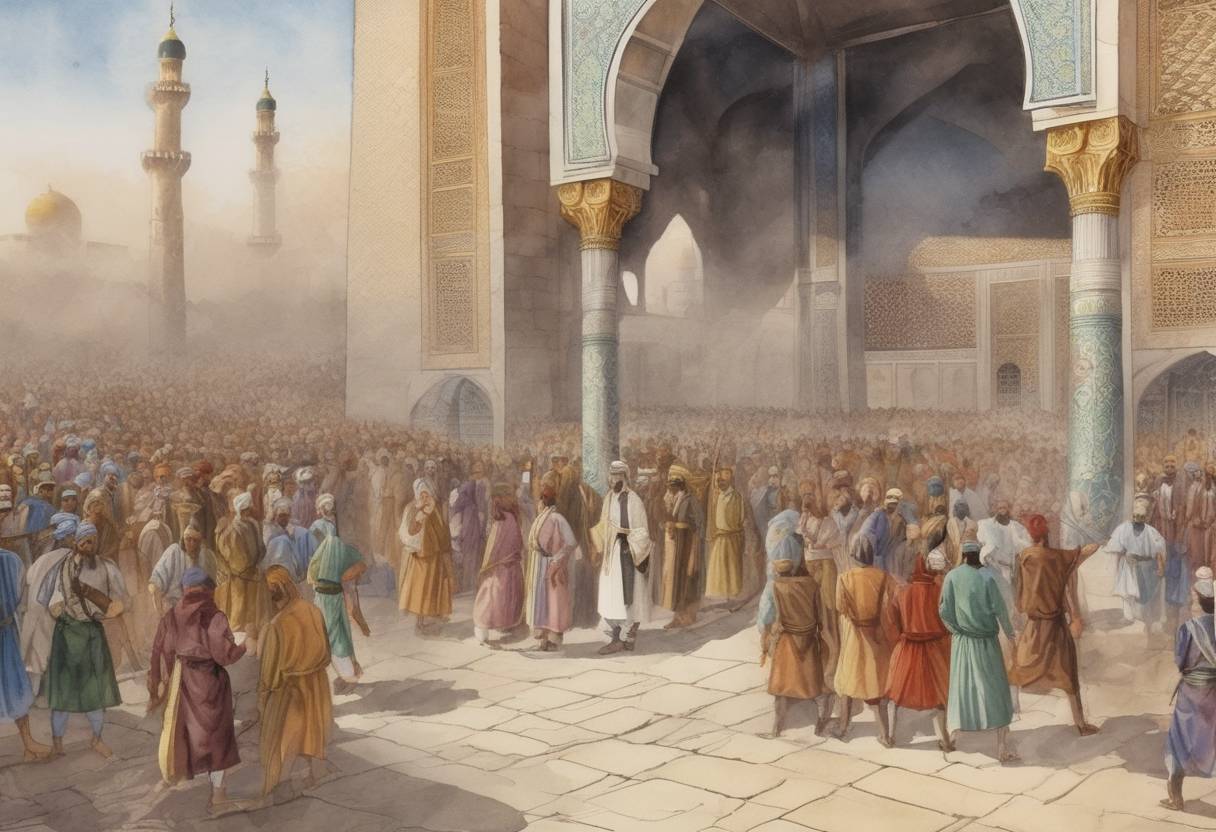
On January 30, 661, a pivotal event in Islamic history occurred with the assassination of Ali ibn Abi Talib, the fourth caliph of Islam. Ali was attacked by a Kharijite named Abd al-Rahman ibn Muljam while he was praying in the Great Mosque of Kufa. This event not only marked the end of Ali’s caliphate but also had profound political and religious ramifications that contributed significantly to the Sunni-Shia split.
Ali ibn Abi Talib was a cousin and son-in-law of the Prophet Muhammad and is revered in Islamic tradition for his piety, wisdom, and leadership. He became the fourth caliph after the assassination of Uthman ibn Affan, amidst a period of considerable unrest and division within the Muslim community.
The Kharijites, a radical faction that emerged during Ali’s caliphate, were initially his supporters but turned against him following the Battle of Siffin and the subsequent arbitration with Muawiya, the governor of Syria. The Kharijites believed that Ali had compromised the principles of Islam by agreeing to arbitration and thus considered him a legitimate target for assassination.
On the morning of January 30, 661, while Ali was leading the dawn prayers in the Great Mosque of Kufa, Abd al-Rahman ibn Muljam struck him with a poisoned sword. Ali succumbed to his injuries two days later, on January 31, 661. His death marked the end of the Rashidun Caliphate, a period characterized by the leadership of the first four caliphs following Muhammad’s death.
The assassination of Ali had immediate and long-lasting effects on the Islamic world:
Political Ramifications: Ali’s death led to the rise of the Umayyad Caliphate under Muawiya, marking a shift from the elective caliphate to a dynastic rule. This transition significantly altered the political landscape of the Islamic empire.
Religious Impact: Ali’s assassination deepened the existing divisions within the Muslim community. His followers, who believed in his rightful leadership and his descendants’ claim to the caliphate, became known as Shia (meaning “party” or “followers” of Ali). This division laid the foundation for the Sunni-Shia split, which remains one of the most significant sectarian divides in Islam.
Cultural Legacy: Ali is revered by Shia Muslims as the first Imam and a martyr, and his legacy continues to influence Islamic thought and culture. His assassination is commemorated annually during the month of Muharram, particularly on the day of Ashura.
In conclusion, the assassination of Ali ibn Abi Talib was a turning point in Islamic history, with consequences that shaped the religious, political, and cultural landscape of the Muslim world for centuries to come.
Source: en.wikipedia.org