Mariner 5 Launch and Mission to Venus - June 14, 1967
1967 · Cape Canaveral, USA
Mariner 5, a NASA spacecraft, is launched towards Venus to conduct atmospheric experiments.
May 24, 1962
Astronaut Scott Carpenter orbits the Earth three times in the Aurora 7 space capsule, becoming the second American to orbit the Earth.
Cape Canaveral, USA | NASA
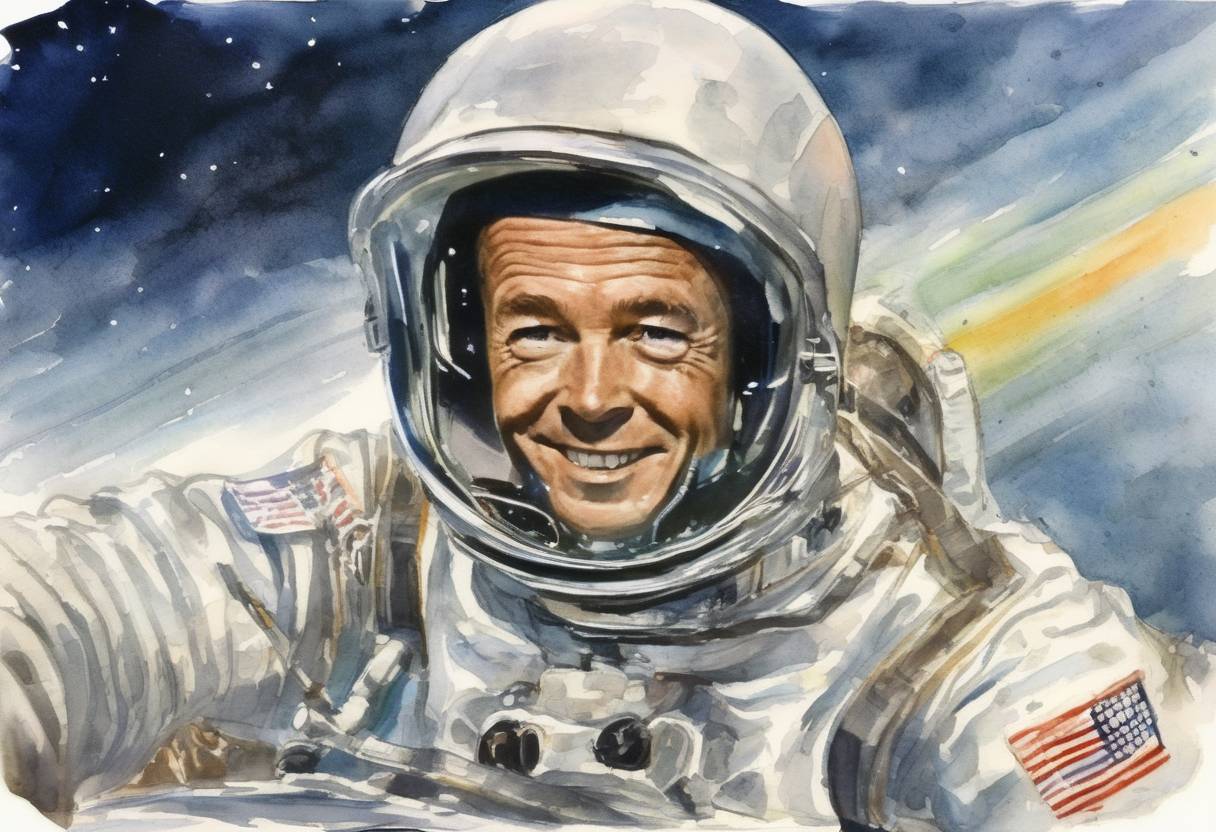
On May 24, 1962, astronaut Scott Carpenter became the second American to orbit the Earth, following John Glenn’s historic flight earlier that year. Carpenter’s mission, known as Aurora 7, was part of NASA’s Mercury program, which aimed to send humans into space and return them safely to Earth.
The Mercury program was the United States’ first human spaceflight program, initiated in response to the Soviet Union’s early successes in space exploration. The program’s objectives included orbiting a manned spacecraft around Earth, investigating human capabilities in space, and recovering both the astronaut and spacecraft safely.
John Glenn’s successful orbit on February 20, 1962, aboard Friendship 7 marked a significant achievement for NASA and set the stage for Carpenter’s mission.
Launch and Orbit:
Scientific Experiments:
Communication and Navigation Challenges:
Splashdown and Recovery:
Carpenter’s successful mission further demonstrated the United States’ growing capabilities in human spaceflight and contributed valuable data to NASA’s understanding of orbital mechanics and human factors in space. The lessons learned from Aurora 7 helped refine procedures and technologies for future missions, including the Gemini and Apollo programs.
Carpenter’s flight was a testament to the bravery and skill of the early astronauts, as well as the dedication of the engineers and scientists who supported the Mercury program. His contributions to space exploration remain a significant part of NASA’s history and the broader narrative of human spaceflight.
Source: www.nasa.gov