Establishment of the Nickel: May 16, 1866
1866 · Washington D.C., United States
The U.S. Congress establishes the nickel, a five-cent coin, replacing the half dime.
February 3, 1913
The Sixteenth Amendment to the United States Constitution was ratified, authorizing the federal government to impose and collect an income tax.
Washington D.C., United States | United States Congress
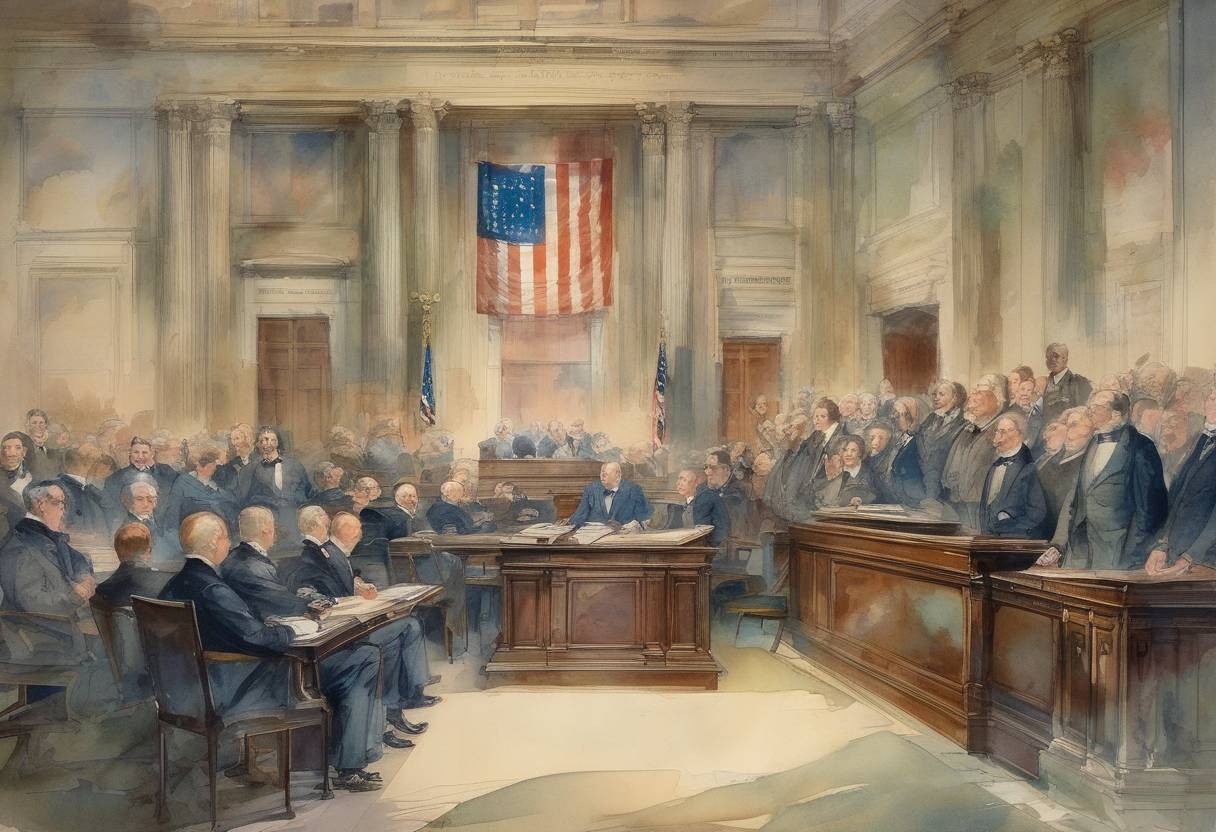
On February 3, 1913, the Sixteenth Amendment to the United States Constitution was ratified, marking a pivotal moment in American fiscal policy. This amendment granted Congress the authority to impose and collect taxes on incomes, regardless of the source, without apportioning it among the states or basing it on the United States Census.
Before the Sixteenth Amendment, the federal government’s ability to levy direct taxes was limited by Article I, Section 9 of the Constitution, which required that direct taxes be apportioned among the states based on population. This restriction made it challenging to implement a federal income tax effectively.
Civil War Income Tax: During the Civil War, the federal government imposed a temporary income tax to fund the war effort. However, this tax was repealed in 1872.
Pollock v. Farmers’ Loan & Trust Co. (1895): The Supreme Court ruled that taxes on income from property were direct taxes and thus unconstitutional unless apportioned according to population. This decision effectively nullified the federal income tax law of 1894.
Growing Need for Revenue: As the United States industrialized and expanded, the federal government required more revenue to support its functions and services, leading to increased interest in a stable income tax system.
The Sixteenth Amendment states:
“The Congress shall have power to lay and collect taxes on incomes, from whatever source derived, without apportionment among the several States, and without regard to any census or enumeration.”
The amendment was proposed by Congress on July 12, 1909, and was ratified by the requisite number of states on February 3, 1913. It was the culmination of a growing consensus that a federal income tax was necessary for a modernizing nation.
Implementation of Income Tax: Following the ratification, Congress enacted the Revenue Act of 1913, which reintroduced a federal income tax. This act established a 1% tax on net personal incomes above $3,000, with a surtax on higher incomes.
Expansion of Federal Revenue: The income tax became a significant source of federal revenue, allowing for increased government spending on infrastructure, social programs, and later, military expenditures.
Long-term Impact: The Sixteenth Amendment fundamentally changed the relationship between the federal government and its citizens, providing a reliable revenue stream that supported the expansion of federal responsibilities throughout the 20th century.
The ratification of the Sixteenth Amendment was a transformative event in U.S. history, enabling the federal government to adapt to the financial demands of a growing and increasingly complex nation.
Source: www.archives.gov