The Death of Captain James Cook
1779 · Kealakekua Bay, Hawaii
British explorer Captain James Cook was killed by Native Hawaiians during his third exploratory voyage in the Pacific, at Kealakekua Bay on the Big Island of Hawaii.
January 18, 1778
James Cook became the first known European to discover the Hawaiian Islands, which he named the "Sandwich Islands."
Hawaii, United States | British Royal Navy
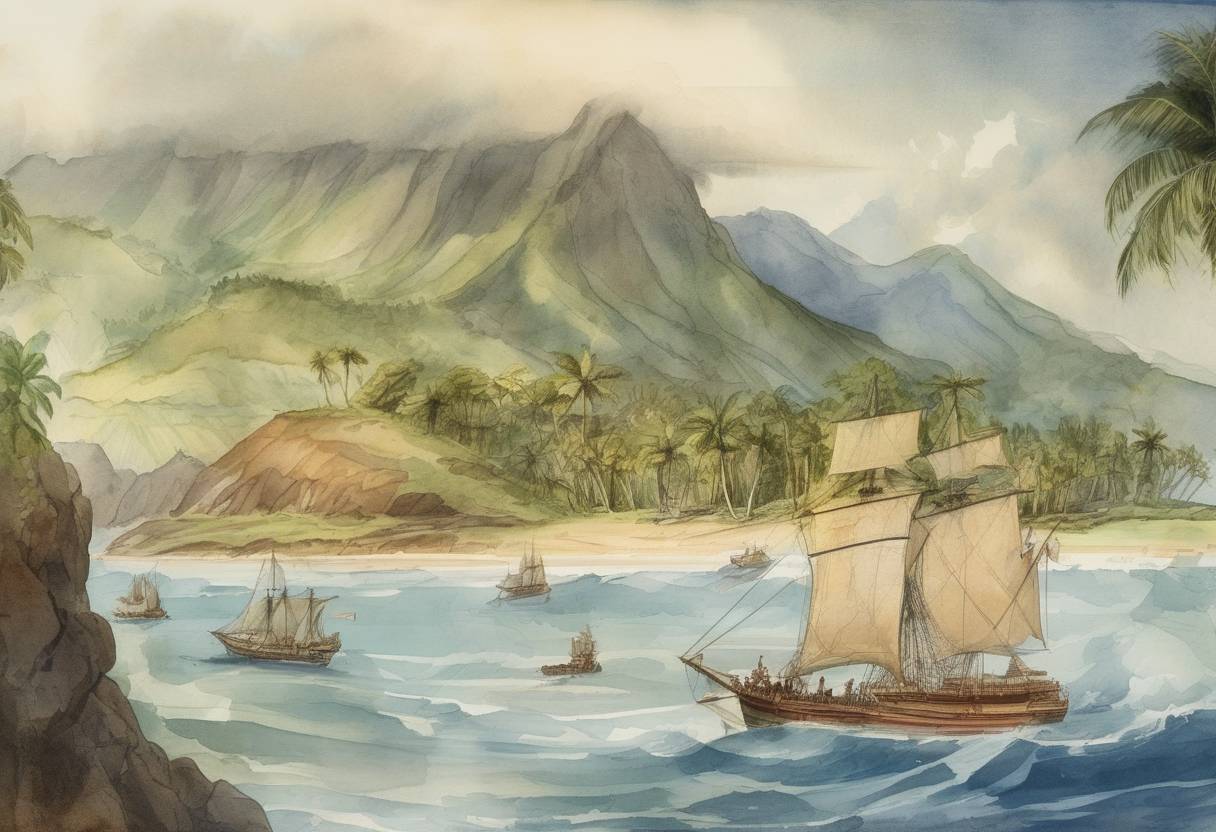
On January 18, 1778, the British explorer Captain James Cook became the first known European to discover the Hawaiian Islands, which he named the “Sandwich Islands” in honor of John Montagu, the 4th Earl of Sandwich, who was the First Lord of the Admiralty at the time. This event marked a significant moment in the history of European exploration in the Pacific Ocean.
James Cook was an experienced navigator and cartographer, having already completed two major voyages of exploration in the Pacific. His third voyage, which began in 1776, was primarily aimed at finding the Northwest Passage—a hypothesized sea route connecting the Atlantic and Pacific Oceans through the Arctic Ocean. During this expedition, Cook commanded two ships, HMS Resolution and HMS Discovery.
Cook’s ships first sighted the Hawaiian Islands on January 18, 1778. The initial landfall was made at Waimea Bay on the island of Kauai. Cook and his crew were greeted by the native Hawaiian people, who were initially curious and hospitable. The encounter was marked by mutual fascination, as neither the Hawaiians nor the Europeans had seen each other’s cultures before.
Cook named the archipelago the “Sandwich Islands” in honor of his patron, the Earl of Sandwich. This name was used by Europeans for some time, although it eventually fell out of favor as the native name “Hawaii” became more widely recognized.
The discovery of the Hawaiian Islands had profound implications:
Cultural Exchange: Cook’s arrival initiated a period of cultural exchange between Europeans and Hawaiians. While initially peaceful, these interactions would eventually lead to significant cultural and societal changes for the Hawaiian people.
Strategic Importance: The islands’ location in the central Pacific made them strategically important for future maritime navigation and trade routes.
Impact on Hawaii: The introduction of European goods, ideas, and diseases had lasting effects on Hawaiian society, leading to significant demographic and cultural shifts.
Cook’s exploration of the Hawaiian Islands continued until his death in 1779 during a subsequent visit to the islands. His voyages significantly contributed to the European understanding of the Pacific region and paved the way for further exploration and eventual colonization.
The legacy of Cook’s discovery is complex, as it represents both the spirit of exploration and the beginning of significant changes for the indigenous Hawaiian population. Today, Cook’s voyages are studied for their contributions to navigation and exploration, as well as their impact on the peoples and cultures he encountered.
Source: en.wikipedia.org