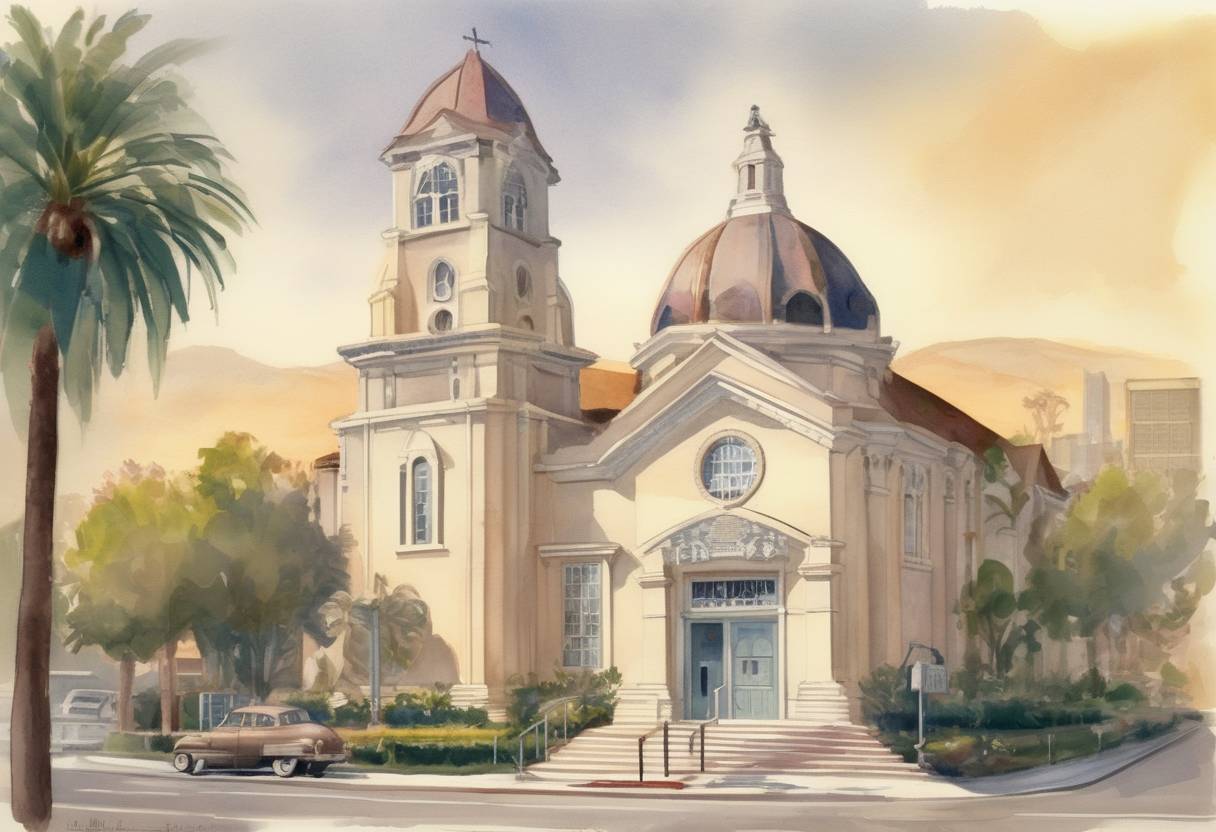
Establishment of the First Church of Scientology
On February 18, 1954, the first Church of Scientology was officially established in Los Angeles, California. This event marked a significant milestone in the development of Scientology as a religious movement, which had been founded by science fiction writer L. Ron Hubbard.
Background
L. Ron Hubbard: Before founding Scientology, Hubbard was a prolific author, primarily known for his science fiction and fantasy works. In 1950, he published “Dianetics: The Modern Science of Mental Health,” which laid the groundwork for Scientology. The book introduced the concept of the “reactive mind” and proposed methods for achieving mental clarity and self-improvement.
Dianetics to Scientology: Initially, Hubbard’s ideas were presented as a form of mental health therapy called Dianetics. However, as the movement grew, it evolved into a religious philosophy known as Scientology. This transition was marked by the incorporation of spiritual elements and the establishment of churches.
Key Events Leading to the Establishment
Early Growth: Following the publication of “Dianetics,” Hubbard’s ideas gained a following, leading to the formation of Dianetics groups across the United States. However, financial difficulties and legal challenges prompted Hubbard to reframe his teachings within a religious context.
Legal and Tax Considerations: By establishing Scientology as a religion, Hubbard aimed to gain tax-exempt status and protect the movement from legal scrutiny. This strategic shift was crucial in the formal organization of the Church of Scientology.
Establishment of the Church
Incorporation: The Church of Scientology was incorporated in Los Angeles by a group of Hubbard’s followers, including Burton Farber, who served as the first executive director. The incorporation documents outlined the church’s mission to promote Hubbard’s teachings and facilitate spiritual enlightenment.
Doctrinal Foundations: The church’s doctrines were based on Hubbard’s writings, which included concepts such as “Thetan” (the spiritual self), “Auditing” (a counseling process), and the “Bridge to Total Freedom” (a path of spiritual progression).
Aftermath and Significance
Expansion: Following its establishment, the Church of Scientology expanded rapidly, opening new churches and missions worldwide. It attracted a diverse membership, including notable public figures and celebrities.
Controversies and Legal Battles: Throughout its history, the Church of Scientology has faced numerous controversies, including allegations of abuse, aggressive litigation tactics, and disputes over its religious status. Despite these challenges, it has maintained a significant presence globally.
Cultural Impact: Scientology has had a notable impact on popular culture, often depicted in media and entertainment. Its unique beliefs and practices have sparked both curiosity and criticism.
The founding of the first Church of Scientology in 1954 was a pivotal moment in the history of the movement, setting the stage for its growth and the controversies that would follow. It remains a subject of interest and debate in discussions about new religious movements and their place in modern society.