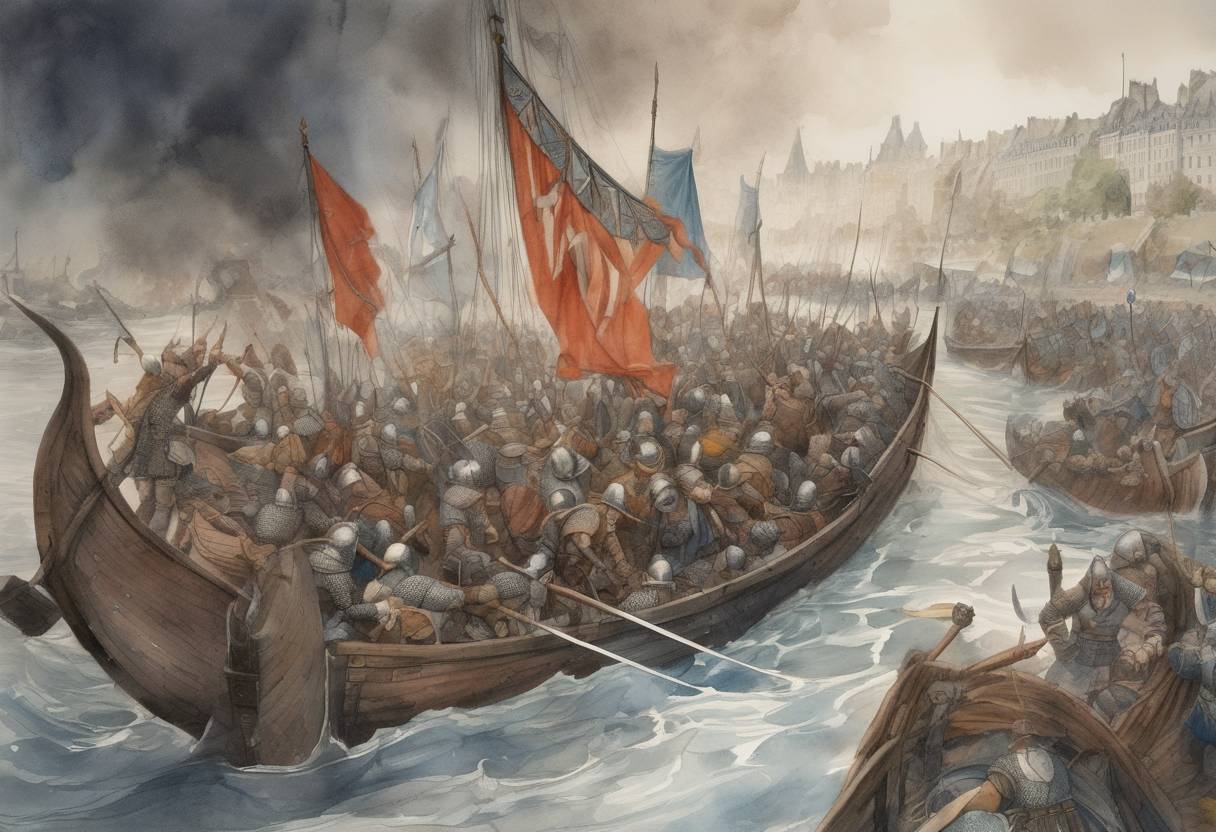
Viking Raid on Paris - March 28, 845
On March 28, 845, a significant Viking raid on Paris began, led by the legendary Norse chieftain Ragnar Lothbrok. This event marked a pivotal moment in the Viking expansion into Europe during the early medieval period.
Context and Background
- Viking Expansion: The 9th century was a period of extensive Viking exploration and expansion. Norse seafarers from Scandinavia were known for their raids across Europe, driven by a combination of economic, political, and environmental factors.
- Ragnar Lothbrok: A semi-legendary figure, Ragnar Lothbrok is often depicted in Norse sagas as a formidable warrior and leader. While historical evidence of his existence is debated, he is credited with leading several successful raids during this era.
The Raid on Paris
- Approach: In early 845, Ragnar led a fleet of approximately 120 ships carrying over 5,000 Viking warriors up the Seine River towards Paris, the heart of the Carolingian Empire.
- Initial Success: The Vikings quickly overpowered the Frankish defenses. They captured and plundered the city, demonstrating the vulnerability of even the most fortified locations in Europe to Viking incursions.
- Ransom and Withdrawal: Charles the Bald, the Carolingian king, opted to pay a substantial ransom of 7,000 pounds of silver to persuade the Vikings to withdraw, a common practice at the time to avoid further destruction.
Aftermath and Significance
- Impact on the Carolingian Empire: The raid exposed the weaknesses in the Carolingian defenses and highlighted the need for improved military strategies against Viking threats.
- Viking Influence: The success of the raid on Paris emboldened further Viking expeditions into Europe, contributing to their reputation as formidable warriors and traders.
- Cultural Legacy: The raid became a part of the rich tapestry of Viking lore and was later romanticized in various sagas and modern interpretations, cementing Ragnar Lothbrok’s place in popular culture.
Broader Historical Significance
- Military and Political Changes: The repeated Viking raids prompted significant changes in European military tactics and fortifications, influencing the development of feudalism as local lords sought to protect their territories.
- Economic and Cultural Exchange: Despite the destruction, Viking raids also facilitated cultural and economic exchanges between Scandinavia and the rest of Europe, impacting trade and cultural development.
The Viking raid on Paris in 845 remains a testament to the Norsemen’s impact on European history, illustrating the complexities of their interactions with the societies they encountered.