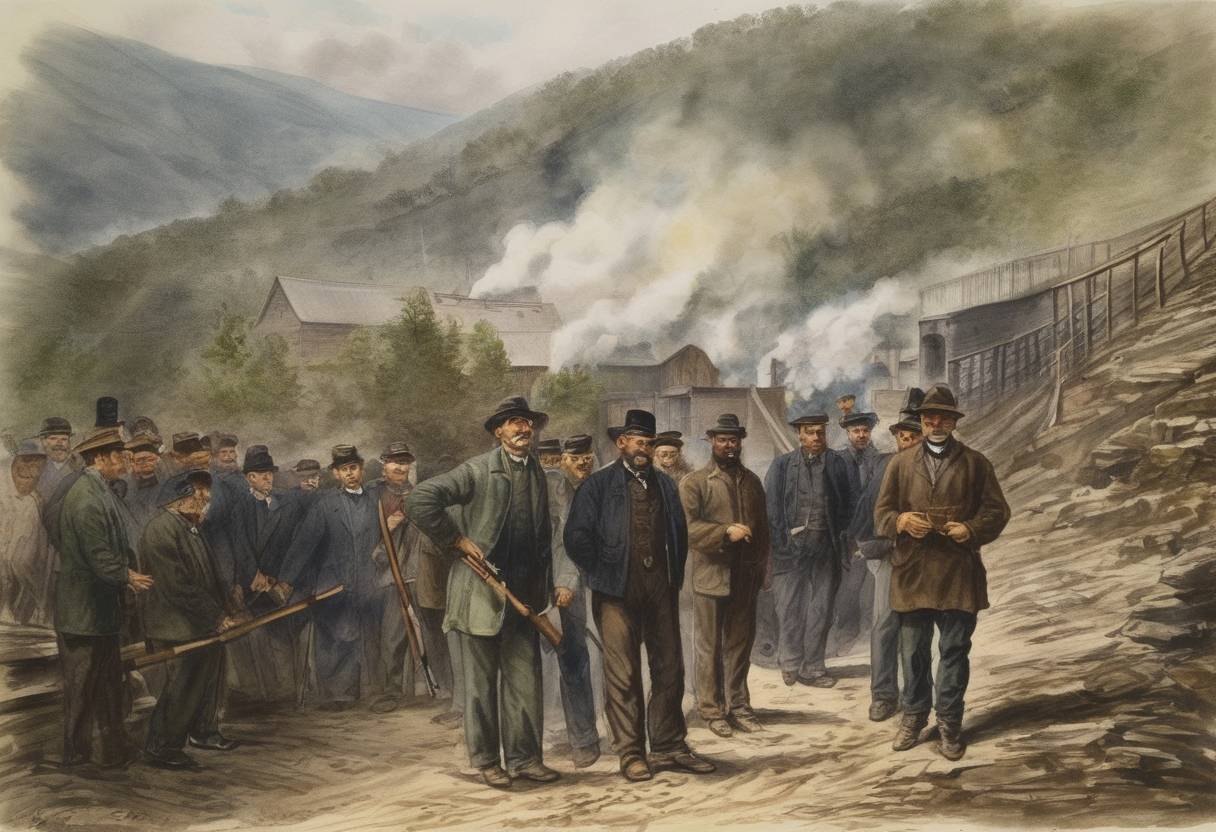
The Molly Maguires Executions: June 21, 1877
On June 21, 1877, a significant event unfolded in Mauch Chunk (now Jim Thorpe), Pennsylvania, marking a critical moment in the history of American labor movements. On this day, ten members of the Molly Maguires—a clandestine group of Irish-American coal miners—were executed. Their convictions stemmed from accusations of involvement in a series of violent labor-related activities, including murder.
Historical Context
The Molly Maguires were formed amidst the harsh conditions faced by coal miners in the 19th-century United States. Predominantly comprised of Irish immigrants, the group emerged in response to oppressive labor practices and the exploitation by coal mine operators. The miners’ grievances included poor working conditions, low pay, and the dangerous nature of their work. The organization reportedly took its name from Irish secret societies that had combated similar exploitation in Ireland.
Events Leading to the Executions
Throughout the 1870s, the coal regions of Pennsylvania witnessed a series of violent incidents, attributed by many to the Molly Maguires. These incidents included arson, sabotage, and several murders, notably against mine supervisors and owners believed to be oppressive. To combat what they saw as criminal activities, mine owners hired the Pinkerton National Detective Agency, leading to a substantial infiltration of the group.
James McParland, a Pinkerton detective, infiltrated the Molly Maguires, collecting evidence that would become crucial in the trials that followed. His undercover work contributed to the arrest and subsequent conviction of several members of the organization.
The Trials
The trials of the Molly Maguires were controversial. Conducted in the coal-mining regions, the trials saw a predominantly non-Irish jury convict the Irish defendants. McParland’s testimony played a pivotal role, though questions of reliability and the fairness of the trials persist historically. Many viewed the proceedings as skewed by ethnic prejudices and the influence of industrial powers intent on crushing labor organization efforts.
Execution and Aftermath
On June 21, 1877, the executions of the ten convicted men were carried out by hanging. This dramatic act was part of a broader crackdown on labor movements and was intended to deter further violence and organization by labor groups.
The legacy of the Molly Maguires and their trials has endured as a complex symbol of the struggles between labor and capital, as well as the challenges of justice in periods of social strife. It sparked discourse on labor rights, the justice system, and the immigrant experience in America. The events also highlighted the tensions between Irish immigrant communities and the wider American society during this period.
Historical Significance
The story of the Molly Maguires remains significant in American labor history, underlining the ongoing battles between workers seeking rights and authorities seeking control. It serves as a reminder of the past struggles for labor rights and sets the stage for future labor reforms that would occur in the 20th century. The executions are often viewed as pivotal in the larger narrative of labor rights, exemplifying the extent of resistance workers faced and the lengths they might go to in fighting against injustice.