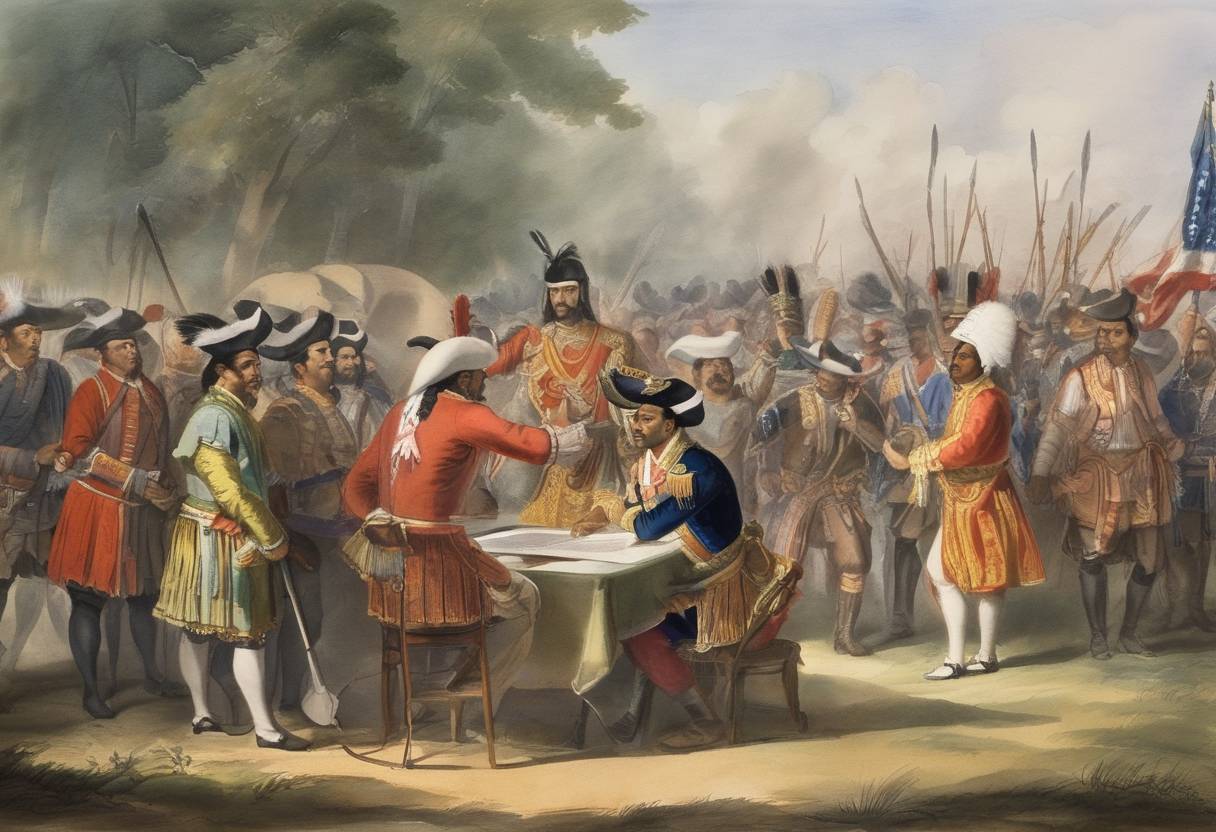
Treaty Between the Pawnee and the Spanish Empire: May 25, 1738
On May 25, 1738, a significant treaty was signed between the Pawnee tribe and the Spanish Empire, marking a pivotal moment in the history of colonial North America. This accord represented a strategic diplomatic engagement, providing the Spanish Empire with critical recognition and legitimacy over certain territories they claimed in the North American region.
Historical Context
The 18th century was characterized by European powers expanding their colonial interests in North America. The Spanish, who had declared vast swaths of the continent under their control, faced competition not only from other European powers but also from the indigenous populations who inhabited these lands. The Pawnee, a Native American tribe residing primarily in what is now Nebraska, Kansas, and Oklahoma, were influential players on the regional political stage.
Key Aspects of the Treaty
Spanish Legitimacy: The agreement with the Pawnee offered the Spanish Empire formal recognition in territories they aspired to govern. This diplomatic acknowledgment was vital for solidifying Spain’s claims against other colonial powers and local resistance.
Mutual Benefits: For the Pawnee, aligning with the Spanish meant potential access to trade goods, military alliances, and support in their intertribal conflicts. For the Spanish, securing alliances with powerful tribes like the Pawnee facilitated their expansionist strategies.
Cultural and Economic Exchange: The treaty fostered an environment of increased cultural and economic interactions. Spanish influence in terms of material goods, religious missions, and cultural practices began to permeate Pawnee society.
Consequences and Significance
Enhanced Spanish Influence: By securing alliances with native tribes such as the Pawnee, the Spanish were able to strengthen their territorial claims, as these treaties acted as a bulwark against French and British encroachments.
Precedent for Future Treaties: This treaty set a precedent for future agreements between European powers and indigenous tribes, highlighting the importance of diplomacy in colonial expansion.
Pawnee-Spanish Relations: While initially beneficial, the relationship between the Pawnee and the Spanish would evolve over ensuing decades, influenced by broader geopolitical shifts and the dynamics of European colonial rivalry.
The signing of this treaty underscores the complex interplay between European colonizers and Native American tribes during the colonial era, setting the stage for subsequent developments in the history of the region.