1649 · London, England
King Charles I of England went on trial for treason and other high crimes against the realm. This trial eventually led to his execution.
January 2, 1642
The King of England, Charles I, orders the arrest of members of Parliament, sparking a confrontation that leads to the English Civil War.
London, England | British Parliament
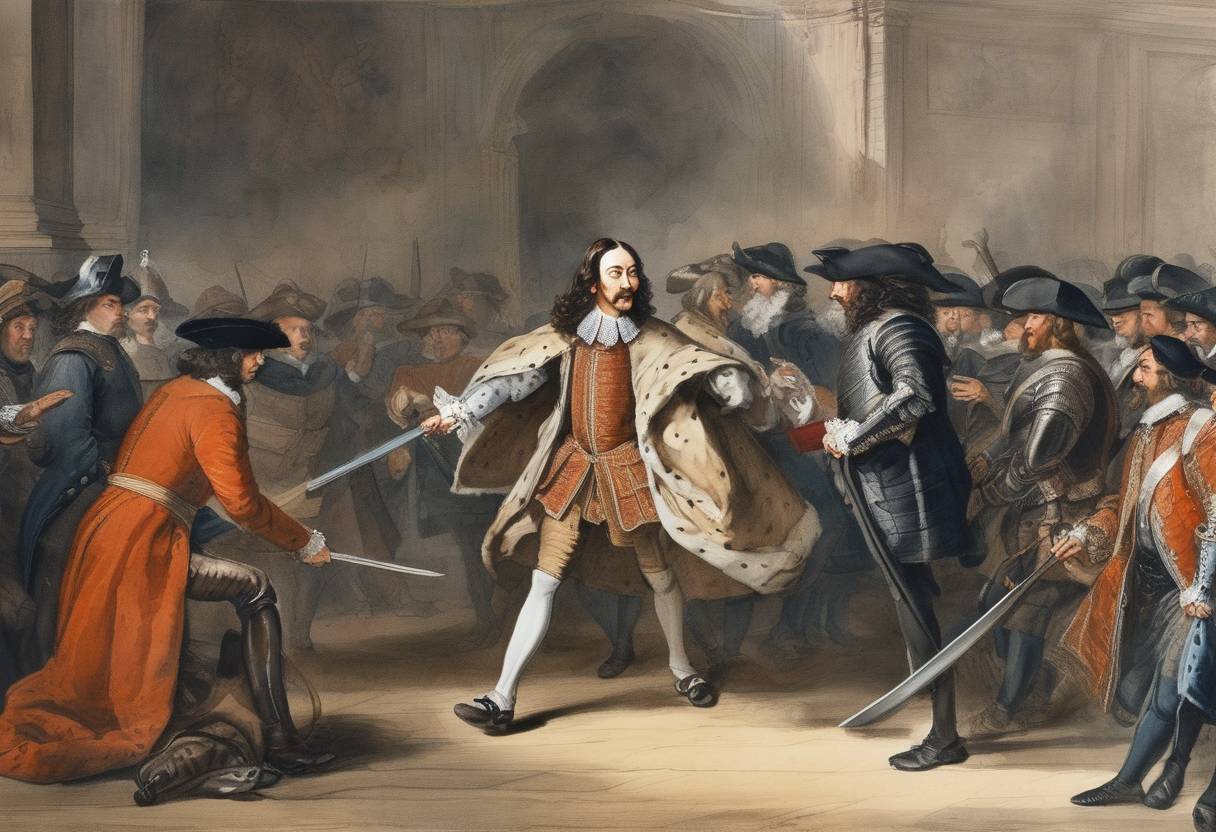
On January 2, 1642, a pivotal moment in English history unfolded when King Charles I made a bold and controversial move by ordering the arrest of five members of the English Parliament. This action created immediate tension between the monarchy and Parliament, contributing significantly to the outbreak of the English Civil War.
Under Charles I’s rule, England faced significant political and religious tensions. Charles had a tumultuous relationship with Parliament, primarily due to his belief in the divine right of kings and his attempts to govern without parliamentary consent. His personal rule from 1629 to 1640, often referred to as the “Eleven Years’ Tyranny,” saw him levy taxes without Parliament’s approval and attempt to enforce religious reforms that many opposed.
In 1640, Charles was forced to summon what became known as the Long Parliament to address financial strains largely due to conflicts with Scotland. During this time, Parliament enacted measures to limit royal authority, exacerbating tensions.
By late 1641, the political climate was fraught with suspicion and paranoia. Charles’s failure to suppress a rebellion in Ireland further strained his resources and reputation. Allegations had been made against certain members of Parliament, accusing them of being in league with the Scottish rebels and plotting to undermine the monarchy.
On January 2, 1642, King Charles I issued orders for the arrest of five prominent members of the House of Commons: John Pym, John Hampden, Denzil Holles, William Strode, and Sir Arthur Haselrig. Additionally, Lord Mandeville, a member of the House of Lords, was implicated.
The news of the impending arrests quickly spread, and the five members were forewarned. By the time the king’s forces reached Parliament to enforce the arrests, the members had absconded, finding refuge in the City of London.
Charles’s action was seen as a severe breach of parliamentary privilege and an outright assault on the legislative body. The failure of the arrest escalated the existing mistrust between the king and Parliament. In response, the House of Commons declared its session adjourned and eventually took measures to safeguard its members, solidifying its stance against the king.
Charles I’s attempted arrest significantly escalated the conflict between the monarchy and Parliament. It was perceived as an act of royal overreach and helped galvanize support for the parliamentary cause. The event catalyzed a series of confrontations, leading the country toward the English Civil War, which began later in 1642.
The war had long-lasting implications for the English monarchy, culminating in Charles I’s trial and execution in 1649 and temporarily establishing a republic under Oliver Cromwell’s leadership. These events marked a turning point in English constitutional history, setting fundamental precedents for the balance of power between the monarchy and Parliament.
Source: en.wikipedia.org