Thomas Wolsey Becomes a Cardinal
1515 · Westminster, England
Thomas Wolsey becomes a cardinal of the Catholic Church, affirming his political and ecclesiastical influence in England under King Henry VIII.
September 15, 1514
Thomas Wolsey is appointed Archbishop of York.
York, England | Catholic Church
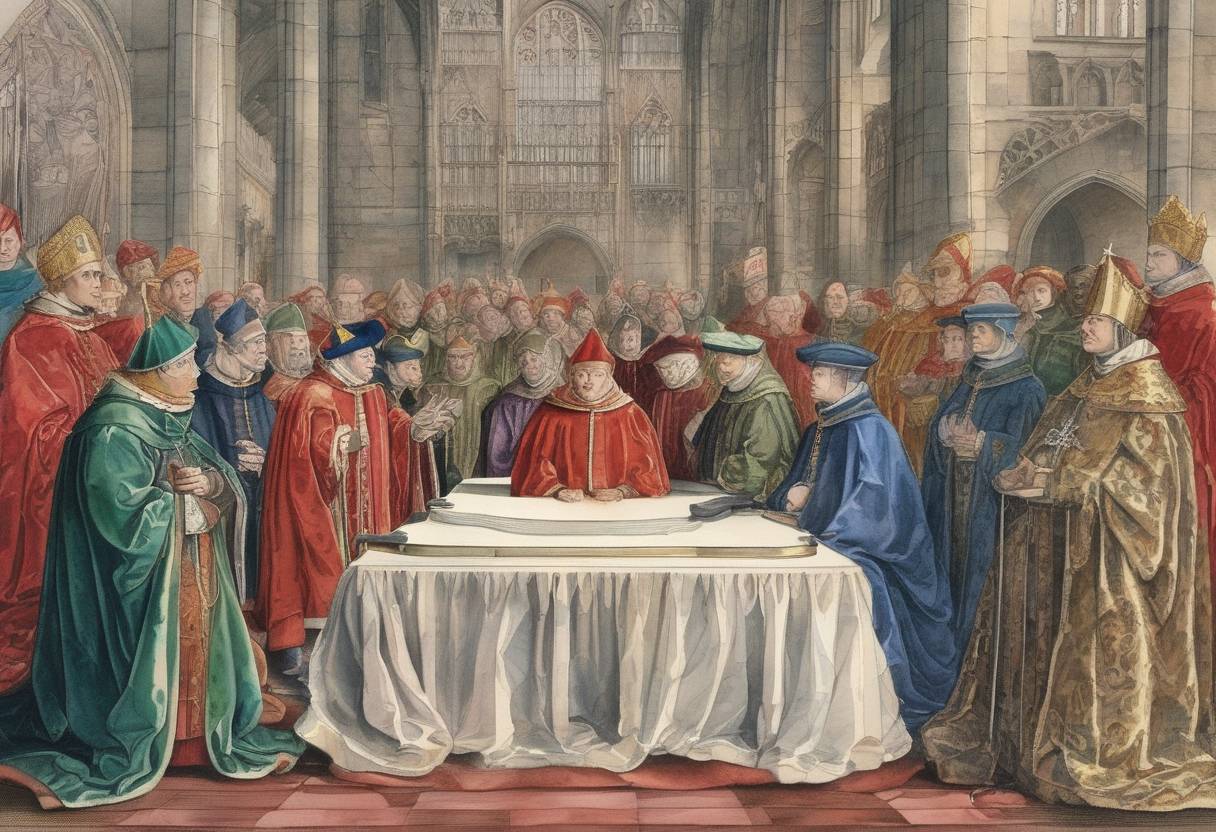
On September 15, 1514, Thomas Wolsey was appointed Archbishop of York, marking a significant step in his rise to power within the English church and government. This appointment was a pivotal moment in Wolsey’s career, as it solidified his influence in both ecclesiastical and secular affairs during the reign of King Henry VIII.
Thomas Wolsey was born around 1473 in Ipswich, Suffolk, England. He was the son of a butcher and cattle dealer, a humble beginning for someone who would rise to become one of the most powerful figures in England. Wolsey’s academic prowess was evident early on, and he attended Magdalen College, Oxford, where he earned a Bachelor of Arts degree at the age of 15. His career in the church began shortly thereafter, and he quickly gained a reputation for his administrative skills and ambition.
Wolsey’s talents did not go unnoticed, and he entered the service of Henry VII. However, it was under Henry VIII that Wolsey truly flourished. He became the king’s almoner in 1509, a position that allowed him to gain the trust and favor of the young monarch. Wolsey’s ability to manage the king’s affairs and his diplomatic skills were instrumental in his rapid ascent.
The appointment as Archbishop of York in 1514 was a significant milestone for Wolsey. The Archbishopric of York was the second most important ecclesiastical position in England, after the Archbishopric of Canterbury. This role not only enhanced Wolsey’s influence within the church but also increased his political power. As Archbishop, Wolsey was responsible for overseeing the vast diocese of York, which covered much of northern England.
Wolsey’s appointment was part of a broader strategy by Henry VIII to consolidate power and ensure loyalty among his advisors. Wolsey’s influence extended beyond the church; he became Lord Chancellor in 1515, effectively acting as the king’s chief minister. His dual role in both church and state affairs allowed him to wield considerable power, making him one of the most influential figures in England during the early 16th century.
Wolsey’s tenure as Archbishop of York and his subsequent roles were marked by significant achievements, including the negotiation of important treaties and the reformation of the English legal system. However, his fall from grace came in the late 1520s, primarily due to his failure to secure an annulment of Henry VIII’s marriage to Catherine of Aragon. Wolsey was stripped of his titles and died in 1530 on his way to face charges of treason.
Despite his downfall, Wolsey’s impact on English history is undeniable. His administrative reforms and diplomatic efforts left a lasting legacy, and his life remains a testament to the complexities of power and ambition in Tudor England.