Battle of Cape Spartivento: November 27, 1940
1940 · Cape Spartivento, Italy
The Royal Navy engaged the Italian fleet in the Battle of Cape Spartivento during World War II, resulting in a tactical stalemate.
March 28, 1941
The Battle of Cape Matapan takes place during World War II, resulting in a decisive Allied naval victory against the Italian fleet.
Cape Matapan, Greece | Royal Navy
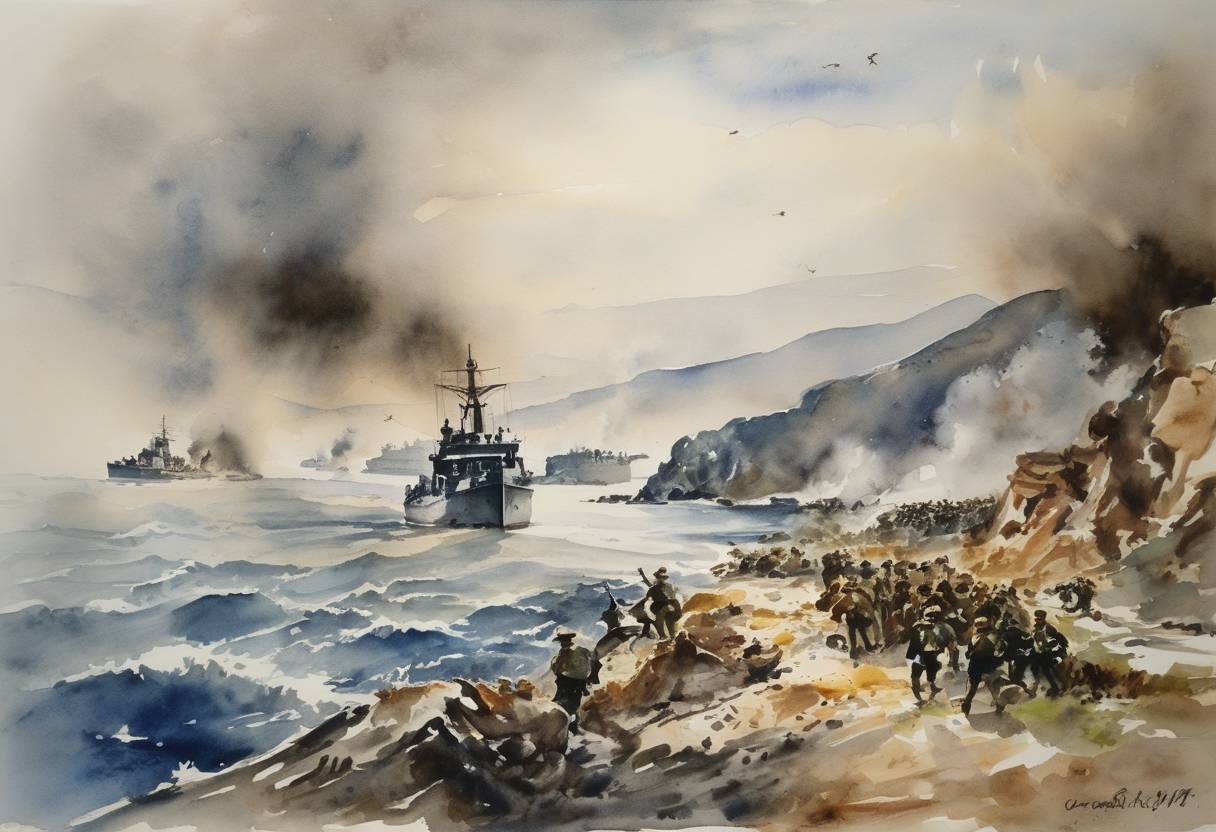
The Battle of Cape Matapan occurred during World War II, showcasing a significant naval engagement between Allied and Italian forces in the Mediterranean Sea near the Greek Peloponnesian coast. The confrontation was part of the larger Mediterranean and North African campaigns. At the time, control of the Mediterranean was crucial for supply routes, and both Axis and Allied forces sought dominance over this strategic area.
The Allied forces were primarily composed of British and Australian ships led by Admiral Sir Andrew Cunningham. The Royal Navy’s strength included battleships HMS Valiant, HMS Warspite, and HMS Barham, as well as the aircraft carrier HMS Formidable. The Italian fleet, under Admiral Angelo Iachino, featured the battleship Vittorio Veneto and several cruisers and destroyers.
On March 27, 1941, Allied intelligence, aided by Ultra codebreakers — the cryptanalysts deciphering Axis codes — learned of the Italian naval deployment. Leveraging this intelligence, Cunningham set out to intercept the Italian fleet.
The battle commenced in the afternoon of March 28, 1941. Initially, the Italian battleship Vittorio Veneto engaged Allied forces but retreated after coming under intense air attack from aircraft launched from HMS Formidable. Subsequently, the Italian cruisers found themselves isolated and vulnerable.
The night phase of the battle was particularly decisive. Utilizing radar technology, a significant advantage the Allies held over the Italians, the British battleships launched a surprise nighttime assault on the Italian heavy cruisers. This resulted in the sinking of three Italian cruisers—Fiume, Zara, and Pola—and two destroyers.
The Battle of Cape Matapan ended with a resounding victory for the Allies. The destruction of Italian naval power in the region ensured temporary Allied supremacy in the central Mediterranean Sea. This success hindered the Axis’ naval capabilities and bolstered Allied morale.
The outcome further demonstrated the effectiveness of radar technology and the strategic advantages of superior intelligence, exemplified by the role of codebreakers and aerial reconnaissance in modern naval warfare. Consequently, the battle underscored the evolving nature of naval engagements and the increasing importance of technological and intelligence capabilities in determining outcomes.
Source: www.britannica.com