Death of Richard the Lionheart
1199 · Châlus, France
Richard I of England, known as Richard the Lionheart, dies from an infection following an injury received during a siege, leading to his brother John ascending to the English throne.
April 20, 1194
King Richard I of England returned to England from his captivity in Germany. Richard had been held in captivity by Holy Roman Emperor Henry VI since December 1192 following his return from the Third Crusade and was released after a hefty ransom was paid.
England, England | Kingdom of England
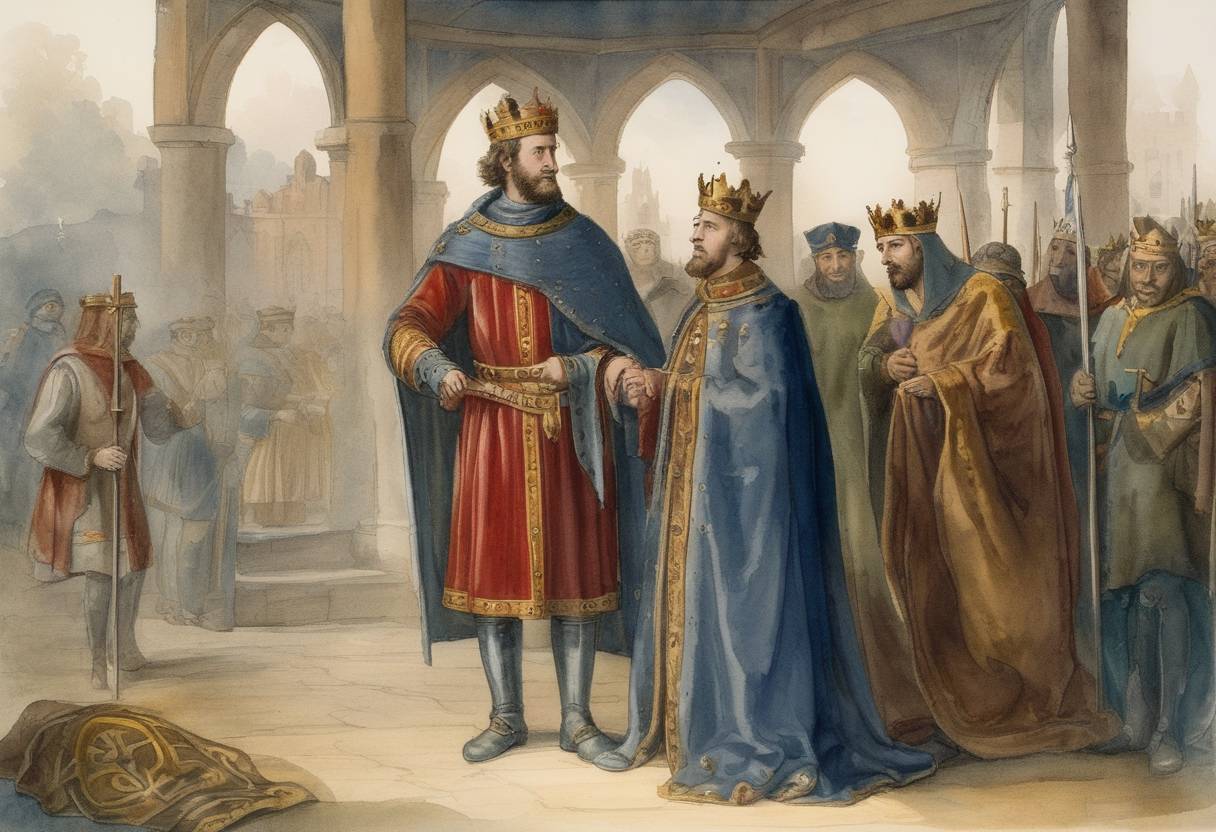
On April 20, 1194, King Richard I of England, famously known as Richard the Lionheart, returned to English soil after a protracted captivity in Germany. His capture and subsequent ransom were significant episodes that shaped his reign and the politics of medieval Europe.
Richard I embarked on the Third Crusade in 1190 alongside other European monarchs to reclaim Jerusalem from Saladin’s forces. His journey was fraught with challenges, and while he achieved some military successes, such as the capture of Acre, Richard could not retake Jerusalem. The Crusade concluded with a treaty ensuring Christian access to the holy sites, but it did little to ease tensions between Christian and Muslim forces.
After departing the Holy Land in late 1192, Richard’s return journey was perilous. Shipwrecked off the coast of the Adriatic Sea, he attempted to make his way back to England through Europe in disguise. Despite his efforts, Richard was captured near Vienna by Leopold V, Duke of Austria, in December 1192. Leopold viewed Richard as a personal enemy due to slights during the Crusade and detained him as a political and financial bargaining chip.
Leopold V handed Richard over to Henry VI, Holy Roman Emperor. The emperor demanded an immense ransom for his release—150,000 marks, equivalent to about two to three times the annual revenue of the English crown at that time. This ransom significantly burdened England, necessitating heavy taxation and the confiscation of church treasures.
Richard’s mother, Eleanor of Aquitaine, played a crucial role in organizing the ransom’s collection. The kingdom rallied to gather the necessary funds, demonstrating the monarchy’s resilience and Richard’s popularity despite his long absence.
Upon the successful delivery of the ransom, Richard was released in February 1194. He journeyed back to England, landing at Portsmouth on April 20, 1194. His return was met with relief and celebration, as his presence was needed to address various internal and external challenges, including regaining control from his brother John, who had attempted to seize power during Richard’s captivity.
Richard I’s capture and the subsequent ransom had far-reaching consequences. It highlighted the vulnerability of medieval monarchs while traveling, even on sanctioned religious missions. The immense financial strain it placed on England had long-lasting economic effects, necessitating increased taxes and fostering discontent across the realm.
Moreover, the event cemented Richard’s legendary status, portraying him as both a war hero and a victim of political betrayal. His resilience and the loyalty he inspired became central themes in English folklore and history.
Richard’s return also reasserted his authority, allowing him to resume control and focus on domestic and continental issues, particularly his ongoing conflicts with France. His reign continued until his death in 1199, marked by ongoing struggles to maintain and expand his territories.
Source: en.wikipedia.org