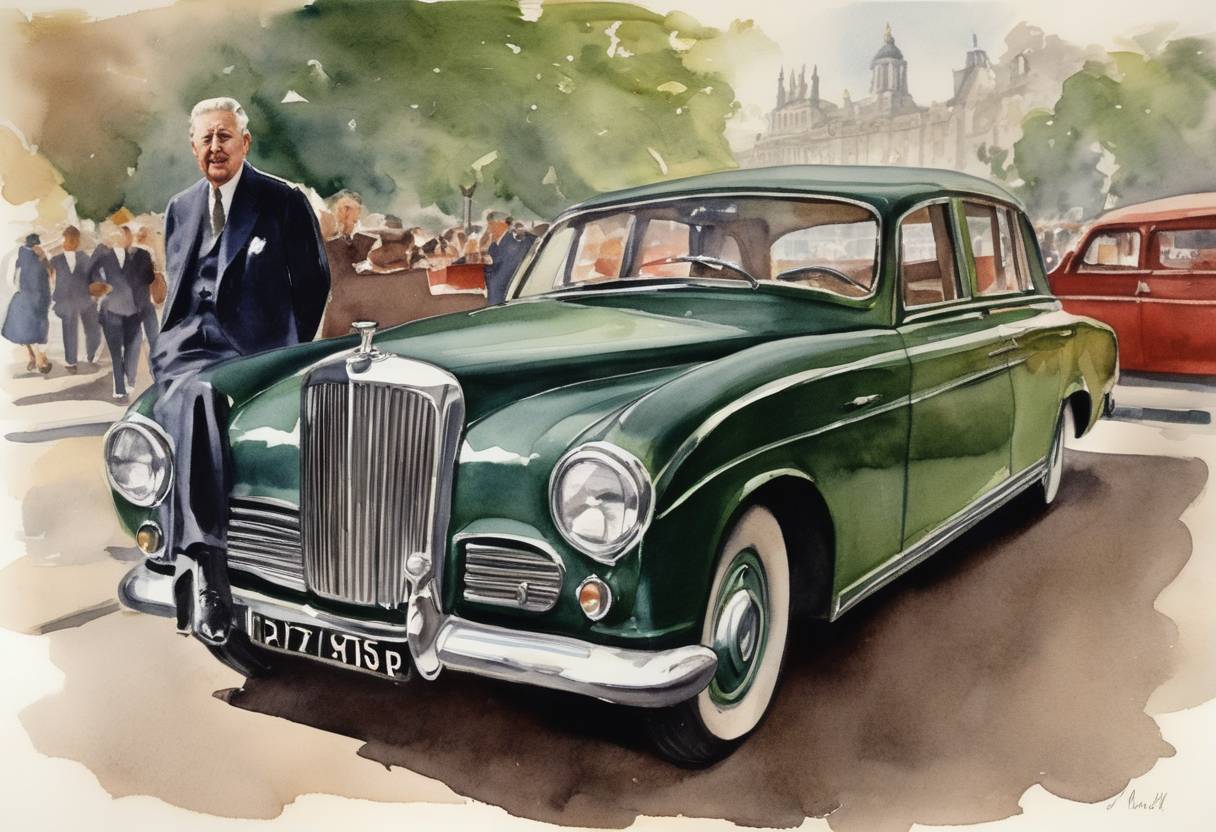
Harold Macmillan Becomes Prime Minister of the United Kingdom
Background
On January 10, 1957, Harold Macmillan became the Prime Minister of the United Kingdom. This political shift followed the resignation of Sir Anthony Eden, who stepped down largely due to the political fallout from the Suez Crisis. The Suez Crisis of 1956 damaged Eden’s career by highlighting both his and Britain’s diminished global influence and creating tension within the government and with global allies.
Sir Anthony Eden’s Resignation
Sir Anthony Eden’s decision to resign was influenced by his health and widespread criticism over his handling of the Suez Crisis. The invasion of Egypt by a tripartite force of Britain, France, and Israel, intended to regain Western control of the Suez Canal and remove Egyptian President Gamal Abdel Nasser from power, faced immense opposition. International pressure, notably from the United States and the Soviet Union, along with financial turmoil, forced a withdrawal of troops and led to a significant political crisis for Eden’s government.
Macmillan’s Rise to Power
Harold Macmillan, who held the position of Chancellor of the Exchequer prior to becoming Prime Minister, emerged as the preferred candidate to lead the Conservative Party and the country. Though R.A. Butler was another key contender for the leadership, Macmillan was seen as a unifying figure capable of consolidating the party and restoring confidence in its administration. His experience, personality, and political maneuvering abilities gained him the support necessary to succeed Eden.
Impact and Legacy
Macmillan’s tenure as Prime Minister heralded a period of economic growth and social reform, marked by a distinctive emphasis on modernizing British society. His government oversaw the decolonization of several British territories in Africa and the Caribbean, significant infrastructure developments, and a strengthening of ties with the United States, all against the backdrop of the Cold War. Macmillan’s leadership style and effective communication skills earned him the moniker “Supermac.”
Harold Macmillan’s entrance onto the global stage on January 10, 1957, marked the beginning of a significant period in 20th-century British politics characterized by cautious but progressive change. His leadership tried to navigate the United Kingdom through the challenges of post-war adjustment, balancing the nation’s traditional role as a global empire with the inevitable shift towards becoming a modern, European-centered state.