Coronation of Stephen of Blois and the Beginning of The Anarchy
1135 · London, England
Stephen of Blois is crowned King of England in Westminster Abbey, marking the beginning of the period of civil war known as The Anarchy.
January 14, 1559
Elizabeth I was crowned Queen of England at Westminster Abbey, marking the beginning of her influential reign, often referred to as the Elizabethan Era.
London, England | Westminster Abbey
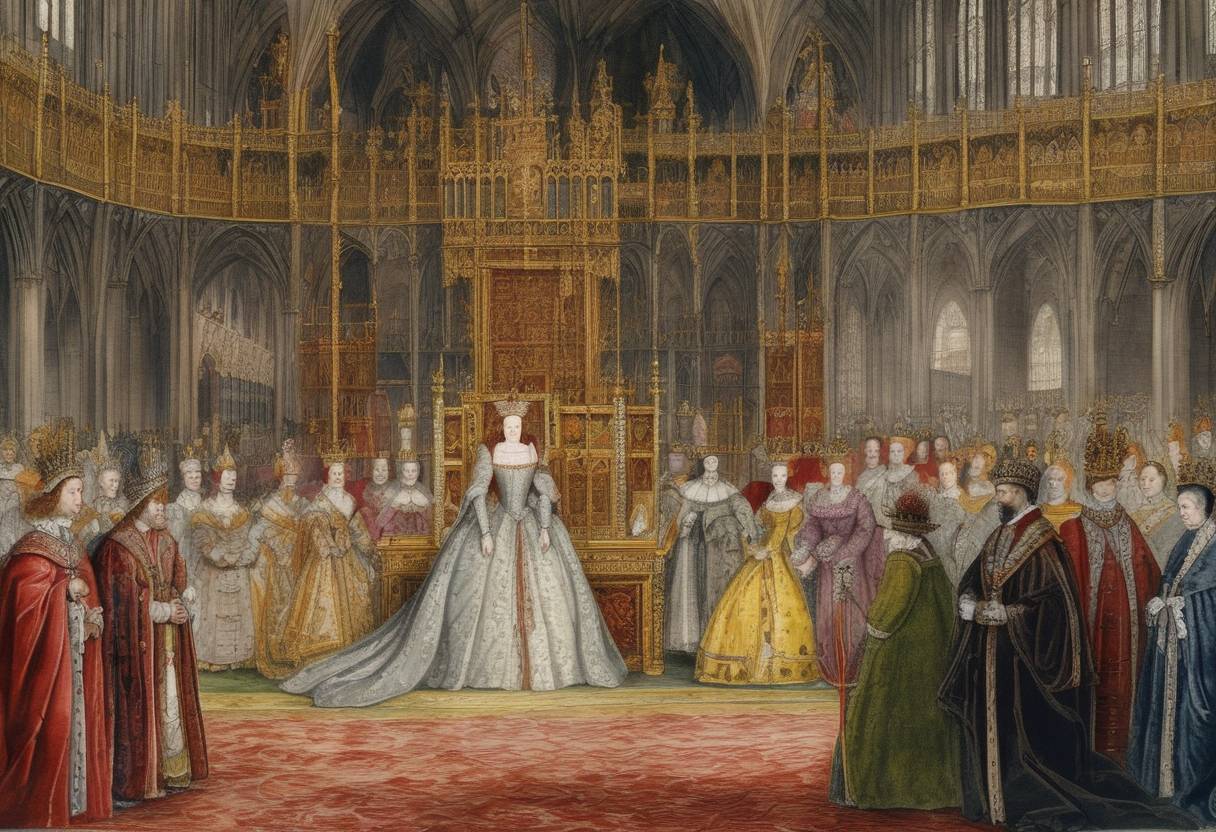
On January 15, 1559, Elizabeth I was crowned Queen of England at Westminster Abbey, marking the official commencement of her reign, which would come to be known as the Elizabethan Era. The coronation ceremony was a significant event in the history of England, characterized by both grandeur and political symbolism.
Elizabeth I ascended to the throne following the death of her half-sister, Mary I, in November 1558. Mary’s reign had been marked by religious turmoil, as she sought to restore Roman Catholicism in England. Elizabeth, the daughter of Henry VIII and Anne Boleyn, was Protestant and her accession was welcomed by those who opposed Mary’s return to Catholic orthodoxy.
The coronation took place in Westminster Abbey, a traditional setting for English coronations, and was conducted by Owen Oglethorpe, the Bishop of Carlisle. Due to tensions between differing religious factions, it was controversial that the ceremony was performed by a bishop who did not fully adhere to Elizabeth’s Protestant beliefs. Elizabeth strategically navigated these religious sensitivities to stabilize her rule.
During the coronation, Elizabeth was anointed and crowned with the hefty St Edward’s Crown, symbolizing her legitimate claim to the throne and divine right to rule. The event was attended by nobles, foreign dignitaries, and the public, each eagerly anticipating the reign of the young monarch.
Elizabeth’s reign saw the flourishing of English culture, exploration, and power. Known as the Elizabethan Era, this period witnessed the expansion of English influence through exploration, notably with figures like Sir Francis Drake and Sir Walter Raleigh. It was also a time of cultural renaissance with the works of William Shakespeare, Christopher Marlowe, and Ben Jonson representing a high point in English literature.
Politically, Elizabeth’s rule was marked by astute diplomacy and compromise, particularly in religious matters. She established the Elizabethan Religious Settlement, which aimed to unify her subjects by incorporating elements of Catholic tradition with Protestant reforms, thus shaping the future of the Church of England.
Elizabeth I’s successful reign provided a period of relative stability and prosperity for England, strengthening national identity and establishing the conditions for future expansions during the British Empire. Her leadership, intelligence, and political acumen left a lasting legacy, securing her place as one of England’s most revered and iconic monarchs.
Source: www.britannica.com