The Reopening of the Leaning Tower of Pisa: December 15, 2001
2001 · Pisa, Italy
The Leaning Tower of Pisa reopened to the public after 11 years of stabilization work to prevent it from toppling over.
August 8, 1173
Construction began on the Tower of Pisa, which would later become famous as the Leaning Tower of Pisa due to its unintended tilt caused by a poorly laid foundation on unstable soft ground.
Pisa, Italy | No specific organization
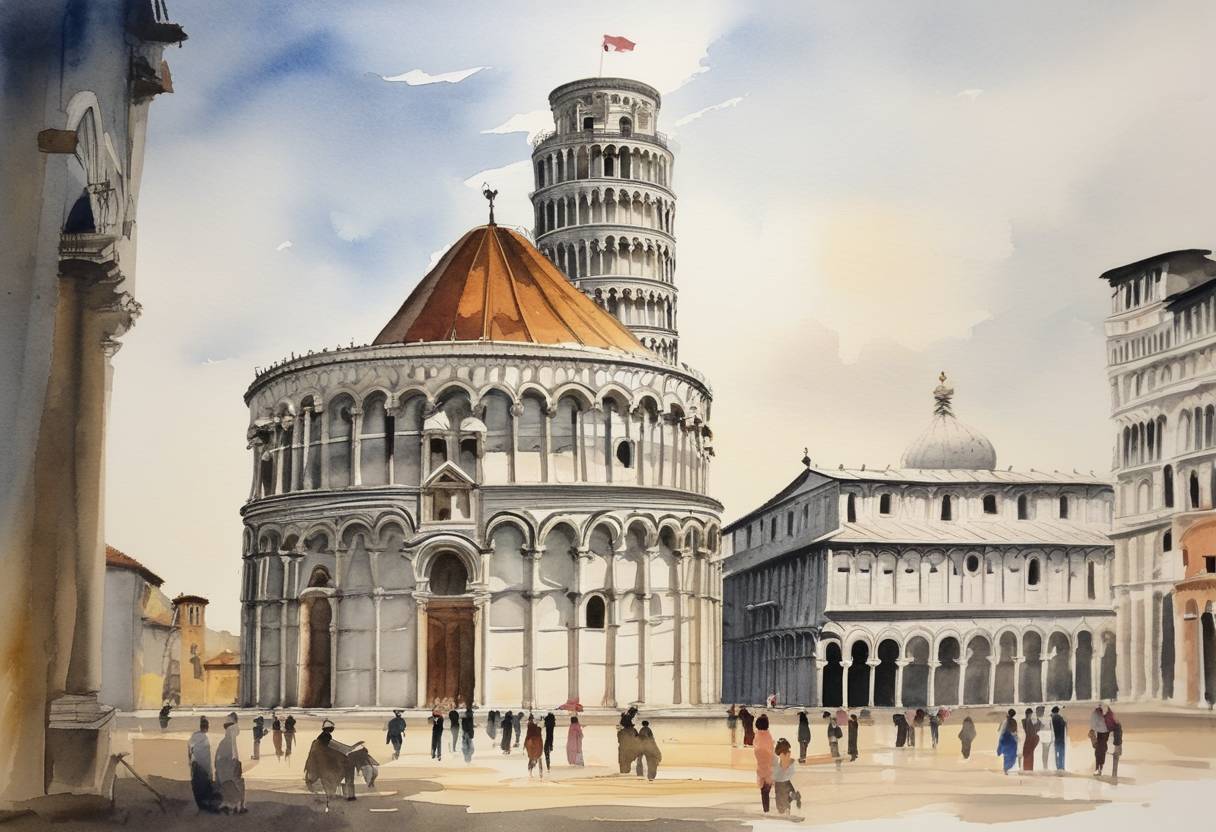
On August 8, 1173, construction commenced on what would become one of Italy’s most iconic architectural marvels—the Tower of Pisa, widely recognized today as the Leaning Tower of Pisa. This ambitious project took place in the city of Pisa, within the region of Tuscany, during a period where the Republic of Pisa was a powerful maritime city-state.
The Bell Tower, intended to accompany the Pisa Cathedral complex, was designed to display the city’s wealth and architectural prowess. Architect Bonanno Pisano is often attributed with its design, although many details about the project’s early leadership remain uncertain. The initial plan intended the tower to stand vertically as a freestanding bell tower for the cathedral.
Initial construction spurts saw setbacks when workers completed three floors of the intended eight-story structure, observing an unexpected tilt. The leaning was caused by the tower’s foundational bed—a layer of soft, unstable subsoil comprised of a mix of mud, sand, and clay—which could not adequately support the structure’s intended weight.
Due to political unrest and wars, particularly with neighboring city-states such as Florence, Genoa, and Lucca, construction was sporadically halted, which incidentally allowed for some ground settlement underneath the tower, temporarily stabilizing the foundation. This pause in building efforts inadvertently contributed to the eventual survival of this uniquely tilted structure.
Despite various efforts over the centuries to correct, stabilize, or halt the progression of the tower’s leaning, the Leaning Tower of Pisa has endured as a UNESCO World Heritage Site and an iconic symbol of architectural perseverance through adversity. For nearly two centuries, from the start in 1173 to its completion in 1372, the tower’s tilt continued to capture popular imagination.
The Leaning Tower’s inclination has made it a subject of intense study and discussion in fields ranging from architectural engineering to geology. Its enduring legacy as a globally recognized tourist attraction underscores the intrigue and admiration for human craftsmanship and the relentless passage of time and nature.
Through centuries fraught with war, attempts to rectify its tilt, and countless visitors, the Leaning Tower of Pisa stands as a testament to medieval ingenuity and, unintentionally, a metaphor for persistence and balance.
Source: en.wikipedia.org