The Gloster E.28/39: Maiden Flight on May 15, 1941
1941 · Gloucestershire, United Kingdom
The Gloster E.28/39, the first British jet engine aircraft, made its maiden flight.
July 27, 1949
The de Havilland Comet, the world's first commercial jet airliner, makes its maiden flight.
Hatfield, United Kingdom | de Havilland
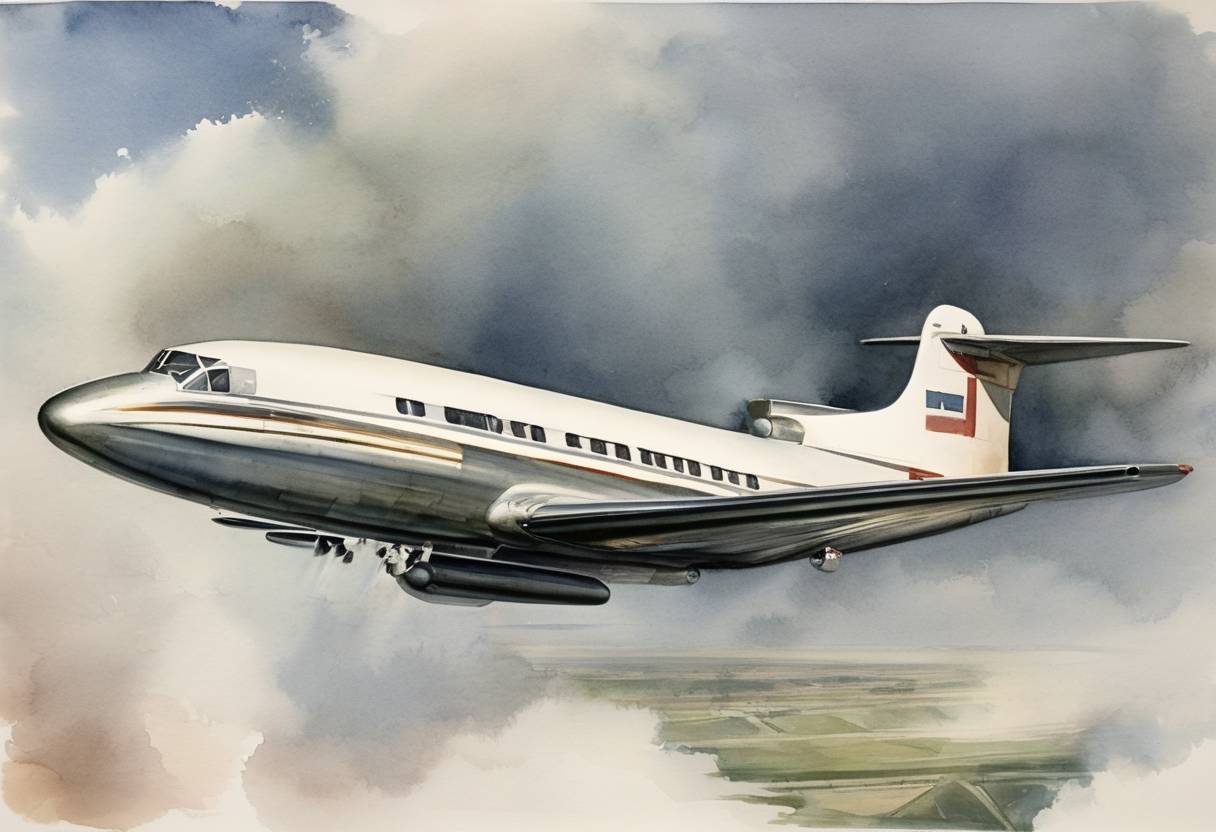
On July 27, 1949, the de Havilland Comet, the world’s first commercial jet airliner, made its maiden flight, marking a significant milestone in aviation history. This initial flight took place at the Hatfield Aerodrome in Hertfordshire, England, where the prototype Comet 1 took to the skies, demonstrating the potential for jet-powered passenger travel.
The development of the de Havilland Comet was driven by advancements in jet engine technology. During World War II, the use of jet aircraft was primarily limited to military purposes. However, post-war optimism and technological innovation quickly adapted this technology for commercial use.
The Comet was developed by the de Havilland Aircraft Company, led by a team including chief designer Ronald Bishop and chief aerodynamicist R.E. Bishop. The project aimed to revolutionize air travel by significantly reducing flight times and providing a smoother, more comfortable ride for passengers.
The prototype, known as ‘Prototype Comet DH.106,’ was piloted by de Havilland’s chief test pilot, John Cunningham. The aircraft departed from Hatfield Aerodrome, achieving a successful short-duration flight that showcased its advanced design and the feasibility of commercial jet aviation.
The Comet’s configuration included:
The successful maiden flight of the Comet set the stage for its entry into commercial service in 1952, when it began operations with British Overseas Airways Corporation (BOAC). The introduction of the Comet reduced transcontinental travel times dramatically and thus transformed the air travel industry, offering higher speed, altitude, and passenger comfort levels than propeller-driven aircraft of the era.
Despite initial triumphs, the Comet faced challenges due to structural failures attributed to metal fatigue, leading to several tragic accidents in the early 1950s. These issues led to significant redesign and improvements in aircraft safety standards across the industry.
The lessons learned from the Comet’s early operations influenced the design of subsequent jet airliners and laid the groundwork for the modern commercial aviation industry, ultimately establishing the jet age in global travel.