The February 2, 2011 Groundhog Day Blizzard
2011 · Chicago, United States
A massive snowstorm hit large portions of the United States, affecting about a third of the country. It disrupted transportation and led to widespread power outages.
January 19, 2019
A severe snowstorm strikes the Midwest of the United States, resulting in widespread travel chaos and power outages across several states, affecting thousands of households and businesses.
Chicago, United States | National Weather Service
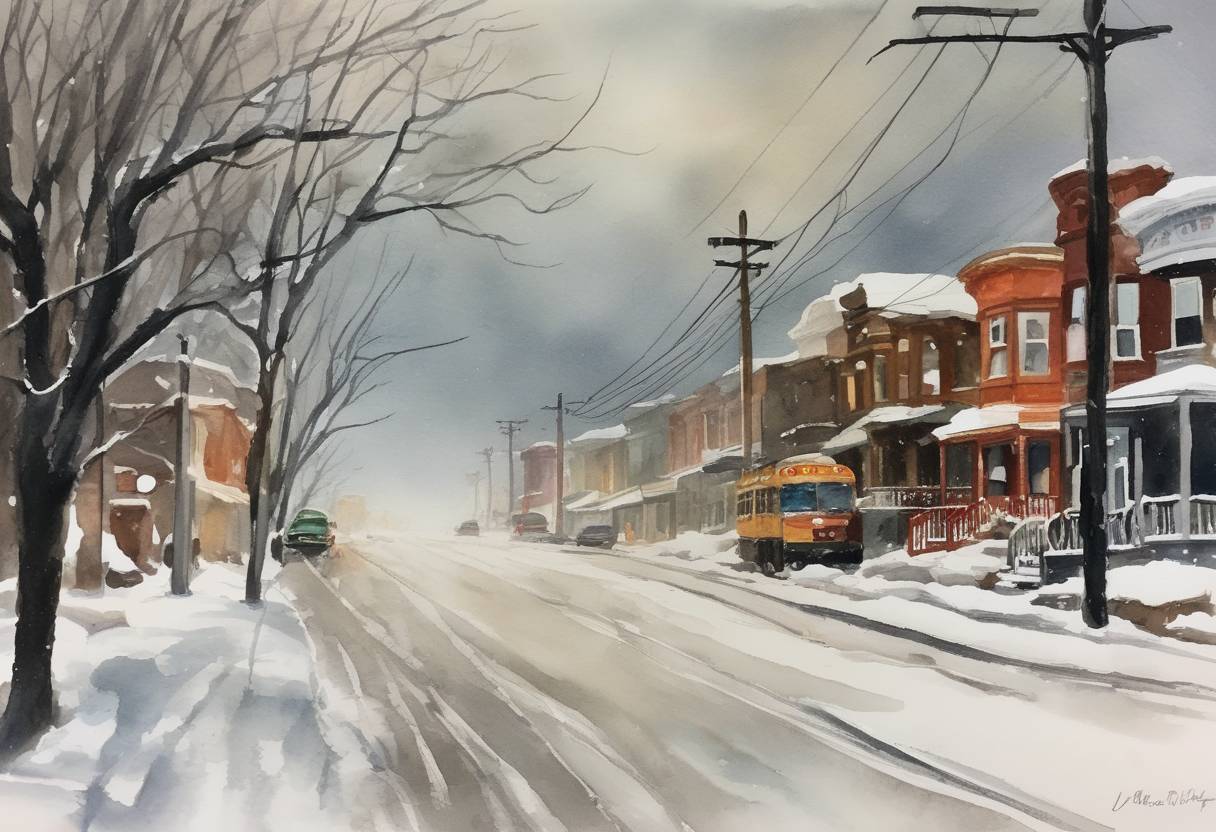
On January 19, 2019, a powerful snowstorm swept across the Midwest region of the United States, causing significant disruption and hardship for residents throughout the affected areas. This severe weather event was characterized by heavy snowfall, strong winds, and dangerously cold temperatures, leading to widespread travel chaos and power outages that impacted thousands of households and businesses.
The snowstorm resulted from a complex meteorological system that brought Arctic air down from Canada, colliding with a moist air mass coming from the south. The convergence of these air masses created ideal conditions for substantial snow accumulation across the Midwest, particularly affecting states such as Iowa, Illinois, Missouri, and Indiana.
Travel Disruptions: The storm led to hundreds of flight cancellations and delays at major airports, including Chicago O’Hare and Midway, St. Louis Lambert International, and Kansas City International. Roads and highways became treacherous with snow and ice, causing numerous accidents and prompting road closures.
Power Outages: Strong winds and heavy, wet snow brought down trees and power lines, leading to widespread power outages. Utility companies worked tirelessly in freezing conditions to restore electricity, but the severity of the storm meant that some areas experienced prolonged outages.
Emergency Response: State and local governments activated emergency plans to deal with the storm’s impact. Many schools and public offices were closed as officials urged residents to stay indoors and avoid unnecessary travel.
This snowstorm was one of several severe weather events that winter, highlighting the challenges posed by hazardous weather conditions in the Midwest. It underscored the importance of preparedness and the need for efficient response strategies to minimize the impact on daily life and economic activity. The storm also served as a reminder of the region’s vulnerability to rapidly changing and extreme weather patterns, fueling discussions on infrastructure resilience and climate adaptation measures.
As the region recovered from the immediate effects of the storm, conversations around improving weather forecasting and emergency management procedures continued, aiming to enhance future responses to such disruptive weather events.
Source: www.cnn.com