Thomas Edison Patents the Kinetoscope
1897 · West Orange, United States
Thomas Edison patented the Kinetoscope, a device for viewing moving pictures.
April 14, 1894
The first commercial motion picture house opened in New York City using Thomas Edison's Kinetoscope.
New York City, United States | Holland Brothers Novelty Company
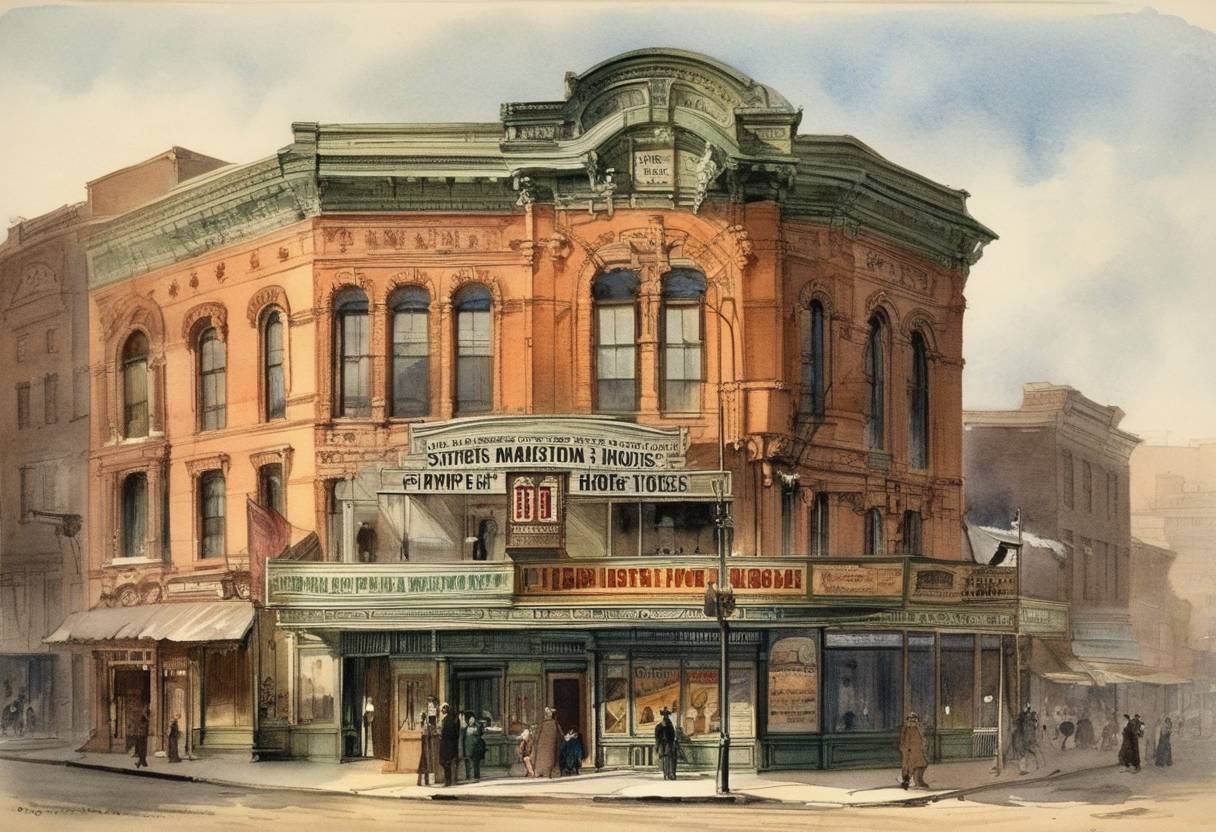
On April 14, 1894, history was made in the world of entertainment with the opening of the first commercial motion picture house in New York City. This groundbreaking establishment used Thomas Edison’s Kinetoscope, an invention that revolutionized the way people experienced visual media.
The Kinetoscope, developed by Thomas Edison and his associate William Kennedy Laurie Dickson, was an early motion picture exhibition device. This device was designed for films to be viewed by one individual at a time through a peephole viewer window. Although it was not capable of projecting onto a screen, it played a crucial role in the development of cinema.
Located at 1155 Broadway in New York City, the venue housed ten Kinetoscope machines, allowing patrons to experience moving pictures individually. Each machine displayed a short film, lasting about 15 to 60 seconds. For a fee, visitors could witness these captivating, albeit brief, snippets of moving images, ranging from vaudeville acts to scenes of everyday life.
The opening of this motion picture house marked a pivotal moment in the history of film. It was the first instance where the general public had commercial access to moving picture technology on a dedicated, publicly accessible platform. This event signaled the beginning of the transition from traditional, stationary forms of entertainment to dynamic visual storytelling that would eventually lead to the development of the film industry as it is known today.
The success of the Kinetoscope parlor prompted further innovations in the field of motion pictures, ultimately leading to developments in film projection and the eventual rise of the movie theater as the centerpiece of cinematic experiences. The transition from individual to communal viewing experiences profoundly altered social entertainment dynamics and paved the way for the cultural phenomenon of cinema.
Source: www.todayintechhistory.com