The United States Takes Control of Los Angeles - August 13, 1846
1846 · Los Angeles, United States
The United States takes control of Los Angeles during the Mexican-American War, marking an important step in the conquest of California.
February 24, 1942
The Battle of Los Angeles occurs during World War II, where a false alarm causes a blackout and firing of anti-aircraft shells by the United States against a supposed enemy attack, which later turns out to be a false warning.
Los Angeles, United States | United States Army
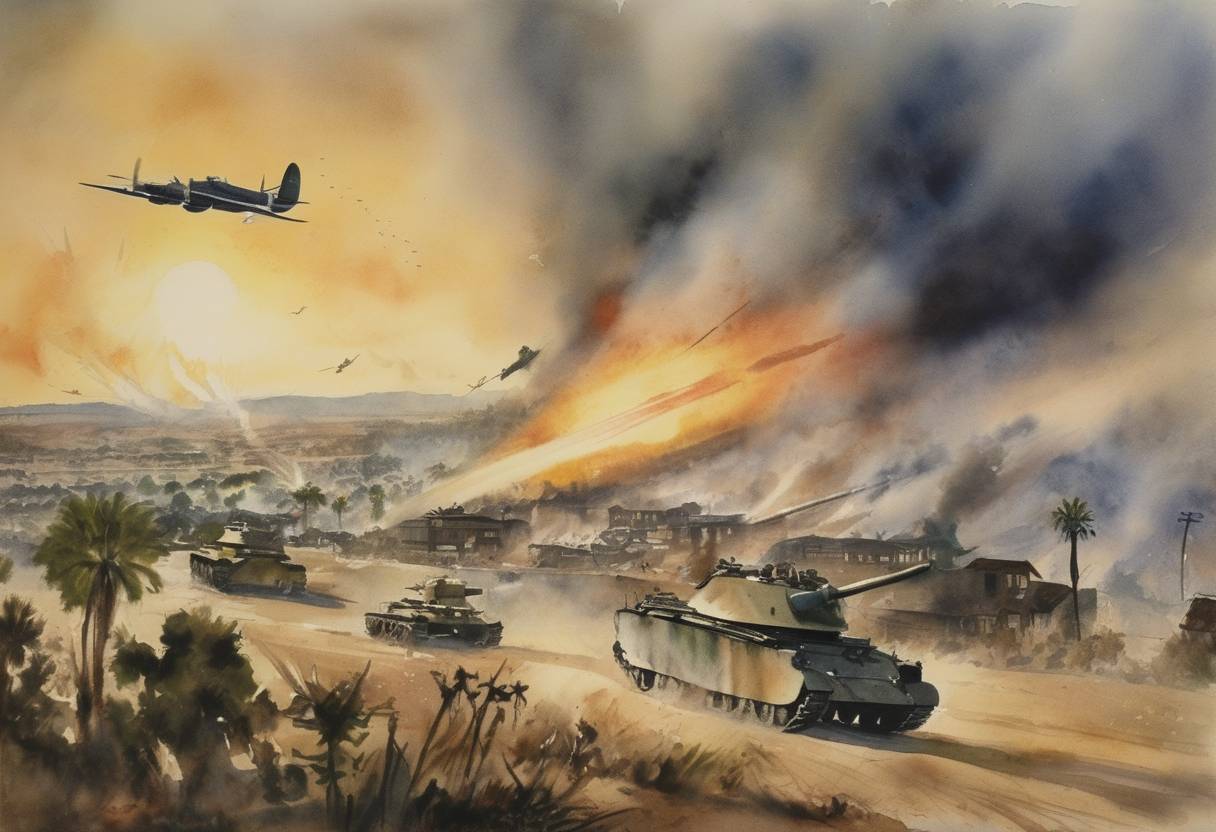
In the early years of World War II, the United States was on high alert after the attack on Pearl Harbor on December 7, 1941. The West Coast, in particular, feared a potential Japanese attack. This heightened anxiety led to several false alarms and sightings of supposed enemy aircraft in the weeks that followed, contributing to an atmosphere of tension and suspicion.
On the night of February 24, 1942, and into the early hours of February 25, unknown objects were reported in the skies over Los Angeles. The alerts began around 7:18 PM when Naval intelligence warned of a potential attack within the next ten hours. Around 2:25 AM, air raid sirens sounded throughout Los Angeles County, prompting a citywide blackout and placing military and civilian defense units on high alert.
Anti-aircraft artillery units were summoned to protect the city, and at approximately 3:16 AM, they began firing .50 caliber machine guns and anti-aircraft shells into the skies. The firing continued sporadically for over an hour, with approximately 1,400 shells being shot.
By sunrise, the “all-clear” signal was given, and no enemy planes were found or reported shot down. In the light of day, the event was seen largely as a false alarm. There were no significant property damages, although five civilians died during the incident due to heart attacks and car accidents resulting from the chaos.
The U.S. Army initially attributed the incident to nervousness and weather balloons, with Secretary of the Navy Frank Knox downplaying speculation of an enemy attack and labeling it a “false alarm.” Over the years, theories have ranged from Japanese reconnaissance planes to the notion of unidentified flying objects (UFOs), although no definitive evidence has supported these claims.
The “Battle of Los Angeles” reflected the intense fear and readiness that characterized the American home front during World War II. While it did not directly involve combat with enemy forces, it highlighted the psychological impact of the war on American civilians and military personnel. The incident served as a lesson in the importance of calibrated responses to threats and better communication systems, which were improved upon as the war progressed.
Source: www.history.com