Annulment of King Henry VIII's Marriage to Anne of Cleves
1540 · London, England
King Henry VIII of England annuls his marriage to his fourth wife, Anne of Cleves.
October 23, 1520
King Henry VIII of England ordered a royal inquiry into the legitimacy of his marriage to Catherine of Aragon.
London, England | Royal Court of England
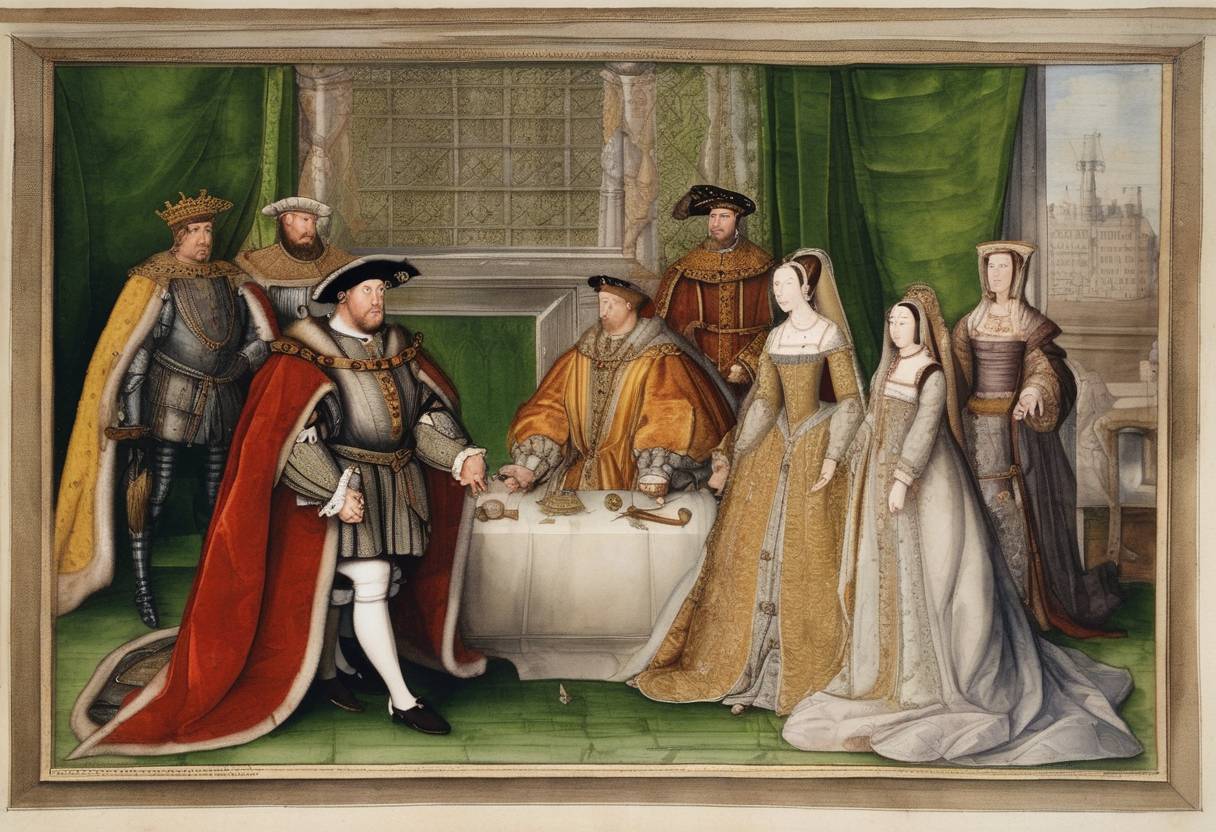
There appears to be a chronological discrepancy concerning the date cited for King Henry VIII’s inquiry into the legitimacy of his marriage to Catherine of Aragon. Historical records indicate that the famous question of the validity of this marriage emerged significantly later, around 1527, culminating in a series of events that ultimately led to the English Reformation.
Marriage Background: King Henry VIII married Catherine of Aragon, the widow of his brother Arthur, in 1509. This marriage required a papal dispensation due to canonical prohibitions against marrying a brother’s widow.
Desire for an Heir: By the mid-1520s, Catherine had failed to produce a male heir, a pressing concern for Henry who desired a stable Tudor succession. This urgency precipitated doubts regarding the marriage’s divine sanction.
Initial Efforts: In 1527, Henry began earnest attempts to resolve the matter by seeking an annulment, a process instigated formally through a petition to Pope Clement VII.
Cardinal Wolsey’s Role: Cardinal Thomas Wolsey, Henry’s Lord Chancellor, was deputed to persuade the Papacy of the marriage’s invalidity, asserting that Catherine’s prior marriage to Arthur rendered her union with Henry sinful.
Papal Obstacles: The political context, including the sack of Rome and Pope Clement VII’s imprisonment by Charles V (Catherine’s nephew), complicated the matter, delaying the resolution Henry sought.
Annulment and Consequences: The protracted failure to secure a papal annulment eventually led Henry to break from the Roman Catholic Church, forming the Church of England and initiating the English Reformation.
Legacy: The question of his marriage’s legitimacy set a precedent that altered the course of English history, having profound religious, political, and social ramifications.
The inquiry into Henry’s marriage, while pivotal, did not commence on October 23, 1520. Instead, it escalated into prominence years later, serving as a critical turning point that shaped England’s ecclesiastical and monarchical landscape.