Russia Adopts the Gregorian Calendar
1918 · Petrograd, Russia
Russia adopted the Gregorian calendar, effectively transitioning from the Julian calendar previously in use.
December 29, 1709
Emperor Peter I of Russia issues a ukase (edict) that requires the Russian New Year to be celebrated on January 1, aligning with the Julian calendar instead of September 1.
Saint Petersburg, Russia | Russian Imperial Government
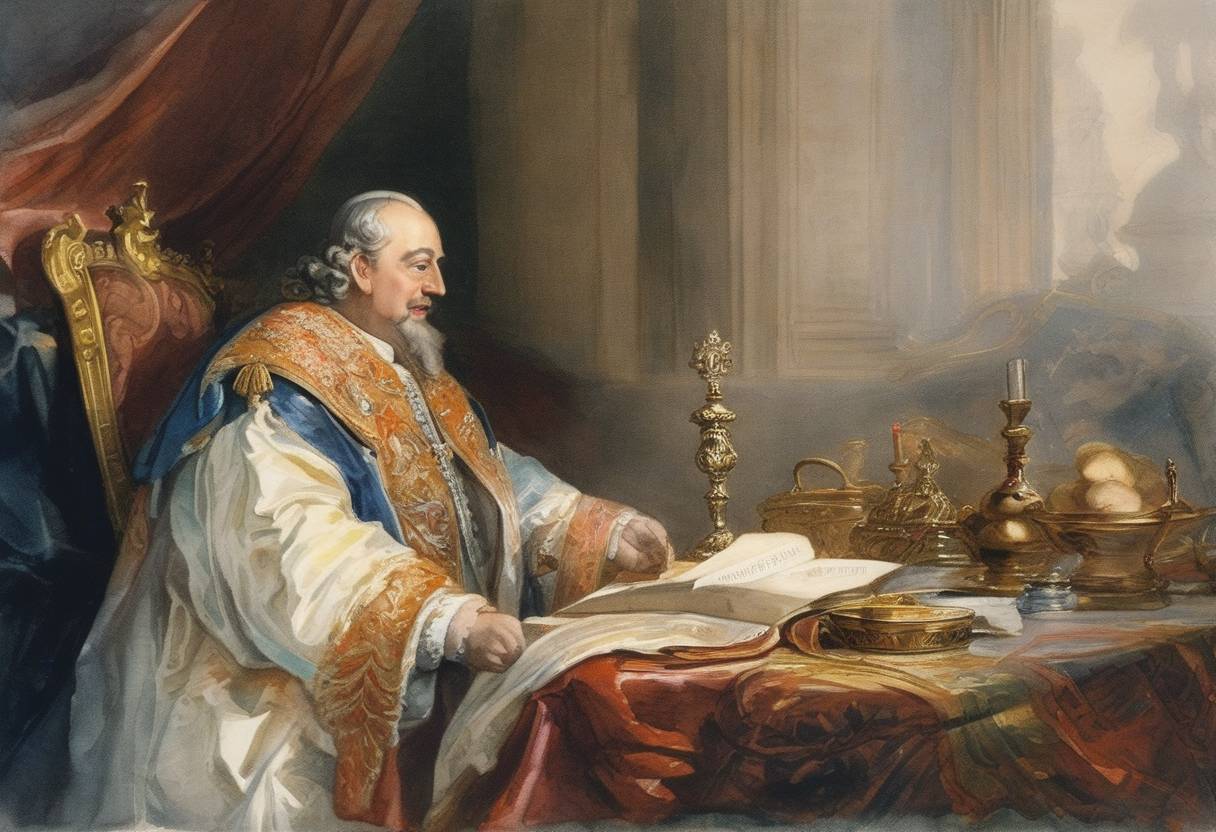
On December 20, 1709 (Old Style; Julian calendar), which corresponds to December 30, 1709, New Style (Gregorian calendar), Emperor Peter I of Russia issued a significant ukase (edict) decreeing the change of the Russian New Year celebration from September 1 to January 1. This was a part of Peter’s broader efforts to modernize Russia and align it more closely with Western European customs.
Pre-Reform Calendar: Traditionally, Russia followed the Byzantine calendar, which began the new year on September 1. This calendar was deeply entrenched in the religious and cultural practices of the Eastern Orthodox Church.
Westernization of Russia: Peter the Great was determined to reform Russian society along Western European lines, aiming to modernize the country both culturally and administratively. This ukase was in line with his ongoing efforts to integrate Western customs and perspectives.
New Year Switch: The edict mandated that January 1, 1709 (Old Style) would officially be recognized as the first day of the new year, adopting the date commonly used in most of Europe.
Implementation: The change was intended to simplify communication and align trade practices with Western countries, which largely followed the Gregorian calendar.
Symbolism: By changing the date of the New Year, Peter the Great was not only adopting a Western norm but also symbolically demonstrating Russia’s shift towards Westernization under his reign.
Cultural Integration: Aligning the New Year with Western Europe was part of Peter’s broader campaign for Russia’s integration into European affairs, impacting commercial, political, and cultural exchanges.
Resistance and Acceptance: While some conservative factions resisted the change due to its deviation from Orthodox traditions, the practical benefits and Peter I’s strong governance eventually led to widespread acceptance.
Modernization: This adjustment was part of a series of reforms that greatly contributed to modernizing Russia, allowing it to emerge as a major European power by the early 18th century.
Peter I’s New Year ukase is remembered as a critical step in Russia’s transformation under his rule, symbolizing the broader Westernization policies that redefined Russian society, aligning it more closely with contemporary European standards while setting the stage for Russia’s future as a global power.
Source: en.wikipedia.org