Josiah Winslow's Raid Against the Narragansett - November 2, 1675
1675 · Narragansett, United States
Plymouth Colony governor Josiah Winslow led a colonial militia in a raid against the Narragansett during King Philip's War.
September 22, 1711
The Tuscarora War began with a raid by Native American tribes on colonial settlements in North Carolina.
Bath, Thirteen Colonies (present-day United States) | Tuscarora and other allied tribes
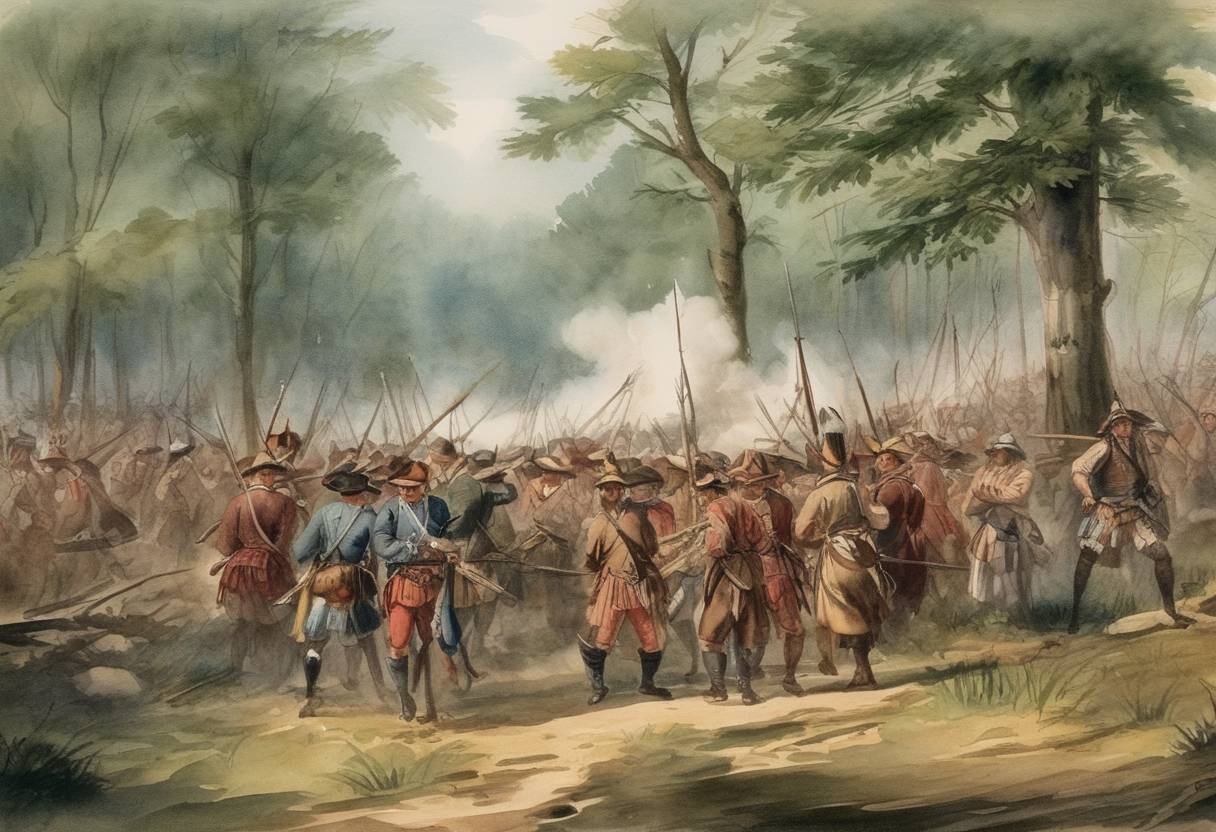
On September 22, 1711, the Tuscarora War began, marking a significant and violent chapter in colonial North Carolina’s history. This conflict arose when the Tuscarora people, an Indigenous group from the interior regions of present-day North Carolina, attacked colonial settlements along the Neuse and Pamlico Rivers. The attack was a result of escalating tensions over encroachment on Tuscarora lands by European settlers, exploitative trade practices, and abuses against Native communities.
Several factors contributed to the outbreak of hostilities:
Land Encroachment: As European settlers expanded their colonies, they increasingly infringed upon the traditional territories of the Tuscarora, leading to disputes and tensions over land ownership and use.
Exploitation and Slavery: There was a prevailing practice of exploiting Native populations through unfair trade and capturing them for enslavement. The Tuscarora, like many Indigenous groups, faced significant threats from slavers who raided their communities.
Political Dynamics: The Native tribes of the region, including the Tuscarora, had complex relationships with the European powers and among themselves, occasionally leading to alignments and conflicts influenced by broader colonial politics.
On the morning of September 22, the conflict officially began when Tuscarora warriors launched coordinated attacks on multiple settlements, notably at Bath and New Bern. They targeted the homes of settlers, destroying property, and resulting in the deaths of approximately 130 colonists. These surprise raids unfolded in an environment where the settlers were unprepared for such a calculated assault.
This initial attack marked the beginning of a three-year conflict characterized by violence on both sides. The war saw the collaboration of other Native tribes with colonial forces and ended with the defeat of the Tuscarora and their eventual migration north to join the Iroquois Confederacy in New York. The war significantly diminished Tuscarora numbers and power in the region while opening the way for increased colonial expansion.
In the wake of the war, colonial policies towards Native American tribes became increasingly aggressive and exclusionary. The Tuscarora War served as a precursor to other colonial-Indian conflicts in the Carolinas and beyond. It highlighted the volatility of colonial and Native American relations and accelerated changes in land ownership and control in the Carolinas. Ultimately, the war had lasting effects on both the indigenous populations and the development of colonial policy in the early Southeastern United States.
Source: www.ncpedia.org