The Naval Battle of La Rochelle: June 22, 1372
1372 · La Rochelle, France
The naval Battle of La Rochelle took place during the Hundred Years' War, resulting in a decisive Castilian victory over the English fleet.
August 29, 1350
The Battle of Winchelsea takes place, also known as the Battle of Les Espagnols sur Mer, where English forces led by Edward III defeat a Castilian fleet in a naval conflict during the Hundred Years' War.
Winchelsea, England | English Fleet
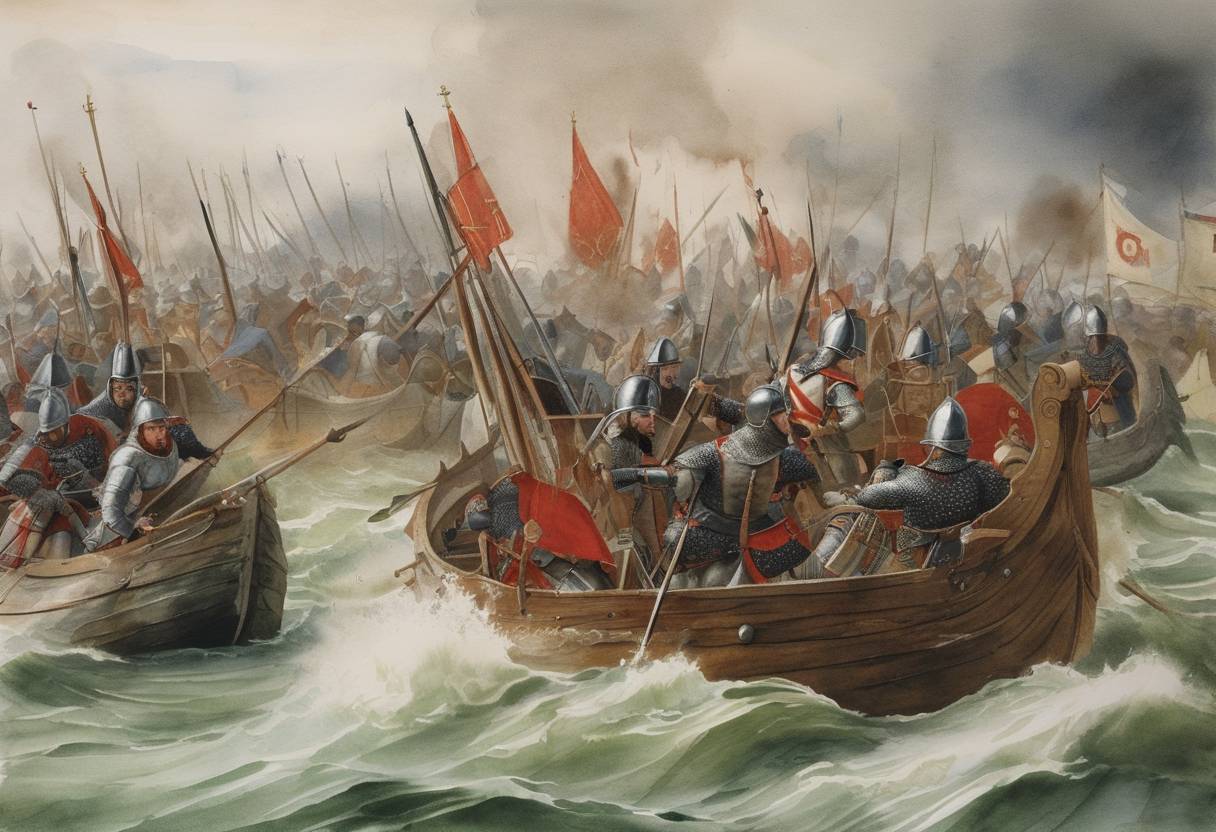
On August 29, 1350, the Battle of Winchelsea, also known as “Les Espagnols sur Mer,” took place as a significant naval engagement during the early phases of the Hundred Years’ War. This battle saw English forces, led by King Edward III, successfully confronting and defeating a fleet of Castilian ships.
The battle unfolded against the backdrop of the Hundred Years’ War, a prolonged series of conflicts between the Kingdom of England and the Kingdom of France over control of the French throne. Although the principal antagonists were France and England, several other European kingdoms, including Castile, were indirectly involved or affected by the hostilities.
The tension between England and Castile rose due to disputes over piracy and trading routes in the English Channel and the Bay of Biscay. Castilian privateers had been intercepting English merchant vessels, prompting a decisive English response.
The Battle of Winchelsea bolstered English maritime confidence and buffered the English coastline against future incursions. It demonstrated the effectiveness of robust naval strategies and reinforced England’s naval dominance in the region during a critical phase of the Hundred Years’ War.
The victory reaffirmed Edward III’s military prowess and furthered his domestic reputation, consolidating his leadership at a time when control of the seas was pivotal to England’s broader military and economic ambitions.
In the larger scope of the Hundred Years’ War, though not a decisive turning point, the battle illustrated the interconnectedness of European royalty, commerce, and maritime power in the medieval period. It reflected the escalating reach and impact of this prolonged conflict beyond the land battles on the continent, extending into marine territorial disputes.
Source: en.wikipedia.org