1555 · Augsburg, Holy Roman Empire
The Peace of Augsburg was signed, ending the conflict between Catholic and Lutheran rulers in the Holy Roman Empire.
September 5, 1548
Catholic forces defeat a significant Protestant army at the Battle of Sievershausen led by Maurice of Saxony.
Sievershausen, Holy Roman Empire | Catholic League
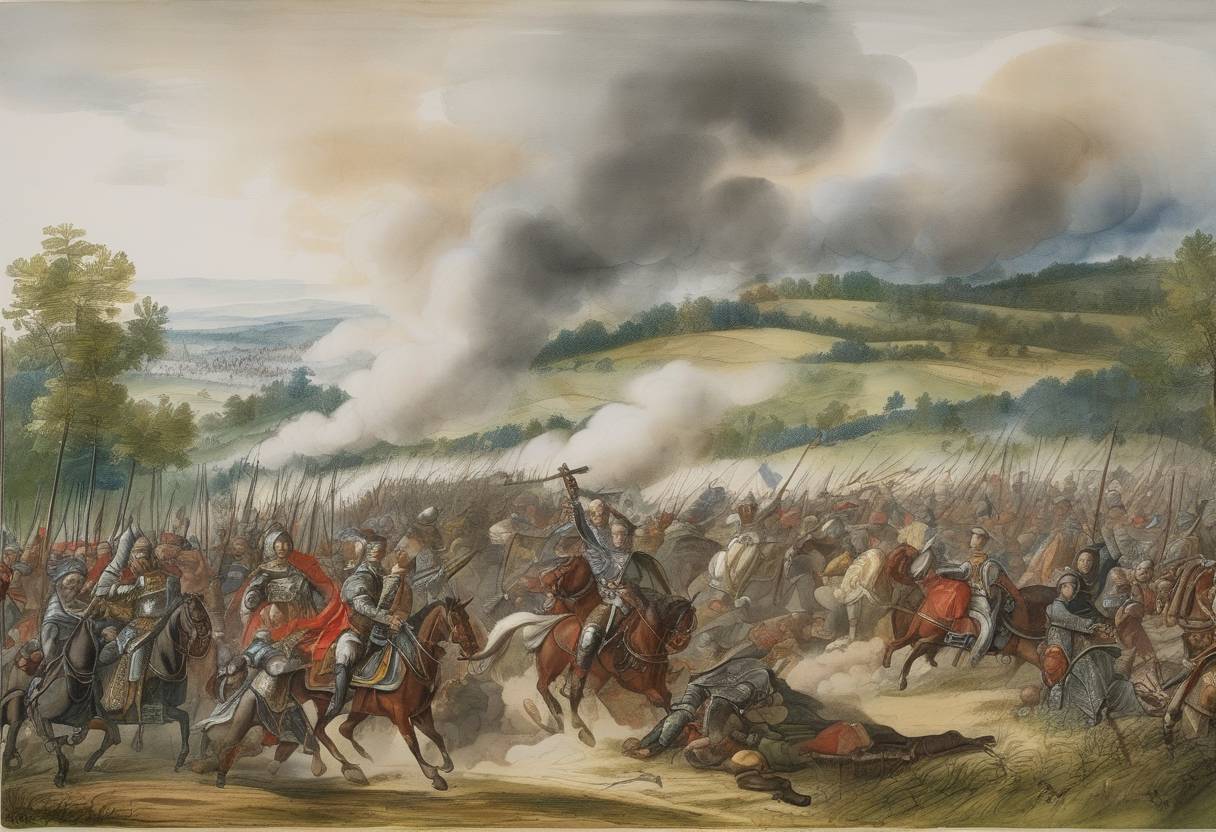
The Battle of Sievershausen did not occur on September 5, 1548. Instead, the historical battlefield saw action on July 9, 1553. This notable conflict was part of the religiously charged struggles of the Holy Roman Empire during the Reformation.
This battle took place during the turmoil of the Protestant Reformation, a period of significant religious upheaval in Europe. The Schmalkaldic War (1546-1547) had recently ended, leaving tensions between Catholic and Protestant factions. The Holy Roman Empire was a fragmented entity where religious affiliations exacerbated political divisions.
The confrontation at Sievershausen was characterized by intense combat. Maurice of Saxony commanded Protestant forces against the Catholic troops led by Henry. The battle resulted in a Protestant victory, but it came at a high cost.
The battle underscored the deep divisions within the Holy Roman Empire. It highlighted the precarious balance of power between Protestant and Catholic states and was symbolic of the broader conflicts emerging from the Reformation. The Peace of Augsburg eventually sought to stabilize these tensions, allowing rulers to select the religion of their state—a crucial development in the shaping of religious tolerance and policy in Europe.
Source: en.wikipedia.org